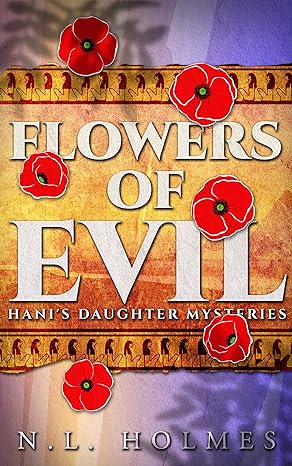
Flowers of Evil: Hani’s Daughter Mysteries by N.L. Holmes

Flowers of Evil is set in the era of King Tut and follows the adventures of two well-educated noblewomen as they try to solve the mystery of a flower seller’s death. The storyline is intriguing, and the fact that it is based in a culture I know little about during a period I know even less about makes for good reading. 

I had a few reservations, however. First, the book starts with some historical tidbits that could have been explained to the reader during the course of the story, rendering this section unnecessary. Also, there’s a glaring typo in this section (circumscribed rather than circumcised), which immediately caused me to question the wisdom of continuing this book. 

Another drawback I found while reading is this book is a sequel to a series of books about the main character’s father, Lord Hani. At times, the story referenced events found in those books but weren’t fully explained in this one, leaving some gaps in the information given to the reader. As this is meant to be the first in the series about Hani’s daughter, it wouldn’t be remiss to review pertinent events more fully. 

The final item I found issue with was the character development of Lord Hani’s daughter, Neferet, the woman of her heart, Bener-ib, and the rabble of children the two had adopted. I found Neferet to be a spoiled and obstinate child, much younger in action than her purported age in the story. It’s hard to get into the story if the main character irritates the reader, although I’m sure this annoyingness is subjective, and other readers might disagree. Then, although Neferet and Bener-ib were lovers, there was no depth to their relationship described in the story. And finally, the passel of orphaned children was given no more than a vague mention here and there. I couldn’t tell you any of their names or describe them in any detail. 

The previous issue aside, I found the cozy mystery element delightful, making it a wonderfully light and enjoyable read. So, if you’re looking for an ancient history cozy mystery, Flowers of Evil fits the bill!

I received an ARC from Reedsy Discovery for this review. You can read my review HERE.
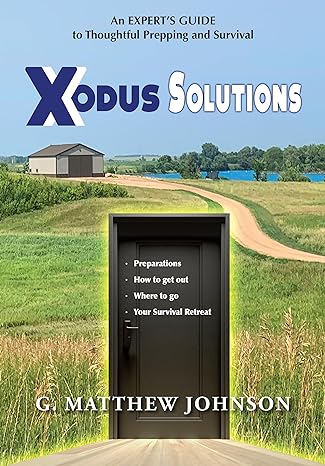
Xodus Solutions: An Expert’s Guide to Thoughtful Prepping and Survival By G. Matthew Johnson

Xodus Solutions, the book, is designed to complement the resources available at XodusSolutions.com and vice versa. The book’s first section focuses on the bug-out scenario, providing a host of possible solutions that most prepper books don’t cover when it’s time to get out of Dodge (or whatever urban location you happen to be in). As an example, the book considers evacuation methods involving caravans or aircraft leased or collectively owned by a group of individuals who share the common objective of leaving the area. The amount of organization and money these options entail makes them less feasible for the individual prepper or small family. 

Xodus Solutions outlines a strategy for executing these solutions, including the establishment of restricted-access fueling stations exclusively available to members and the commitment to coordinate flights from specific urban regions, also reserved for members. Readers are urged to participate in a website survey for additional details. While considerable research has gone into formulating these secure and orderly bug-out solutions, they do not address the unpredictability of human behavior, which frequently leads to frenzied scrambles and chaos when confronting life-or-death situations, even when there is a “plan.”

The following sections run through the estimates of how much food you might need, what tools and supplies would be helpful to have on hand, and some energy options. Again, I found the information to be on the upper scale of “survival options,” with more of a focus on hoarding rather than developing skills for survival after a catastrophic event. For instance, you certainly can rent fallow farmland and build a shelter to store your goods, but if the world order changes, that farmer will need that farmland to produce (as will you), and your tin shack will just be in the way.

The last section focused on nuclear bombs. While fascinating reading, it’s not something that you can effectively prepare for. Any supplies you have stored in a nuclear blast zone will be contaminated by radiation and unsafe to use. 

Overall, I found Xodus Solutions to be interesting reading. However, in my opinion, the book is primarily tailored to preppers who seek to minimize inconvenience rather than individuals like myself who are already living off-grid or for those who recognize that in TEOTWAWKI scenarios, a more fundamental survival skill set is required beyond what this book encompasses. 

I received an ARC from Reedsy Discovery to review this book. You can read my review HERE.

1 John: A Devotional On Love, Obedience, and Side Effects of Salvation by Nicole Hanson

This short devotional is unique in that it includes original watercolor paintings by the author. Each of the 23 chapters begins with a painting, an exhortation to read the selected verses from 1 John from a bible version that is easy for the reader to understand, followed by the author’s commentary and journal prompts. 

I enjoyed the addition of the painting and the journal prompts. However, I would have liked to have seen a place where readers could write their responses or thoughts about the biblical reflection posed by the author. This would reinforce the idea that not words but action is the basis for faith-based behavior. 

I was also curious as to why the author chose to include the exhortation to read the bible verses being discussed but not include them in the book itself. Since I was curious, I decided to check about copyright laws and scripture. 

While the King James Version of the Bible is in the public domain in the U.S., most other translations are under copyright, which means there are restrictions for quoting from them. Additionally, although the King James Version is in the public domain in most countries (except for the U.K.), it may not be the easiest translation to read for some people. As a result, readers may be more comfortable reading a selected passage from a version of the Bible that they are more familiar with and find easier to understand, which is undoubtedly why the author suggested it.

As with any text citation, properly attributing a Bible quote is essential. While requesting permission can be time-consuming, it’s sometimes a necessary step to ensure legal compliance. However, in this case, the book only focuses on 2-4 verses from 1 John in each chapter, so it’s unlikely that the snippets would make up more than 25% of the text. That being said, the author says she is using the New Living Translation (NLT) for the scriptures. The copyright holder of that particular translation, Tyndale House Publishers, gives permission for up to 500 verses in a book as long as it’s not 25 percent of the book nor the entire bible book.

 Regardless, 1 John: On Love, Obedience, and Side Effects of Salvation by Nicole Hanson would make a nice addition to any bible study, whether in a group using the journal prompts and author’s commentary as a platform to open discussion or individual biblical contemplation.

I received an ARC from the author for this review.

Love on Thin Ice 3 – Healing by Vallean Jackson

Love on Thin Ice 3 – Healing by Vallean Jackson is the third book in the Love on Thin Ice series. 

Briefly, the main characters and their relationships are as follows:

Keiontay believed that Ginger’s daughter was his but discovered that Kaleigh was Tarven’s child. Keiontay fathered Nolan with Nova but has not stepped up to the plate as a father. Morgan is Keiontay’s nurse and allows him to stay with her as he recovers from a stab wound.

Nova is doing the best she can for her son, Nolan. Omar is interested in becoming a permanent part of their family, but Nova hesitates to let him in.

Tarven and Keiontay were best friends until Ginger revealed that her daughter was biologically Tarven’s and not Keiontay’s. Tarven is working on creating a family with Ginger. However, Ginger is obsessed with Keiontay, suffering from depression and making life difficult for Nova. 

The most interesting aspect of this book for me was the level of introspection the characters were capable of. Keiontay and Tarven both could see that their behavior stemmed from incidents in their upbringing. Nova and Morgan were also able to understand the origin of the seemingly irresponsible actions of these men. These intertwining relationships illustrate the adage, “hurt people hurt people.” 

As the theme for this third book in the series is “healing,” the characters make transformative observations about their behavior. Some are able to make reparations, while others, although acknowledging the hurt they have caused, decide to move on without apology. 

This book has several explicit sex scenes and deals with domestic and drug-related violence, so it may not be for everyone. Additionally, because of the amount of introspection, sections can be confusing if you haven’t read the previous books in the series, although Love on Thin Ice 3 – Healing can be read as a stand-alone.

I received an ARC from the author.

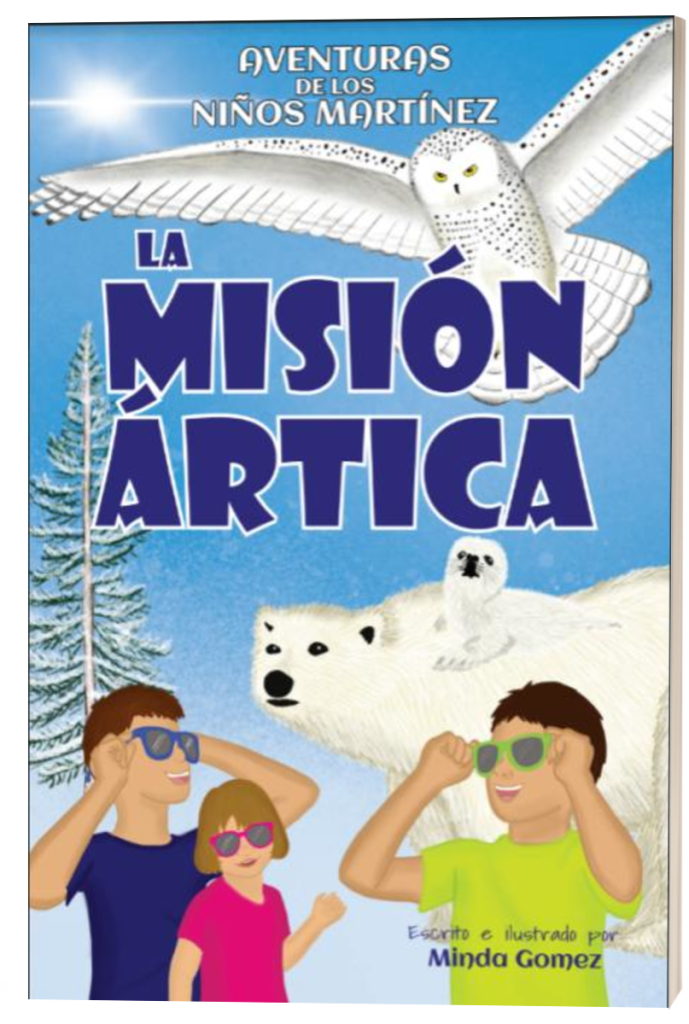
La Misión Ártica por Minda Gomez

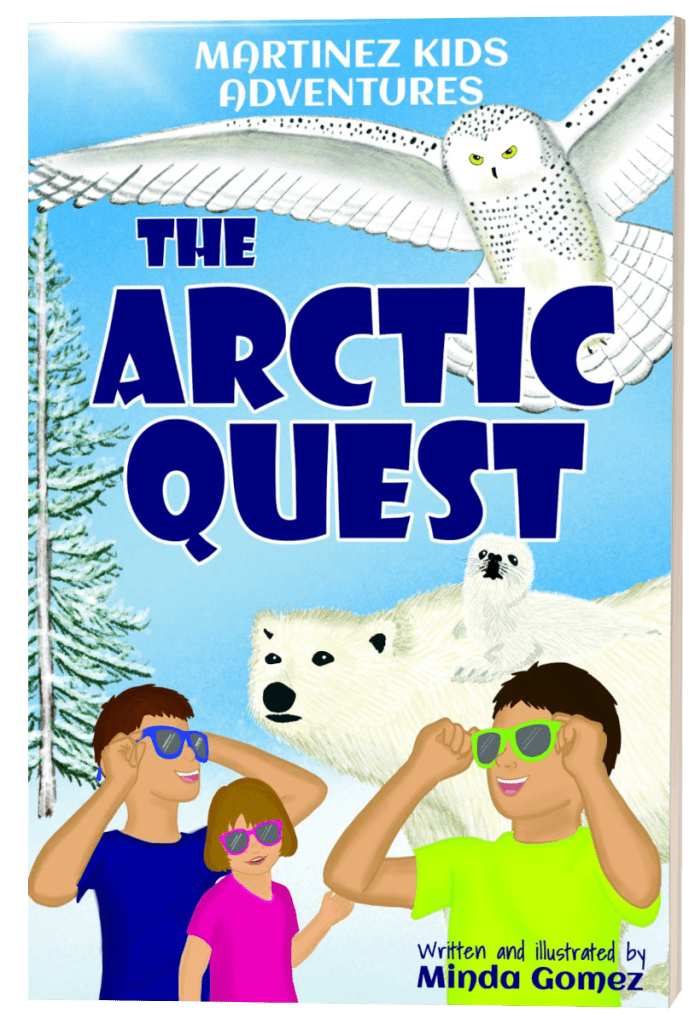
La Misión Ártica por Minda Gomez el segundo libro de la serie Las aventuras de los niños Martinez (Martinez Kids Adventures). En este libro, Diego, Rico y Araceli se entretienen en el LAAAARGO viaje de Minnesota a Ciudad Juárez con las gafas de realidad virtual de su vecino inventor Don Toño. Sus hazañas refuerzan los valores de cooperación, responsabilidad, constancia y ánimo.

Cuando la familia llega a su destino, el lector puede echar un vistazo a algunas de las costumbres y comidas tradicionales mexicanas que se encuentran en las áreas cercanas a la frontera entre EE. UU. y México. Las aventuras continúan a través de las gafas de realidad virtual en el viaje LAAAARGO de regreso a Minnesota.

El libro termina con la receta de atole de avena de Tita y la canción de la piñata, ¡que siempre es una gran canción para cantar!

La versión en inglés (The Arctic Quest) contiene una lista traducida de las palabras en español utilizadas en el libro con una guía de pronunciación. La versión en español (La Misión Ártica) hace lo mismo con el término en inglés que contiene. Como beneficio adicional, este libro de la serie contiene algunas palabras inuit para un mayor aprendizaje del idioma. Las ilustraciones hacen que la lectura de este libro de capítulos sea aún más agradable.

Leer más sobre la autora aquí.

Recibí una copia de revisión avanzada del autor.

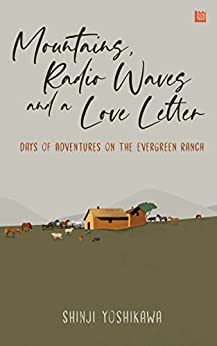
Mountains, Radio Waves, and a Love Letter: Days of Adventures on the Evergreen Ranch by Shinji Yoshikawa

In 2018, Shinji Yoshikawa, a Japanese ex-pat living in Mexico City, decided that since his family was away during Christmas, he would travel out of his comfort zone and visit a place he’d read about in a magazine. He had no idea about the adventures that awaited him. 

El Rancho Evergreen is located in San Isidro Chichihuistan near San Cristobal, Chiapas. It is run by an American, Samuel, a French woman named Stephanie, and their two multicultural daughters, Zoe and Cheyenne. To get there, our fearless traveler took a smooth plane ride to Tuxtla Guiterrez, the nearest airport, which he slept through, then a bumpy and uncomfortable bus ride he did not sleep through. Finally, his voyage culminated in a shared taxi ride to his destination, which was neither comfortable nor uncomfortable. 

The author’s adventures are sprinkled with humor as he thoroughly enjoys his vacation, even when things don’t go exactly as planned. For those that have not experienced ex-pat life in Mexico, he shares some tidbits about Mexican culture, such as no central heating systems, the rarity of on-time transportation schedules, and the reality that the nearest wi-fi signal is quite a hike up the hill and by the big tree which you can climb to improve your reception. 

I’d have to say that my favorite part was Yoshikawa’s description of Christmas Eve with his host family and other guests. Despite being shy and retiring, the author voluntarily added to the festivities by borrowing a guitar and singing in three languages. What a memorable experience for everyone!

Although Yoshikawa’s high-jinks amused me greatly, there were some writing issues that could be improved upon. As the author’s first language was Japanese and his second Spanish, this English version had multiple vocabulary and word use errors, punctuation mistakes, and a few things that, well, just got lost in translation. Another pass-through by an editor for some additional spit polish and shine would not be amiss here. 

Any world or armchair traveler would love this book, which amounts to a travelogue. It isn’t a long read. After all, the author’s visit to El Rancho Evergreen lasted just four days. Nor is it a tedious read, as many travel stories can be. Yoshikawa pokes fun at his own expectations and finds that the road less traveled is delightful in its own way. 

So if you enjoy a good travel story, Mountains, Radio Waves, and a Love Letter: Days of Adventures on the Evergreen Ranch by Shinji Yoshikawa will make your day!

I received an ARC from Reedsy Discovery. You can see my review HERE.

The Secret Door by Minda Gomez

The Secret Door/La Puerta Secreta by Minda Gomez introduces young readers to the Martinez children, Rico, Diego, and Aracela, and their fantastic adventures. In this short chapter book, we can enjoy their treetop, ocean, and rainforest exploits via the neighbor’s virtual reality system (hidden behind that secret door) as they learn about the values of contentment, honesty, and wisdom. 

Minda Gomez is also the book’s illustrator. Her drawings are vibrant and entertaining. She also did the Spanish translation along with her husband, Moises Gomez. According to the author, the Martinez family is based closely on her own multicultural family, which made it fun to write because she knew the characters so well. The family’s creative neighbor Don Toño is a combination of the author’s actual neighbor and her suegro (father-in-law), although she admits that neither is the inventor of the fabulous VR door featured in the story. 

In the English version, there is a guide to pronouncing the characters’ Spanish names and two and a half pages devoted to Spanish/English translation and phonetic pronunciation of the Spanish terms. The Spanish edition defines the English words, and a pronunciation guide is included. Additionally, readers are directed to www.mindagomez.com to hear the English pronunciation. 

Finally, both versions include a section on Mami’s Spicy Turkey Quesadillas, a recipe even kids could prepare to round out the adventures. 

I received an ARC for reviewing purposes.

Rose: Future Heart by Jazalyn

The other day I decided that I’d gotten into a rut with my reading. It was time for a little something different. So when Jazalyn offered me a copy of Rose: Future Heart to review, I jumped at the chance for a little poetry.

It was a quick read. Most of the poems were between 10 and 15 lines. The themes were universal: love, betrayal, self-acceptance, personal growth, and some allusions to bullying. They were mostly general. No details were given about the situations that inspired the poems. The point of view either was from a “She” perspective or a first-person “I” perspective and written in free-verse with occasional rhyme and meter.

For a little light reading, this book was fine. However, if the reader wants a little more substance, then they probably won’t find it between these covers. The vagueness of the incidents described and the focus on the poet’s emotional state kept the words from sticking. On the other hand, the book is ideal for teenagers and young adults just coming to terms with being themselves. The poem Im-Possible Dream is a good example. In it, the poet talks about how they have yet to achieve anything just yet but has the confidence that soon that will change, much like any young adult at the precipice of becoming.

So if you are looking for something along the lines of literary Tik-Tok, then Rose: Future Heart is for you.

Your Finances God’s Way: A Biblical Guide to Making the Best Use of Your Money by Scott LaPierre

The bible has excellent examples of how Christians can live a balanced life regarding money. The Old and New Testaments provide stories and parables about what happens when rich and poor make wise or foolish financial decisions. Knowing this, I was looking forward to reading Your Finances God’s Way: A Biblical Guide to Making the Best Use of Your Money by Scott LaPierre. 

Sadly, I was disappointed with the convoluted advice and the book’s organization. Every other paragraph referenced a different scripture rather than focusing on one incident at a time, which didn’t allow for continuity of thought while reading. It was as if the author wanted to impress with his scriptural knowledge rather than offering biblical guidelines. Then there were references to unrelated topics, a whole section on how guns are not amoral, Karl Marx and Margaret Sanger immorally used their knowledge to destroy society, and some story about Abraham showing a rich fool his hovel in heaven, which was certainly not taken from any version of the bible I’ve read.

As I mentioned, the bible is full of helpful guidance about money matters, and most of those are mentioned at some point in this book. So in that regard, Christians might find Your Finances God’s Way a useful introduction to finances in the scriptures.

However, I found much of the writing superfluous rather than feasible. Perhaps I was looking for something other than a sermon based on the title. I wanted something more than generalities. I wanted a guidebook on how best to invest my resources as a Christian and the biblical support for those actions. Although there was much written about the scriptural interpretation of money and a few examples of what the author himself did, this book failed to provide meaningful steps to obtaining financial stability for me.

I received an ARC from Reedsy Discovery. You can read my review here.