April 2021 Virtual Book Tour — Carmen Amato

 
Carmen Amato_best

I’m originally from New York, went to college in Virginia and Paris, and my husband’s job took me to Mexico 17 years ago. While we live in the US now, the years we spent in Mexico were life-changing, mostly because what I saw and experienced there inspired my writing. I’m now a full-time mystery and thriller author, best known for the Detective Emilia Cruz police procedural series set in Acapulco.

My notions of Mexico City were rather naïve before we got there. I didn’t realize what a huge city it is, or what big gulfs there are between social classes. An early lesson came from a mother whose children rode the same school bus as mine. Her chauffeur drove her to my house because we were the first stop and their house was the last. The mother wanted her kids to have the experience of riding the bus, but not too much. So they got off at our house and were chauffeured the rest of the way home.

Later, the woman took pains to put our Mexican housekeeper in her place, lectured me for being too lenient with the hired help, then asked me to help her maid get a visa. I declined and never saw her again but unfortunately met many more women like her. Great for fictional character development, not so great for Mexico’s social stratification.

Little customs, like tipping the attendant at the Pemex station or kid who wheeled my grocery cart to the car, took some getting used to. Was this a cultural norm or ripping off a clueless gringo? I found myself assessing many probably innocent encounters.

The traffic terrified me at first, too. Being able to get around by myself was essential and I was determined that the city streets would not defeat me. A major victory came on the day I decided to take the kids to the zoo to see the pandas. I initially didn’t realize that you can’t drive into the zoo itself. We finally parked somewhere in Chapultepec Park and walked, which turned out to be the exactly right thing to do. We saw the pandas and headed into the Zona Rosa for lunch. I parked on the street near the fancy San Angel antiques market. A man with a red rag popped out and assured me he’d keep the car safe. We walked a bit, discovered VIPs and its famously undrinkable coffee. When we got back to the car, I found that I’d left it unlocked! But the man was there and nothing bad had happened to either us or the car. I knew then that Mexico was going to be a good experience.

Being Catholic helped and opened doors that might have been otherwise closed. I loved the way Mexico celebrates the rhythm of the church calendar, the glory of the feast day of the Virgin of Guadalupe, the floral vendors in front of the big cemetery on the rim of Chapultepec Park. I was very involved in the English-speaking church, Saint Patrick’s, but also attended the local church in the Lomas de Chapultepec neighborhood.

My Spanish was non-existent when we moved to Mexico but having to fix up our house forced me to learn rapidly. One of the first things I did was to sit down and write out numbers up to 100 so I would understand prices. Not only did I have to negotiate for cleaning and gardening services but painting, custom curtains, plumbing—you name it. The Newcomer’s Club and weekly immersion lessons saved me!

The children’s school was another reason to learn the language. The children attended the American school, which meant half their lessons were in English and half in Spanish. We got a tutor to help the kids and I took lessons, too. The school’s administration and most teachers were Mexican and many preferred to hold parent-teacher sessions in Spanish.

The security situation in Mexico City was a low-simmering and ever-present concern. We had a hard and fast rule for the kids: no talking getting into or out of the car. This is when it is most easy to be distracted. We had some close calls; would-be robbers were scared off by our dogs, our car suffered minor vandalism, and I was followed around a store. But I think being very vigilant helped us avoid any real trouble.

I had several defining moments in Mexico but the one I recall most clearly was when I was driving back from the big mall in the Santa Fe suburb. I’d had a run-in with a snarky salesgirl in Liverpool. She’d taken something I’d tried on, five minutes later didn’t know where it was, and bottom line, I walked out of the store empty-handed. This was a common occurrence, that and being unable to complete a purchase because the person with the key to the cash register wasn’t there, or the cash register didn’t have change. Using a credit card was generally out of the question; every time I did the credit card company would put a hold on the card. I called them weekly to explain that I lived in Mexico—please see the mailing address—but it never mattered.

So I’m driving out of the mall and the afternoon sky darkens to lead. Sheets of water pour down, deafening me as the rainstorm pounds on the roof of the car. I’m already frustrated and angry and now I’m scared, too. I begin to cry in the car while repeating my mantra, “This city will not defeat me.” I pull up at a red light and there’s this Madonna-looking girl standing in the median, with a thin rebozo over her head, carrying a baby.

Now I generally did not give to street beggars–warnings had gone out advising not to give because beggars are an organized syndicate or in league with criminals who will approach the other side of the car to rob you. Yet today, as it’s slashing rain and I’m sobbing, I realize that my life is pretty good after all. I roll down the window and give her 200 pesos.

If I could do my Mexico experience all over again, I’d travel more. I never made it to Guadalajara or Copper Canyon or Baja. I also would buy more Otomi embroideries and painted alebrijas.

But with my books, my life is now inextricably linked to Mexico. I know I’ll visit many more times.

I owe Mexico a debt of gratitude because I doubt my writing career would have come together the way it has without those high/low, sweet/salt years of experience. It took me about five years to distill it all into my first novel, THE HIDDEN LIGHT OF MEXICO CITY, a Cinderella story set against the backdrop of cartel drug smuggling and Mexican presidential elections. Next came the Detective Emilia Cruz series which in 2016 was optioned for television by a major US network. I don’t know if the series will actually come about but if it does, I hope it is as authentic as I have tried to make my books.

Thanks so much for hosting me. Readers are invited to join me at any of the links below:

Pacific-Reaper_200px
 
Carmen Amato (also known as me) writes romantic thrillers and the Detective Emilia Cruz mystery series. Emilia is the first female police detective in Acapulco. She can take the heat. Can you?
 
Essentials
 
“Danger and betrayal never more than a few pages away.” — Kirkus Reviews 
 

Playing Tourist in Mexico: A Collection of Adventures from Women Traveling in Mexico

Patty M. Vanegas, Susi Schuegraf, Lynne DeSantis, Karen Swanson, Jill Michelle Douglas, Emily Lee Garcia and I combined our adventures into an amazing travel book last year. It’s finally available on Amazon as a  Kindle book and a full-color paperback!

Have you ever wondered what Mexico is really like? In Playing Tourist in Mexico: A Collection of Adventures from Women Traveling in Mexico you can share in the travels of seven women to 45 different locations throughout Mexico.

Not only are places like Mexico City and the beaches of Baja California included, but also remote but equally delightful places like Dolores Hidalgo, Guanajuato the birthplace of independence, and Paracho de Verduzco, Michoacan, a mountain town dedicated to handcrafting guitars.

You’ll see a different beauty in Mexico through the eyes of these women as they galavant hither and yon experiencing the sights, tastes, and sounds of this amazing country.

If you’ve already read this fun travel book, then we’d love if you could leave a review on Amazon or Goodreads!

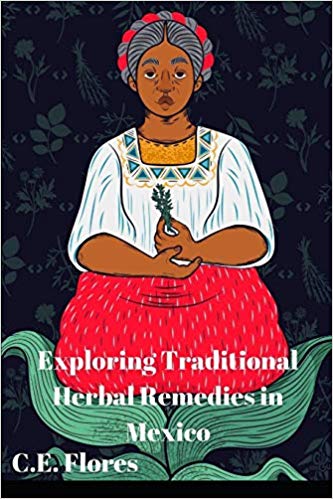
Exploring Traditional Herbal Remedies in Mexico

Exploring Traditional Herbal Remedies in Mexico

Curanderos (healers) in Mexico still practice traditional herbal remedies learned centuries ago. It is only recently that scientists have begun to take these healing practices seriously. Study after study has validated the medicinal use of plants native to North America as well as some brought by the Spanish after the conquest. It’s time to reexamine the basic healing power in 34 common herbs used by traditional Mexican healers.

Included in the Herbs and Essential Oils Ultimate Bundles 2019.

Reviews on Amazon

Reviews on Goodreads

Have you read this book?

Let me know what you thought!

Go back

Your message has been sent

Warning
Warning
Warning
Warning

Warning.

Mirador by James A. Jennings

mirador pic

Sarah and Nate Hunter become embroiled in more than they bargained for when they volunteer to help restore a crumbling church in Mirador, Chiapas. Unbeknownst to them, el Ejército Zapatista de Liberación Nacional (EZLN) has big plans to use Nate’s internet savvy in order to make public their War Against Oblivion. Then the unthinkable happens. 

prefiero.jpg

I have to say that Mirador by James A. Jennings was a great read. The Zapatistas (EZLN) have been in the news lately as they continue this struggle against oblivion begun in 1994. The pivotal events in the story occur just months before the Zapatista battle cry ¡YA BASTA! was heard on January 1, the day NAFTA was signed into effect. 

The characters were well-developed and believable. The locations were described in exquisite detail. The political situation was explained in the introduction and then again in a historical note at the end, bringing the events up to the present. 

Prefiero morir de pie que vivir de rodillas.--Emilano Zapata.jpg

What this book really needed, however, was a Mexican consultant for the Spanish phrases included in the book. These lacked the proper cadence and rhythm found in Mexican Spanish that just can’t be duplicated by a non-native speaker. 

For example, although “Mi hijo” is grammatically correct, no one says that, mijo. It was to the point that I was reading the Spanish text as if a gringo were speaking, not a Mexican. There were also grammar errors. When speaking of the native people of the area, the correct term is “los indígenas” not “las indígenas” even though the word ends in the feminine “a.” Another incident was that a young man would NEVER use the informal “” tense when speaking to a woman he revered as a grandmother which occurred in the book. There were sentences that were totally incomprehensible in Spanish, as if the author tried to translate directly from English. “Ser grave” should have been “Se serio” and so on. 

While I understand that the book was meant for English speakers, these glaring oversights detracted from my enjoyment of the story to some extent. Although to be authentic, most of the characters would have been speaking in one of the nearly 70 indigenous languages found in Mexico. 

subcomadante

On the other hand, I took immense pleasure imagining life among the Zapatistas, something I probably will never experience. I was delighted to learn just a little more about el lek’il kuxlejal which roughly translates as buen vivir (living well) that is at the heart of the indigenous resistance movement in Mexico. 

I believe you will enjoy Mirador by James A. Jennings as much as I did!

I received an ARC from the publisher to review this book.

Blackbirds in the Pomegranate Tree: Stories from Ixcotel State Prison by Mary Ellen Sanger

blackbirds

I read Blackbirds in the Pomegranate Tree: Stories from Ixcotel State Prison by Mary Ellen Sanger last year and was profoundly moved by it. I thought I’d reread it again this year and had the same reaction. The author was able to capture Mexico as I see her, all her hardship, corruption, and exquisite beauty. I would be remiss not to share this story with you.

mexicans

Mary Ellen left behind the corporate jungle to read in the shade of the steps of a pyramid in Mexico. She began her new life in tourism but eventually found her way to a sheltered patio in Oaxaca as a caretaker to an elderly widower.

Until, one night she was bustled from her residence to the Ixcotel State Prison, one of the most overcrowded and unhygienic facilities in Oaxaca. There she was held for 33 days on fabricated charges. However, her story is just the prelude to the stories of the women she met inside.

Concha, arrested for armed robbery, who found love at last inside the stone walls. Berta, whose husband had tended sorghum interspersed with marijuana for a wealthy landowner. Susa, heroin addict earning drug money with a shoeshine service for visitors. Natalia, arrested so that the wife of her lover could take her child. Ana, human rights lawyer jailed because of her work on behalf of rural farmers. Citlali, a curandera who spoke only Chinantec and her infant daughter Xochitl. Lucia and her infant son Sebastian, whose 5-year-old daughter was in a group home allowed to visit once a month. Soraya, imprisoned for refusing the advances of the mayor. Flor, dying of a tumor from the bullet in the back of her head.

over mexico

Mary Ellen was not the same women upon her release and neither will you be after you read these haunting stories from the women at Ixcotel State Prison.

Read more about Mary Ellen Sanger here.

Echoes from the Wall: Real Stories of Mexican Migrants By Judy King

Recognize yourself in he and she Who are not like you and me..jpg
echoes from the wall

This quote by Carlos Fuentes epitomizes Echoes from the Wall: Real Stories of Mexican Migrants by Judy King. With so much division being fostered these days by politicians with private agendas, it’s hard to see the similarities we all share. Judy King does an excellent job both sharing stories of Mexican migrants and the recent U.S. policy change that are affecting them.

In Echoes from the Wall, you’ll meet Varo, Moises, Ramon, Arturo, Roberto, Jose, and Ken who are sometimes documented, sometimes not migrant workers. Then there are special circumstances:

  • Erica, a promising, bright young scholar accepted at Yale who is unable to get a student visa.
  • Rafael, married to a U.S. citizen and father of 2 U.S. citizens, who is unable to obtain residency.
  • Leo, a wounded veteran, deported from the country he lived in since he was 3 years old.
  • Lalo, whose house is filled to overflowing with his brother’s wives and children.

You’ll also see the facts about remittances sent to Mexico, border facial recognition policies, Legal Permanent Residence, the effects of the Border Wall on wildlife, the high cost of crossing the desert into the U.S. and the illegality of providing food, water, and medical treatment to migrants, the damage to children separated from their parents, the truth about healthcare and taxes for migrants,  whether migrants are more apt to be criminals than U.S. born citizens, who is financing the mega-detention centers, and how the Bracero work program began the immigration cycle from Mexico to the U.S.

Additionally, you’ll read about the importance of family to the Mexican people, Saint Toribio, the patron saint of travelers, La Virgen de Guadalupe and her iconic presence on both sides of the borders.

Echoes from the Wall ends with a list of both fiction and non-fiction books for further reading about Mexican migrants and the immigration situation as it stands in the U.S.

This well-researched book poignantly tells the story of those who otherwise might not be heard. Tony Burton, Arturo Garcia, and Richard Rhoda contributed to clarifying once and for all who stands to gain by the propagation of an immigrant crisis in the United States.

You can read more about Judy King here.

Beyond Justice by Cara Putman

beyond justice

Beyond Justice by Cara Putman

Seventeen-year-old Miguel is killed while being held in Immigration and Customs Enforcement’s juvenile detainment center in Texas.  Hayden McCarthy, a young D.C. lawyer known for thinking outside the box, is assigned as an advocate for justice for Miguel’s family.  As her investigation deepens, so does the danger for everyone involved. Why did Miguel cross the border?  How did he die?  Who covered his death up and for what reason?  

With immigration still a sensitive topic in politics these days, perhaps it might seem that the scenario in the book is a bit far-fetched.  How likely is it that minors seeking refugee status be kept in what is essentially a juvenile prison?  Unfortunately, it’s the new reality in the US.  

In 2014, it became policy to detain and hold undocumented individuals in privately owned and maintained detention centers much like the one described in the book.  Some of these detention centers have been specifically designed for the detainment of women and children.  As of August 2016, more than 2,000 women and children are being detained in facilities, known as Family Residential Centers, both in Texas and Pennsylvania.  Not surprisingly, the restrictive arrangements have caused irreparable mental harm to the mothers and children, some as young as 2 weeks old, who have fled their home countries in search of safety. (See Teen mother at immigrant detention center in Texas attempts suicide, Infants And Toddlers Are Coming To The U.S. To Work, According To Border Patrol, Is Texas Reforming or Enabling Immigration Lockups for Children?, Immigrant kids detained in warehouse of humanity)

Life for teenagers in the detention camps is not easy. (See What It’s Like to Be a Teen Living in an Immigration Detention Center, The Shame of America’s Family Detention Camps)  Legal aid came too late for Miguel, which is not unusual for teenagers seeking asylum in the US. (See Teenage Immigrants Are Being Denied Asylum Because They Have No Right to an Attorney)  It might seem that against such overwhelming odds, there can be no justice.  Fortunately, there are lawyers, like Hayden McCarthy, who take it upon themselves to assist these children seeking asylum. Personally, I have the honor to know Nicole Ramos, whose tireless efforts have saved countless women and children.  (See Modern Day Marias–Nicole the liberator)

Beyond Justice by Cara Putman, although fiction, resonated with life.  It is yet another avenue that the voices of these lost children, like Miguel, can be heard.  Once heard, their stories can be shared.  Once their stories are known, action can be taken on their behalf.  No child is Beyond Justice.

5 star

***********************

Disclosure of Material Connection: I received this book free from the publisher through the BookLook Bloggers book review bloggers program. I was not required to write a positive review. The opinions I have expressed are my own. I am disclosing this in accordance with the Federal Trade Commission’s 16 CFR, Part 255  “Guides Concerning the Use of Endorsements and Testimonials in Advertising.”


Infusions of Healing–A Treasury of Mexican-American Herbal Remedies by Joie Davidow.

While the Botany & Wildcrafting Course from Herbal Academy Courses that I recently completed was spectacular and I have more confidence in using my plant identification skills, I still run into the problem of not being able to transfer the identification from Mexican Spanish to English. This has been frustrating to me since my little Aztec Remedy books say use such and such a plant, but I have no idea what the botanical name is.

My previous Mexican plant authorities!

One of my friends recommended Infusions of Healing–A Treasury of Mexican-American Herbal Remedies by Joie Davidow. I ordered it from Amazon and finished it in a week. In it, hundreds of herbal remedies are included as well as a chart that gives the English name, Spanish name, Botanical name and other names it might be called. Fabulous!

Recipes were included that used plants that I can identify in La Yacata, like mesquite, sábila, and huizache and I can’t wait to investigate more about their medicinal properties.

Furthermore, more 1/3 of the book talked about indigenous healing traditions. Thousands of years of medicinal tradition were lost when the Catholic church ordered the codices to be burnt, only a handful of others were preserved.  Spanish priests and naturalists compiled various tomes about the conquered peoples that were sent to Europe and lost for hundreds of years, only having been recently rediscovered.

These rediscovered accounts helped me to put the curandero tradition still alive and flourishing into perspective. Not only were curanderos skilled with herbs but they were also doctors of the soul. Some of those long-ago spiritual beliefs about health still exist in Mexico today.

Let me give you an example. It was an extremely hot month, hotter than I can remember since moving to Mexico. So now that we have electricity, albeit limited, we bought a fan. I had my husband install it so that we would get a nice breeze while we slept. My sister-in-law, who has also been suffering from the heat, asked to see our fan since it doesn’t use too much power. She thought it was good but said she’d never have the fan blowing on her in the night because she’d wake up “chueca” (wry-necked).

So what does this have to do with ancient Aztec beliefs? Well, the Aztecs believed that body ailments were either “hot” or “cold”, “wet” or “dry”. Therefore, a cramp would be an ailment caused by a “cold” source, the fan which cooled the tonalli (energy center also connected to the heat of the sun) of a person that is centered in the head.

Other things suddenly became clear as well. The sacred novena (9-day prayer session for the deceased) is 9 days because there are 9 levels to Mictlan, the underworld and 9 levels in the celestial kingdom above. Bilis, an illness caused by excessive coraje (rage) occurs when there is something wrong in the ihiyotl, another energy center located in the liver. The belief that not only must the physical body be treated, but the God who sent the infirmity must also be appeased continues with pilgrimages, prayer, candles, and offering found throughout Mexico.

While the book didn’t specifically mention going barefoot in the house as a potential cause of sickness, I bet the reason is mentioned in one of those lost books that I’d love to get my hands on.

So if you are at all interested in herbal uses of plants found in Mexico, this is the book I would recommend to you to start with. Having read it through once, I feel that I have finally entered the pre-school level in my local plant study.

5 star

A Woman’s Survival Guide to Mexican Healthcare by C.E. Flores

healthcare cover

A Woman’s Survival Guide to Mexican Healthcare is finally ready for release. The book covers the basics of the Mexican national healthcare system as it stands now, the reality of sexual assault, femicide, and abuse in Mexico, the role of the traditional curandera, and herbal remedies as alternative healing practices. Women living in all parts of Mexico (and Guatemala) candidly shared their health and wellness experiences so that other women will be better informed.

It is my hope that this book in some way empowers women who have moved to Mexico to have some measure control of their own healing. You can get it free at Amazon for the next few days.

Que est(Be well).jpg