Tools That Help Me Write (and Might Help You Too)

You know I’ve been working on my own WIP and Book Marketing Challenges this year, and since we’re all in this together, I thought I’d share a few tools you might find useful in your own writing endeavors. These resources can help you move from idea to done with more clarity and a lot less overwhelm.

🧰 1. The Writer’s Toolkit 2025
Feeling just a little overwhelmed by all the things that come with being a writer today: drafting, editing, publishing, promoting, and social media? 

That’s where The Writer’s Toolkit 2025 from Ultimate Bundles comes in. It’s a curated collection of 22 premium tools, templates, trainings, and courses (worth over $2,300!), created by authors, bloggers, and creatives who get it.

You’ll find resources to help you:

  • Build your author platform
  • Write more confidently and consistently
  • Market your work without burning out
  • Stay organized and focused on what truly matters

Inside you’ll get:
📘 1 eBook
🎥 16 eCourses & Videos
🧾 6 Templates & Printables

It’s only available for one week, so don’t wait!

✨ 2. Oracle Cards for Writers: Unlock Your Story Magic
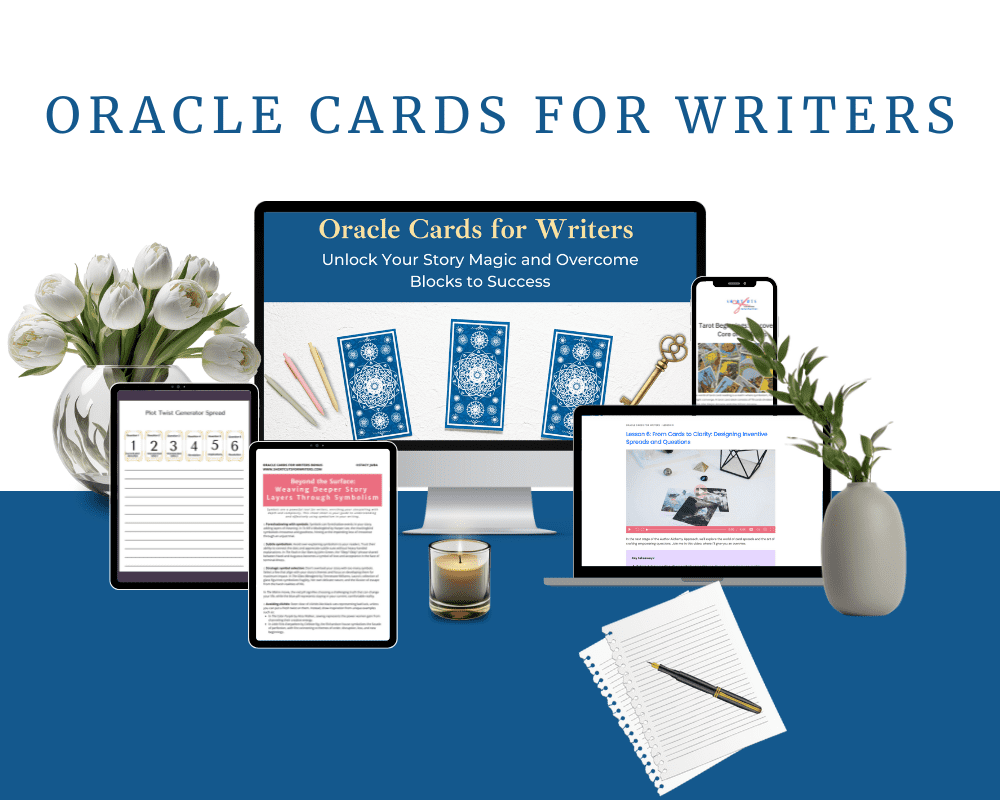
Being an author means conjuring ideas from the unseen, shaping stories from flickers of imagination. Writing is already a mysterious process, so why not embrace that mystery by tapping into your subconscious?

That’s exactly what Oracle Cards for Writers: Unlock Your Story Magic and Overcome Blocks to Success helps you do.

This self-paced online course from my friend Stacy Juba, fiction author and founder of Shortcuts for Writers, invites you to explore 9 richly illustrated lessons filled with journaling prompts, oracle and tarot card spreads for writers, and creative exercises to help you rediscover your flow.

It’s perfect for writers who want to:

  • Create characters that feel real and memorable
  • Add emotional depth and symbolism to their stories
  • Overcome writer’s block and self-doubt
  • Infuse their stories with intuitive insight and meaning

You’ll also receive three exclusive bonuses, including an 18-page eBook on tarot, a symbolism cheat sheet, and a journaling workshop replay ($17 value).

Begin your enchanting writing journey today!

🕒 3. 40 Days to a Finished Book by Leonie Dawson
You know you’ve got a book to write. 

The problem? Writing a book can feel like an impossible task. Too big to start, too hard to keep up with, and too easy to abandon halfway through.

That’s why I love 40 Days to a Finished Book, an online course by creative powerhouse Leonie Dawson. It’s all about guidance, accountability, and fun, with a daily email that includes a writing tip and a request for your word count.

It’s like having an encouraging (and slightly cheeky) writing buddy cheering you on every single day.

If you need structure, support, and momentum to finally finish your book, this might be exactly what you’ve been looking for:

Final Thoughts

Whether you’re building your confidence, finding your voice, or simply trying to make writing a consistent habit, these tools offer structure, support, and a little bit of magic along the way.

Here’s to writing it, finishing it, and sharing it with the world.

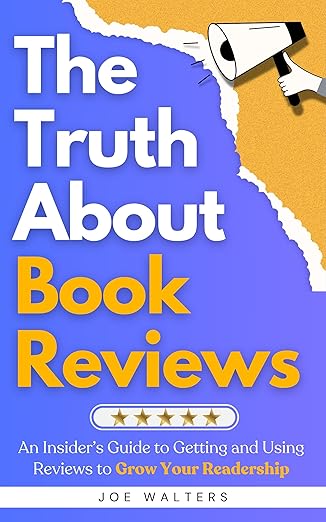
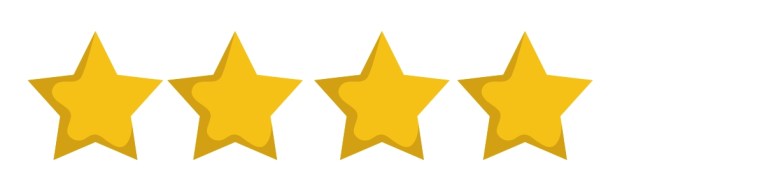
The Truth About Book Reviews: An Insider’s Guide to Getting and Using Reviews to Grow Your Readership by Joe Walters

The Truth About Book Reviews: An Insider’s Guide to Getting and Using Reviews to Grow Your Readership by Joe Walters is a practical, detailed guide for authors who are serious about reaching readers through the power of reviews. For many introverted writers, the idea of asking for reviews can feel intimidating or even impossible. Walters breaks this process down into manageable, actionable steps, showing that obtaining meaningful feedback isn’t as mysterious or unattainable as it seems.

The book clarifies the many different types of reviews, including editorial, media and trade, and customer reviews. It explains their relative importance and how each serves a unique role in an author’s marketing strategy. Walters also discusses how to find and approach reviewers, how to craft effective pitches, and how to make the most of every review once you have it. His insider experience as editor-in-chief of Independent Book Review provides a behind-the-scenes look at what makes a pitch stand out.

While I can’t say I agreed with every point, I found the information genuinely useful. The research required to find the right reviewers can be daunting, and at times, the book reads like a subtle promotion for Walters’ own services. Still, there’s undeniable value in the insight he provides. The inclusion of real email samples, organizational tools, and an excellent to-do list at the end makes the guide not just informative but actionable.

Ironically but effectively, Walters demonstrates his own strategy by reaching out to reviewers like ME to ask for reviews. The fact that I’m now reviewing his book proves his method works. Overall, The Truth About Book Reviews is an honest, accessible, and practical resource that demystifies one of the hardest parts of being an author: getting your work noticed.

The Great Gatsby by F. Scott Fitzgerald

In the spirit of Banned Book Week, I’ve chosen to review a frequently banned book. The Great Gatsby has been challenged and removed from classrooms and library shelves at various times for reasons including sexual references, “profane” language, and depictions of adultery and alcohol use. The novel appears on lists of frequently challenged classics compiled by the American Library Association and related organizations.

This book is like a small, perfectly cut shard of glass: elegant surfaces, sharp edges, and a surprising sting when you look closely. I teach this novel on the platform I work at currently, and the classroom reactions I get have reminded me how much reading is a conversation between text and reader, and how cultural background changes which parts of the book land hard and which parts drift by.

The novel’s canny control of point-of-view, a judgmental Nick Carraway telling us about Gatsby’s dream and the hollowness of old money, is both its strength and, for me, its limitation. Nick’s moralizing gaze gives the book a coherent voice, but it also narrows the novel’s humanity. We almost never see the world except as Nick chooses to frame it. That skewed viewpoint is why the ending, the plot twist, and the moral fallout still hit me every time. The book gives us a climax that feels inevitable and then painfully unresolved.

As a whole, the book can feel thin on action. Much of the “plot” is social maneuvering, parties, and revelations delivered via rumor or later recollection. If you’re the sort of reader who wants kinetic scenes and sustained drama, Gatsby can test your patience. I’m not sure I would have enjoyed it as a teenager. Its pleasures are often retrospective and full of world-weary reflection, things teens don’t always value. My current student, however, is unusually enthusiastic about Gatsby’s romance and tragedy, so who’s to say?

One of my continuing frustrations with the novel is how little we learn about the women who live at its center, Daisy, Jordan, and Myrtle, and even about minor figures like the Finn (the servant) who occupy real positions in the social web. We get Daisy largely as a projection (idealized, then revealed to be small), Jordan as a sketch of modern cynicism, and Myrtle through others’ outrage. Even after reading through the entire book several times, I’m left with questions such as: What were Daisy’s real options in her social world? Why did Jordan cheat and lie, or did she? What did the Finn think about her place in the household and Nick himself? What actually mattered to Myrtle beyond her brief, tragic grasp at glamour? 

In general, I find the sharp, sudden scenes depicting violence to be abrupt and unexpected. The incidents of overt racism and classism are often hard to read from the world’s current position. Despite some definite cringe, I keep teaching The Great Gatsby because it’s compact, richly written, and full of teachable techniques: voice, symbolism (the green light, the Valley of Ashes), and the way an unreliable narrator shapes what a story becomes. It generates excellent class discussions about the American Dream, class, and social performance. But I also teach it with a critique. We read it as a masterpiece and as a text with blind spots, including limited female perspective, a narrow moral lens, and an emphasis on spectacle over sustained action.

If you love it, you’ll find it elegant and quietly devastating. If you find it unsatisfying (as I often do), the book still rewards close reading, especially if you hold a pencil to its margins and ask the questions it leaves unanswered.

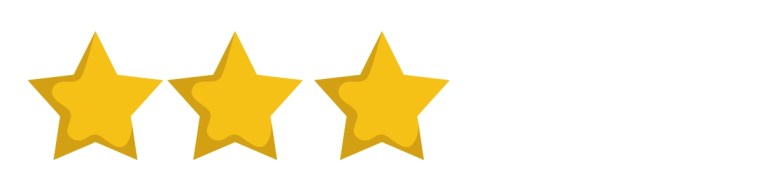
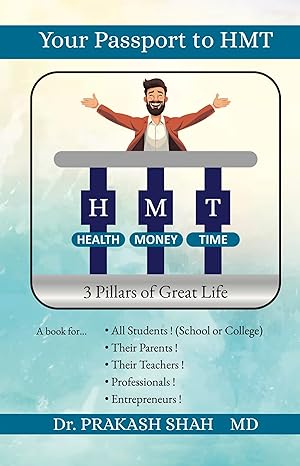
Your Passport to HMT: 3 Pillars of a Great Life by Prakash Shah

Prakash Shah’s Your Passport to HMT sets out to be a motivational guidebook designed to help readers achieve balance and success by mastering the three pillars of a fulfilling life: Health, Money, and Time. With a focus on intentional living, better habits, and actionable strategies, the book promises to help readers create a life of stability, growth, and purpose.

The premise is strong. Shah emphasizes the importance of achieving all three pillars together, rather than chasing health, wealth, or time individually. He offers frameworks meant to inspire self-motivation, discipline, and smart decision-making. The book encourages readers to think ahead, develop systems for success, and cultivate habits that sustain long-term growth.

However, the target audience feels a bit unclear. At times, the book speaks directly to students, guiding them toward self-driven achievement. In other sections, Shah addresses parents and teachers, offering insights into shaping the next generation’s mindset. While the advice is generally sound, choosing a more specific audience could make the message more focused and impactful.

Additionally, Shah’s British Indian background comes through in his phrasing, sayings, and examples, which may feel unfamiliar or slightly “off” to American readers. For example, health tips like avoiding “cold drinks” or the concept of “welcoming pains” as a pathway to future rewards may require some cultural interpretation. Phrases like “appreciation is what a child cries for and an adult dies for” are intriguing but may leave some readers unsure of their meaning.

That said, there’s a lot of value here for readers willing to engage with the book’s perspective. The advice is actionable and well-intentioned, and Shah’s passion for helping others create better lives is evident throughout. If you’re open to exploring new frameworks for success and don’t mind a blend of cultural influences, you may find practical takeaways within these pages.

2024 Reading Challenge Roundup

So, how did I do? Well, let’s take a look, shall we?

So carrying over to 2025, I have a book on my shelf and a hardcover book. Not too shabby, I think. How did your reading go this year?

Want to take a look at my previous reading challenge roundups?

2020

2021

2022

Reading Roundup 2021

January

Anxious People by Fredrik Backman was a good mystery read with a not-quite believable ending.

February

I read How to Write a Book That Doesn’t Suck and Will Actually Sell: Your No B.S. Guide to Learning How to Write a Nonfiction Book by Michael Rogan for further research on refining my writing.

March

Travels with Grace by Erma Note highlights the cultural delights of Mexico City.

April

An interesting paranormal romance, Saving Cassie by L.A. Remenicky was a little outside my usual picks, but that’s the point of the challenge right?

May

I chose Job by Ben Avery and illustrated by Jeff Slemons, as my graphic novel for the year.

June

Middle-aged female nomad on the loose in Tales of a Female Nomad: Living at Large in the World by Rita Golden Gelman. You’ll not want to miss her adventures!

July

Immigrant Secrets: The Search for my Grandparents by John Mancini was a lovely tale of one man’s family history quest that mixed speculative fiction with fact.

August

I belong to an online book club and This is How it Always Is by Laurie Frankel was the selection of the month. What a discussion we had about this book about a transgender child coming of age. A thought-provoking story!

September

A random free book download led to an amazing new thriller series with Probably Dead by Ed Church.

October

November

I read several books this year about health issues, but the one that stood out the most was The Seven Graces of Ageless Aging: How to Die Young as Late in Life as Possible by Jason Elias.

December

Todd by Adam J. Nicolai was my survivalist/science-fiction pick for the year.

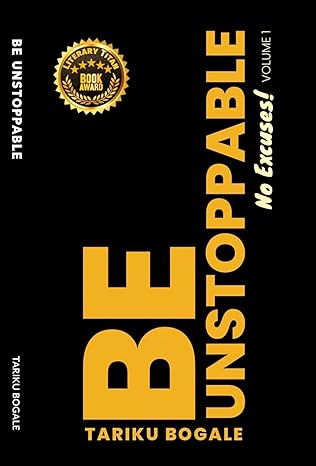
Be Unstoppable: No Excuses! Volume 1 by Tariku Bogale

I picked up this book with high hopes, inspired by its intriguing title and a table of contents that promised to focus on time, courage, sacrifice, forgiveness, and hope. I expected a riveting self-help guide to unlocking my full potential. Unfortunately, the experience fell short.

This disappointment wasn’t because of the author’s life story—he’s clearly an amazing individual who’s overcome incredible challenges and achieved remarkable goals. The issue lay in the book’s tone and writing style. Instead of feeling motivated, I felt berated, even though I’ve faced and conquered significant obstacles myself.

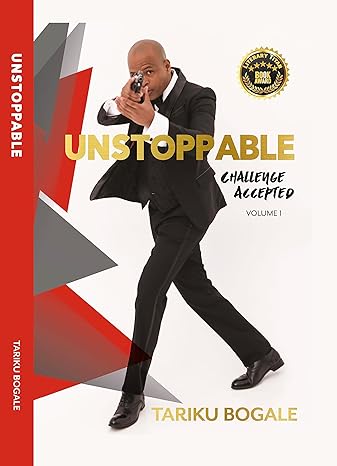
The writing also felt repetitive. The book frequently referred back to the author’s first work, Unstoppable: Challenge Accepted. The same stories were repeated across multiple chapters rather than offering unique examples for each of the five key points. Given the author’s rich life experiences, more variety would have been expected.

Ultimately, I was left confused about the purpose of Be Unstoppable. It didn’t quite fit as a success memoir or a self-help book, as it focused heavily on the author’s achievements with only sporadic advice. There were no reflective questions for the reader nor clear guidance on achieving personal goals beyond the vague encouragement to be unstoppable.

Fans of the author’s first book might find value in this follow-up. However, new readers might share my sense of letdown. While there are some nuggets of wisdom, Be Unstoppable didn’t deliver the inspiring, actionable content I was hoping for.

Celebrate the Season with Bookshop.org’s Fall Reading Challenge!

Are you ready to lose yourself in the enchanting world of books this fall? Bookshop.org presents its Fall Reading Challenge, and it’s the perfect opportunity to cozy up with some captivating reads and potentially win amazing prizes. Whether you’re a seasoned bookworm or just an occasional dabbler in the world of literature, this challenge promises an exciting journey from October 1st to 31st. Let’s dive in and discover how you can be a part of this literary extravaganza!

How to Join the Challenge

Participating in the Fall Reading Challenge is as easy as picking up your favorite book. Simply follow these steps:

  • Sign Up: Head over to Beanstack and sign up for the Fall Into Reading Challenge. It’s your passport to a month filled with reading and fun activities.
  • Log Your Reading: As you devour your books, record your progress on Beanstack. Logging your reading journey is not only satisfying but also an essential part of the challenge.
  • Complete Activities: Keep an eye out for exciting activities throughout October. Completing these activities will earn you badges on a Bingo card, adding a competitive twist to your reading adventure.
  • Prizes and Treats: Brace yourself for the fantastic prizes up for grabs!

Prizes and Treats

The Fall Reading Challenge offers some incredible incentives to keep you motivated and engaged:

Grand Prize Winner:

  • A generous $250 Bookshop.org Gift Card to fuel your reading addiction.
  • An additional $250 donation to the bookstore of your choice, supporting local businesses and authors.

Gold Prize Winners (10 Lucky Readers):

  • Each gold prize winner will receive a $50 Bookshop.org gift card to expand their personal library.

Discounts for Everyone:

  • Achieve a Bingo on your card, and you’ll be rewarded with a 10% discount on your next Bookshop.org purchase.
  • Go the extra mile and complete the entire Bingo card to unlock an impressive 20% off an additional order, letting you explore even more literary treasures.

Official Rules

Before you get started, make sure to familiarize yourself with the official rules of the challenge. You can find all the details here.

Join the Challenge!

I challenge you to read with me and discover the joy of books all over again. Join the Bookshop.org (NY) Fall Reading Challenge on Beanstack by entering my friend code: 1BTXSHR. Download the app here or visit Bookshop.org on Beanstack to immerse yourself in this literary adventure.

This fall, let’s celebrate the magic of books, explore new worlds, and create unforgettable reading memories. Keep turning those pages, and who knows, you might be one of the lucky winners to take home fabulous prizes. Happy reading!

Check out Cherokee By Nature

I am so excited to announce that Cherokee By Nature in Apodaca, Mexico, is now carrying two of my books. Take a look!

If you are looking for essential oils, crystals, incense, and more, Cherokee By Nature has you covered!

Check them out on Instagram and Facebook.