Reading Roundup 2021

January

Anxious People by Fredrik Backman was a good mystery read with a not-quite believable ending.

February

I read How to Write a Book That Doesn’t Suck and Will Actually Sell: Your No B.S. Guide to Learning How to Write a Nonfiction Book by Michael Rogan for further research on refining my writing.

March

Travels with Grace by Erma Note highlights the cultural delights of Mexico City.

April

An interesting paranormal romance, Saving Cassie by L.A. Remenicky was a little outside my usual picks, but that’s the point of the challenge right?

May

I chose Job by Ben Avery and illustrated by Jeff Slemons, as my graphic novel for the year.

June

Middle-aged female nomad on the loose in Tales of a Female Nomad: Living at Large in the World by Rita Golden Gelman. You’ll not want to miss her adventures!

July

Immigrant Secrets: The Search for my Grandparents by John Mancini was a lovely tale of one man’s family history quest that mixed speculative fiction with fact.

August

I belong to an online book club and This is How it Always Is by Laurie Frankel was the selection of the month. What a discussion we had about this book about a transgender child coming of age. A thought-provoking story!

September

A random free book download led to an amazing new thriller series with Probably Dead by Ed Church.

October

November

I read several books this year about health issues, but the one that stood out the most was The Seven Graces of Ageless Aging: How to Die Young as Late in Life as Possible by Jason Elias.

December

Todd by Adam J. Nicolai was my survivalist/science-fiction pick for the year.

Inkheart by Cornelia Funke

Cornelia Funke’s Inkheart is a spellbinding tale that blurs the boundaries between fiction and reality, creating a rich and immersive reading experience for middle schoolers and beyond. The story is about the power of words, the magic of books, and the enduring strength of familial love.

The novel follows Meggie, a spirited twelve-year-old, who discovers her father Mo’s extraordinary gift: the ability to bring characters to life by reading aloud. This unique talent is both a blessing and a curse, as it has unleashed the ruthless villain Capricorn into their world. The story takes Meggie, Mo, and their allies—including the fiercely independent Great Aunt Eleanor—on a dangerous journey filled with captures, escapes, and confrontations as they attempt to stop Capricorn’s reign of terror.

Funke excels in crafting multi-dimensional characters. Meggie is a relatable heroine, balancing her fear and courage as she faces the unknown. Mo, her father, is a profoundly compelling figure, haunted by the consequences of his gift and his love for his daughter. Even the villains, such as Capricorn, are nuanced, adding tension and intrigue to the narrative.

The world-building in Inkheart is fabulous. Funke’s vivid descriptions bring the story to life, from Eleanor’s book-filled villa in Italy to the dark, menacing stronghold of Capricorn. The novel also features charming illustrations interspersed throughout the chapters, which enhance the visual experience.

However, the book is not without its quirks. Each chapter begins with a literary quote, but these excerpts often feel disconnected from the action. While they may add a touch of sophistication, they do little to advance the plot. Additionally, the length of over 500 pages may feel a bit daunting for younger readers, though the engaging storyline makes it worthwhile.

Thematically, Inkheart explores profound ideas, such as the consequences of wielding power, the sacrifices made for love, and the relationship between creators and their creations. Fans of The Neverending Story or The Chronicles of Narnia will find much to love in this book, as it similarly intertwines the fantastical with the real, creating a space where readers can lose themselves in the magic of storytelling.

Overall, Inkheart is a beautifully written and imaginative tale that will captivate readers who love books about books. While lengthy, it remains an enjoyable and thought-provoking read, perfect for middle-grade audiences and anyone who cherishes the magic of the written word.

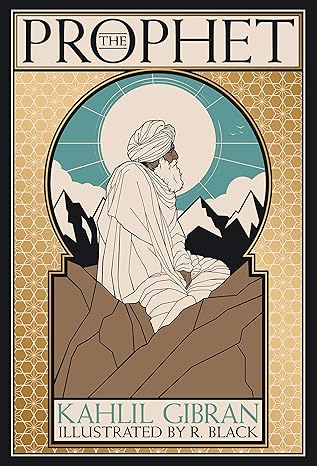
The Prophet by Kahlil Gibran

Kahlil Gibran’s The Prophet is a literary masterpiece transcending time and culture, offering profound insights into the human experience. First published in 1923, this collection of poetic essays remains an enduring classic, celebrated for its universal wisdom and lyrical beauty.

The story revolves around Almustafa, a prophet preparing to leave the fictional city of Orphalese after twelve years. Before his departure, the townspeople gather to seek his guidance on life’s most essential themes—love, marriage, children, work, freedom, pain, and death, among others. Each essay is an absolute jewel, blending poetic language with spiritual depth.

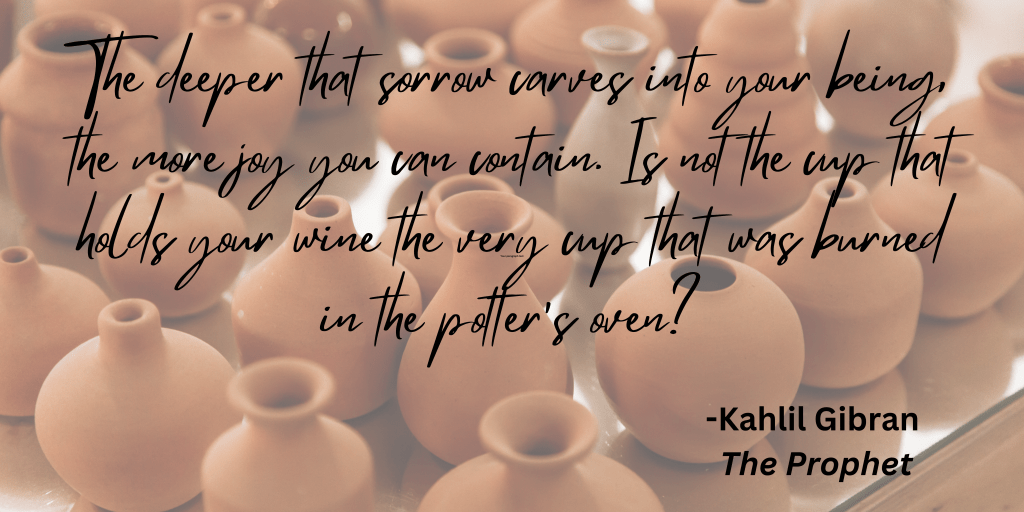
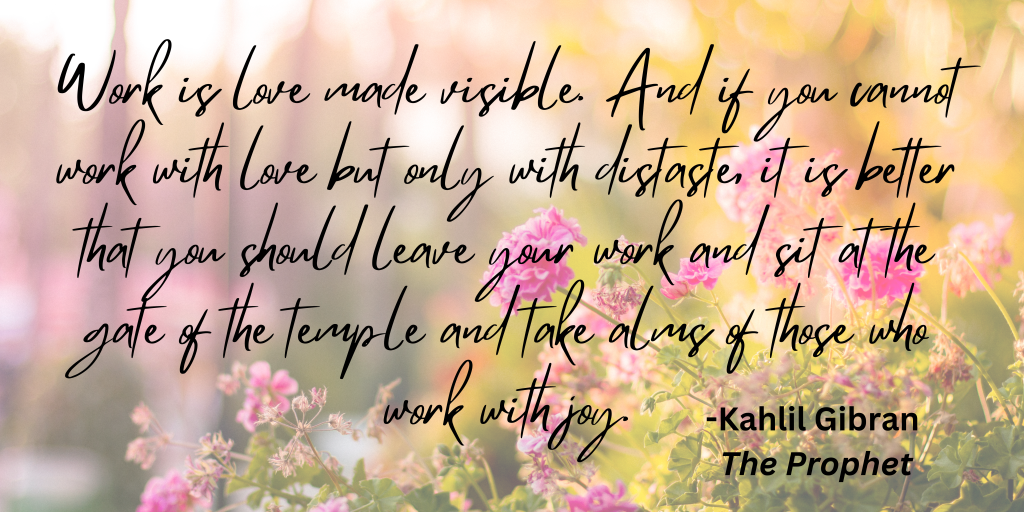
Gibran’s writing style is hypnotic and rhythmic, resembling scripture or sacred text. His use of metaphor and imagery is vivid, painting a tapestry of life that is both personal and universal. For instance, in the essay on love, Gibran describes it as a force that “gives nothing but itself and takes nothing but from itself,” urging readers to embrace its joys and pains as transformative. Similarly, his views on work as “love made visible” challenge conventional notions, elevating daily toil into an act of devotion.

What makes The Prophet timeless is its accessibility. Despite its spiritual undertones, it is not tied to any religion or ideology, making its teachings resonate across cultural and personal boundaries. It offers comfort and guidance to those seeking meaning and purpose, particularly during moments of transition or uncertainty. The Prophet is a luminous exploration of life’s deepest truths. It is a book to savor, revisit, and cherish—a companion for the soul.

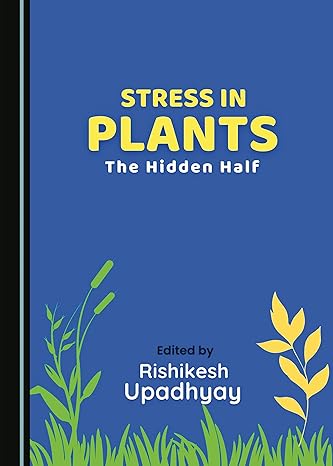
Stress in Plants: The Hidden Half Edited by Rishikesh Upadhyay

Stress in Plants: The Hidden Half is an insightful and timely book that looks at how plants adapt to environmental stressors—a crucial topic in this age of climate change. Edited by Rishikesh Upadhyay, this collection of well-researched articles unpacks the science behind plant resilience and offers strategies to support future crop production in an increasingly unpredictable world.

The book explores the wide-ranging challenges plants face, from drought and salinity to extreme heat and pests, and explains how these stresses disrupt their growth, metabolism, and development. By breaking down complex physiological, biochemical, and molecular processes, the book gives readers a clear picture of how plants respond and adapt to tough conditions. This isn’t just interesting science—it’s critical knowledge for building sustainable agricultural systems that can feed a growing global population.

One of the book’s strengths is how thorough it is. Each chapter is packed with references to relevant studies, making it an excellent resource for researchers. The inclusion of detailed diagrams helps clarify tricky concepts, which is especially helpful given the technical nature of the content. It’s clear the authors wanted to bridge the gap between theory and real-world application, and they show how understanding plant stress can lead to better agricultural practices.

That said, this is definitely not a light read. The language is highly scientific, so it’s aimed more at academics, scientists, and students in fields like plant biology, agriculture, or environmental science. If you’re a casual gardener or just curious about plants, this might feel a bit overwhelming. But for those with a strong interest or background in plant science, it’s a treasure trove of knowledge.

The book’s focus on linking plant stress to global food security is especially important. As climate change continues to challenge agriculture, the ideas and insights presented here could play a big role in shaping how we adapt. From policymakers to environmentalists, anyone working on solutions for sustainable farming will find this book incredibly valuable.

Overall, Stress in Plants: The Hidden Half is a must-read for anyone serious about understanding the science behind plant adaptation and resilience. It’s a dense, technical read but one that’s packed with essential information for tackling the agricultural challenges of the future.

Lost & Found: Book 1 of the E Apocrypha by Alex Andre

Lost & Found: Book 1 of the E Apocrypha by Alex Andre is a dystopian adventure set in a future where technology has been obliterated by a fanatical movement known as E Apocrypha. This apocalyptic reset has left society scrambling to survive amid the ruins. With an intriguing cast of characters, each grappling with their role in this fractured world, Andre crafts a compelling tale of survival, resistance, and ambition.

The novel centers around Yun-mi, a determined young “Rat” — a scavenger who has spent two years honing her skills in the hope of becoming one of the finest scavengers in her city. When her mentor is murdered, Yun-mi finds herself on the verge of being sold to slavers, and her dream is shattered. Yet she’s fierce and resilient, refusing to give up. With both wit and grit, Yun-mi embarks on a journey that not only puts her survival skills to the test but also awakens a fierce desire for revenge within her. 

Supporting Yun-mi is a diverse ensemble of characters, each with unique motivations and backgrounds. Buck, who possesses precognitive abilities and a mechanical intuition, grew up sheltered in a religious enclave, wrestling with an inherited sense of fear and obligation. Rajan, a slave bound to haul train cars under backbreaking conditions, yearns for purpose, dreaming of a life beyond servitude. Ka Ya and Wai Lam, revered as “golden dragons,” aim to restore the integration of machines into society, symbolizing the remaining hope for technological rebirth. Meanwhile, Janet, a scholarly character, searches for a hidden cache of knowledge that could change the fate of their world. Andre gives each character a distinctive voice and perspective, making it easy to follow their individual storylines.

Andre’s world-building is immersive and richly textured, painting a bleak picture of a civilization fallen into ruin. The remains of ancient cities teem with “Rats” scavenging for remnants of technology to trade, offering a thought-provoking look at what society could devolve into if technology vanished overnight. The vivid, often chilling descriptions of this post-apocalyptic landscape remind readers of our deep dependence on technology and pose unsettling questions about how humanity might respond if that lifeline were severed.

The pacing is swift, with each chapter propelling the story forward, though the multiplicity of characters and factions occasionally makes the plot challenging to follow. The motives of certain groups are not always entirely clear, but this mystery adds to the intrigue, making the reader wonder who they can trust as the power dynamics shift. The intertwined plotlines and character arcs ultimately come together, revealing a deeper connection among the protagonists and creating anticipation for future installments in the series.

Despite some narrative complexity, Lost & Found is a gripping and thought-provoking adventure that will captivate fans of dystopian fiction. 

Check out my review on Goodreads HERE!

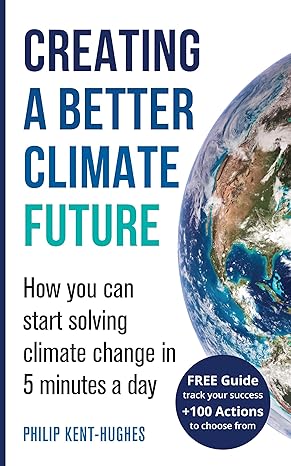
Creating a Better Climate Future: How you can start solving climate change in 5 minutes a day by Philip Kent-Hughes

Climate change is undeniably reshaping our lives, and the task of combating it can feel insurmountable. Philip Kent-Hughes’ Creating a Better Climate Future provides a compelling starting point for those willing to make the effort. This book will ignite in you the goal of establishing a personal anti-climate change movement and promoting a more sustainable lifestyle.

The book is divided into four parts. It begins with an overview of how we can solve the climate crisis, then moves through setting up your plan, implementing it, and then reviewing and updating the plan. Generally, the book seems geared toward the average citizen living in a first-world country. 

The chapters, full of engaging graphs, cover the obstacles to climate change in the food, transportation, energy, production, and consumption sectors. The author’s personal resolutions and their outcomes in several chapters demonstrate his commitment. Statistics, percentages, and other scientific information are backed up with a properly cited appendix, ensuring readers know that the author is well-informed.

While this book serves as an introduction to the concept of becoming a climate hero, it also acts as a stepping stone. The author provides additional resources on his website and gives copious other non-profit and government sites that can help you find your sustainable purpose, encouraging readers to take the next steps in their journey. 

Unfortunately, it seemed that most of the detailed rationale for addressing climate change now was hidden away in the appendix. Perhaps the author wanted the reader to develop their own action plan rather than draw from the more defined ‘shoulds’ found in the appendix. I would have liked to see that appendix information interspersed throughout the book as each topic was addressed rather than lost at the end.

As I mentioned, this book is only the beginning of developing a plan. As a case in point, the author discusses the pros and cons of renewable energy at the residential level, even sharing some of his own experiences. However, converting a home to solar is a significant undertaking that should involve the support of energy specialists. Having done this myself, I would know! 

Creating a Better Climate Future by Philip Kent-Hughes is an inspiring and practical guide for anyone looking to make a difference in the fight against climate change. By providing a clear roadmap for developing and implementing a sustainable lifestyle, the book empowers readers to take meaningful action. The resources and personal insights contained in this book make it a valuable starting point for the average individual on their way to becoming a climate hero by taking steps to protect our planet for future generations.

I received an ARC from Reedsy Discovery for this review. You can find my full review HERE.

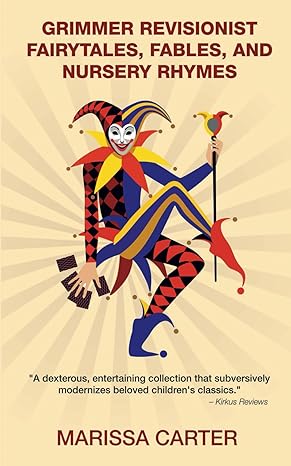
Grimmer Revisionist Fairytales, Fables and Nursery Rhymes by Marissa Carter

I picked up Grimmer Revisionist Fairytales, Fables, and Nursery Rhymes by Marissa Carter with high hopes, perhaps unfairly influenced by fond memories of The Stinky Cheese Man and Other Fairly Stupid Tales by Jon Scieszka. Unfortunately, this comparison set me up for a significant letdown. While Carter’s book aims to offer a fresh and humorous take on classic fairytales and nursery rhymes, it falls short of delivering the same level of wit and laughter.

Carter’s collection includes retellings of well-known stories such as Goldilocks, Chicken Little, The Three Little Pigs, There Was an Old Woman Who Lived in a Shoe, The Little Red Hen, Rapunzel, Snow White, The Gingerbread Man, Jack and the Beanstalk, Tom the Piper’s Son, and Jack and Jill. Despite the potential for clever reinterpretation, I found that the humor often missed the mark. Unlike Scieszka’s tales, which had me laughing out loud, Carter’s versions elicited little more than a few mild chuckles.

The modern twists on these classics, intended to be more politically correct and relevant to contemporary readers, instead highlighted how some of these stories have not aged well. For instance, the old woman who lived in a shoe is depicted in a way that would raise serious child welfare concerns today. Meanwhile, the little red hen drives off in a limousine, a twist that feels more jarring than amusing. Jack, a recurring character in several tales, consistently ends up in unfortunate situations, leaving a sense of bleakness rather than humor.

Ultimately, Grimmer Revisionist Fairytales, Fables, and Nursery Rhymes may appeal to those looking for a light, politically updated take on classic tales, but it lacks the charm and genuine humor of other similar works. If you’re hankering for a truly amusing and clever revisionist fairytale collection, you might want to revisit The Stinky Cheese Man and Other Fairly Stupid Tales instead.

Be Unstoppable: No Excuses! Volume 1 by Tariku Bogale

I picked up this book with high hopes, inspired by its intriguing title and a table of contents that promised to focus on time, courage, sacrifice, forgiveness, and hope. I expected a riveting self-help guide to unlocking my full potential. Unfortunately, the experience fell short.

This disappointment wasn’t because of the author’s life story—he’s clearly an amazing individual who’s overcome incredible challenges and achieved remarkable goals. The issue lay in the book’s tone and writing style. Instead of feeling motivated, I felt berated, even though I’ve faced and conquered significant obstacles myself.

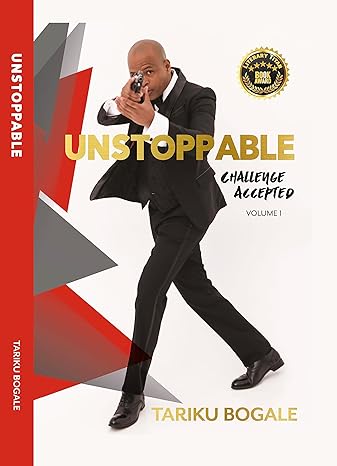
The writing also felt repetitive. The book frequently referred back to the author’s first work, Unstoppable: Challenge Accepted. The same stories were repeated across multiple chapters rather than offering unique examples for each of the five key points. Given the author’s rich life experiences, more variety would have been expected.

Ultimately, I was left confused about the purpose of Be Unstoppable. It didn’t quite fit as a success memoir or a self-help book, as it focused heavily on the author’s achievements with only sporadic advice. There were no reflective questions for the reader nor clear guidance on achieving personal goals beyond the vague encouragement to be unstoppable.

Fans of the author’s first book might find value in this follow-up. However, new readers might share my sense of letdown. While there are some nuggets of wisdom, Be Unstoppable didn’t deliver the inspiring, actionable content I was hoping for.

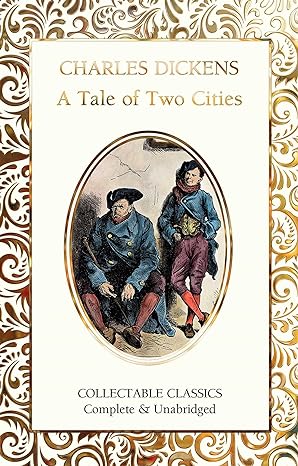
A Tale of Two Cities by Charles Dickens

I don’t believe I would have chosen this book on my own, but for over a year, I’ve been teaching the first two books of Charles Dickens’ “A Tale of Two Cities” to Chinese middle schoolers. Recently, I decided it was time to finish the book myself.

Had I been Dickens’ editor, I might have chided him on the one-dimensional portrayal of the lovely Lucie Manette, the object of all men’s desires (or at least the ones in this novel). I would have also had him fix that chapter that changed from the omniscient narrator to a first-person point-of-view. But alas, Dickens’ works can’t be rewritten to suit my standards. So be it.  

Despite these criticisms, I found great enjoyment in reading this classic. Particularly captivating was the pervasive sense of impending doom that permeated the period leading up to the French Revolution. Even characters who initially seemed secure in England found themselves swept away by the chaos of war. Among the characters, my favorites were Madame Defarge, driven by a relentless, if morally ambiguous, purpose, and Sydney Carton, who discovers redemption through self-sacrifice.

In conclusion, “A Tale of Two Cities” by Charles Dickens remains a timeless classic. The novel’s exploration of themes like sacrifice, redemption, and the tumultuous backdrop of the French Revolution ensures its enduring relevance and appeal. Through vivid storytelling and memorable characters, Dickens masterfully captures the essence of a pivotal moment in history, leaving a lasting impression on readers long after they’ve turned the final page.