A Woman’s Survival Guide to Mexican Healthcare by C.E. Flores

healthcare cover

A Woman’s Survival Guide to Mexican Healthcare is finally ready for release. The book covers the basics of the Mexican national healthcare system as it stands now, the reality of sexual assault, femicide, and abuse in Mexico, the role of the traditional curandera, and herbal remedies as alternative healing practices. Women living in all parts of Mexico (and Guatemala) candidly shared their health and wellness experiences so that other women will be better informed.

It is my hope that this book in some way empowers women who have moved to Mexico to have some measure control of their own healing. You can get it free at Amazon for the next few days.

Que est(Be well).jpg

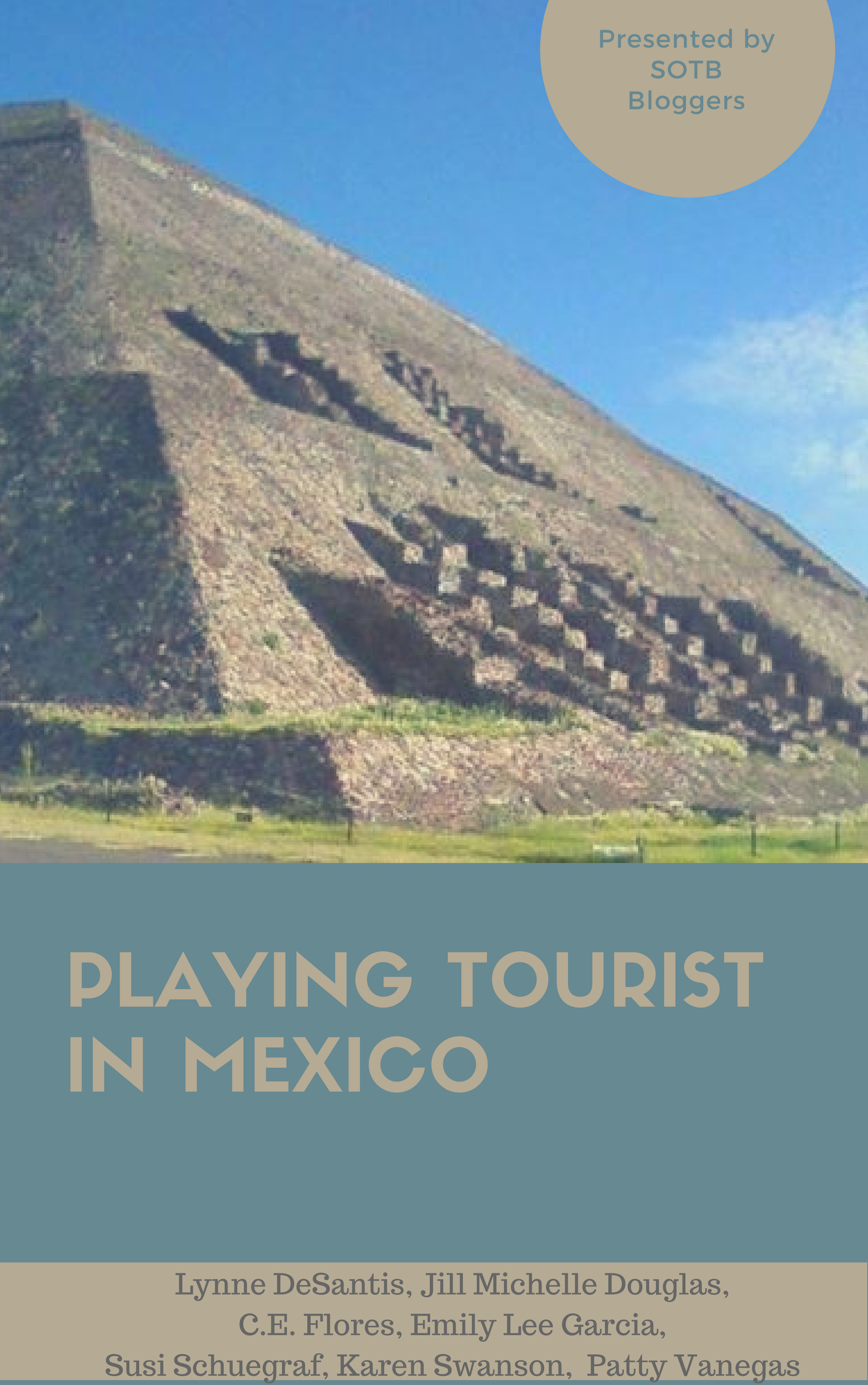
Free Travel Book In Honor of Virtual Vacation Day

Surviving Mexico and the SOTB Bloggers group are pleased to present you with your passport to your Virtual Vacation in Mexico in honor of Virtual Vacation Day!

Playing Tourist is a compilation of 45 travel adventures across Mexico, from the tiniest towns to the sprawling metropolis of Mexico City.

Get your FREE copy herhttps://survivingmexico.files.wordpress.com/2019/04/playing-tourist-in-mexico-1555546160.pdfe!

We Won’t Forget You… Mr. McGillicuddy by Ira L. White

Did you ever consider the implications of what you blog about?  Perhaps you should! Robert McGillicuddy has his hands full caring for an elderly father, pregnant daughter, teenage granddaughter and BP, his affectionate dog.  In the moments he isn’t trying to juggle all his obligations, he writes a blog with a steadily growing readership.  He is blissfully unaware that it’s been flagged by the government as subversive.  Life is about to change drastically for the McGillicuddy family.

I enjoyed reading about the ordinary lives of the characters and Robert’s blog posts in We Won’t Forget You… Mr. McGillicuddy by Ira L. White.  Robert’s father’s daily struggles were so typical of many elderly today.  His daughter’s efforts to provide for her children and the failure of the system for those who most need it also have a strong basis in reality.  It’s no wonder Robert becomes vocal about the government’s shortcomings in his blog posts.

I least liked that the book ended.  I’m hoping there is a sequel in the works.  How do Robert and his family manage?  They aren’t in the least prepared for the situation they find themselves in.  They certainly aren’t Preppers.  What will they do?  Perhaps they should come to La Yacata! 

We Won’t Forget You… Mr. McGillicuddy by Ira L. White will be an enjoyable read for most everyone because of its commentary on everyday struggles in the land of the free and the brave.  It might even inspire its readers to create their own Prepper communities in preparation for possible societal disaster in the near future.  However, those that prefer to keep their heads in the sand about current events won’t enjoy this book.

3 star

I think there needs to be a bit more development in some of the main characters.  Gil and Robert have fully fleshed out characters down to the minutest detail but Ruby and Sapphire seem very one-dimensional.  I would also like to see more of Robert’s blog posts.  Maybe some of the aside chapters, those sections that had nothing to do with the McGillicuddy family, could be presented as blog posts.  And, of course, I want to know what happens next!

This book was an OnlineBookClub.org Book of the Day.  Read about it here.

Master Your Money Ultimate Bundle

Ultimate Bundles is offering another one of their amazing collections. If you aren’t familiar with Ultimate Bundles you are in for a treat! What they do is collect ebooks, workbooks, eCourses and videos into one bundle and offer it at a deeply discounted price!

What's inside the Master Your Money Super Bundle

The Master Your Money Ultimate Bundle contains  13 eBooks, 9 printables & workbooks, 12 eCourses, and 11 videos all designed to help you improve your finances with a total value of $1206.41. BUT………you pay only $37 for the full bundle

Topics include:

  • Better Budgeting
  • Defeat Debt
  • Family Finances
  • Increasing Your Income
  • Managing Money
  • Money Mindset
  • Saving Money

Don’t wait too long! This bundle is only available from Wednesday, March 27  to Monday, April 1, 2019.

Master Your Money Super Bundle 2019 - Learn More

Immediacy: Our Ways of Coping in Everyday Life by Fred Emil Katz

“They could not believe it. They could not believe they would be stripped of their citizenship until it happened. They could not believe their houses of worship would be destroyed unti

How do ordinary men and women find themselves complacently or even passionately supporting mass murder?  How can people transcend their immediate personal suffering yet succumb years later?  How can society prevent such atrocities such as the Holocaust or the Spanish Inquisition from reoccurring? What causes people to willingly sacrifice their lives for a national or religious rationale? How can these things be measured empirically and studied? Author Fred Emil Katz discusses these questions and more in Immediacy: Our Ways of Coping in Everyday Life.

The topic presented is complex.  Immediacy: Our Ways of Coping in Everyday Life is a series of essays and articles written by the author during his distinguished career as a sociologist that have been compiled and updated. The book has 5 principal sections, each with an introduction that explains how these chapters relate to the idea of immediacy. I found these introductory chapters to be extremely helpful in my understanding of the material.

It may seem to some that society as a whole has evolved beyond the incidents discussed in this book, but has it?  (List of genocides by death toll) A call for national unity in an effort to make the country great again which becomes the justification for national purging of undesired and unassimilated residents, never mind the cost to human lives, sounds eerily familiar.  Although Katz has more questions than answers for us, at least he is presenting this topic for our consideration and if we were wise, we would ponder them carefully.

I especially found the chapter on societal denial to be eye-opening.  Sometimes, humanity turns a blind eye.  Sometimes we just can’t see.

“They could not believe it. They could not believe they would be stripped of their citizenship until it happened. They could not believe their houses of worship would be destroyed unti

The examples the author uses to illustrate each aspect of immediacy are well-known.  He uses some unorthodox punctuation, dashes rather than commas or parentheses, but it did not detract from the overall readability of the text.

four star

While I believe that the message is one that everyone should be made aware of, I’m not sure that everyone would benefit from reading this book.  Its tone was scholarly even when discussing the fate of the author’s own parents and elder brother.  Sociology as an applied science is still in its infancy.  We just may not be able to think of our immediacies as something we can change.  

“They could not believe it. They could not believe they would be stripped of their citizenship until it happened. They could not believe their houses of worship would be destroyed unti

This book was an OnlineBookClub.org Book of the Day.

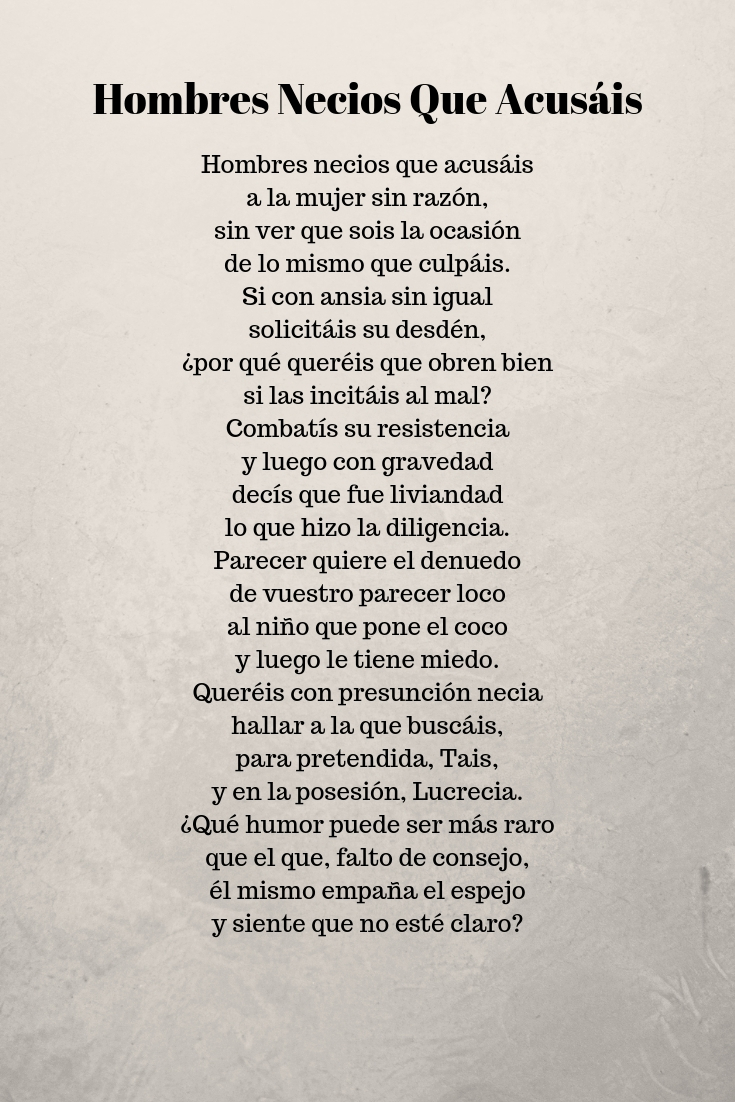
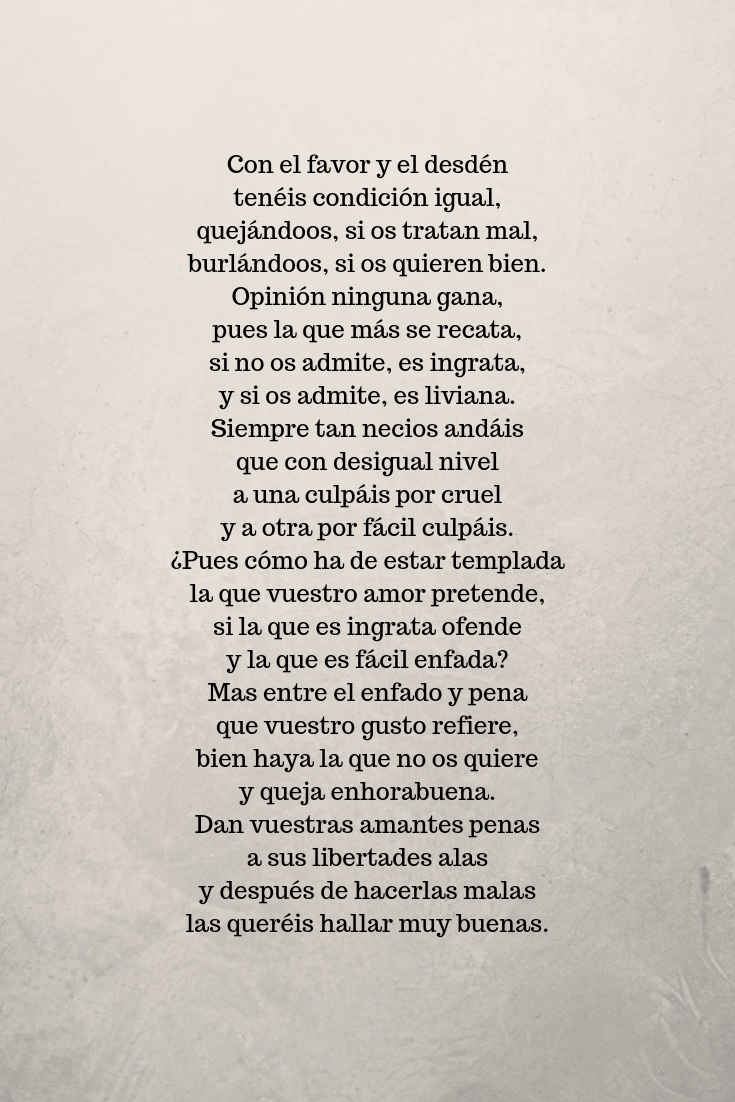
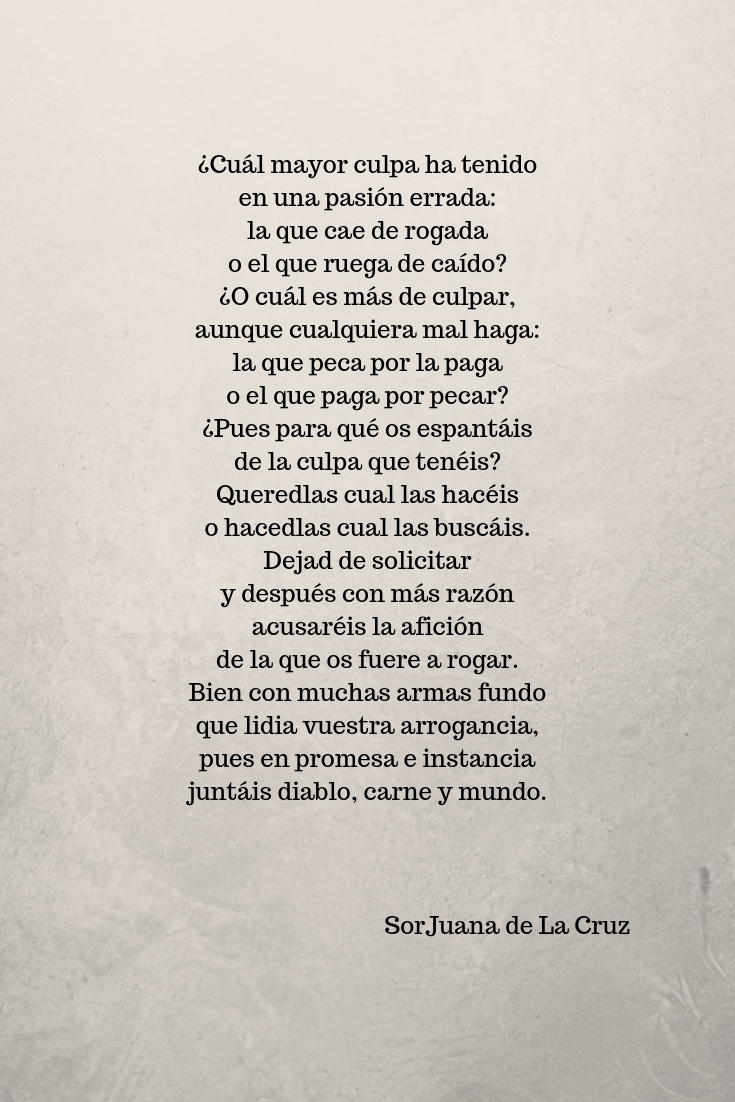
Sor Juana de La Cruz

In honor of Poetry Day, I’d like to share a little information about Mexican poet Sor Juana de la Cruz.

Juana InĂ©s de Asbaje y RamĂ­rez de Santillana was born on November 12, 1648 near Mexico City in San Miguel Nepantla. Her mother,  Isabel RamĂ­rez de Santillana de Cantillana, belonged to the Criolla section of the Mexican population. Her father was a Spanish Captain by the name of Pedro Manuel de Asbaje y Machuca.

She was raised on her grandfather’s hacienda in Amecameca. She was somewhat of a prodigy if the accounts are to be believed. Educating females was strictly forbidden however somehow Juana was able to write in Latin by age three, do account by age five and composed a poem on the Eucharist at age eight.

Her astonishing accomplishments didn’t stop there. As a teenager, she was versed in Greek philosophy, teaching Latin to younger children and fluent enough in Nahuatl, which she learned fom the slaves on the hacienda, to write poems in that language.

In her teens unable to attend the university because of her gender, she became a lady-in-waiting at the viceroy’s court. The Vicereine Leonor Carreto became her patroness. She declined several offers of marriage and instead entered the St. Joseph Monastery in 1667 as a postulant. She took her vows in 1669 at a different monastery, el Convento de San JerĂłnimo, because she desired “Vivir sola… no tener ocupaciĂłn alguna obligatoria que embarazase la libertad de mi estudio, ni rumor de comunidad que impidiese el sosegado silencio de mis libros”(to have no fixed occupation which might curtail my freedom to study).

As penance for her traitorous words and actions as a radical feminist who believed in educational opportunities for women, she was forced to do penance which included giving up her books, musical and scientific instruments. Sor Juana contracted the plague during her ministrations to other nuns and died on April 17, 1695.

You have to admit, some of her poems are pretty intense. You can find several translations of Sonnet #145 here. You can also find an English translation of Hombre Necios (Foolish Men) here. I don’t think I’m up to the task myself.

An American Journey: Culiacan to Redwood City: A Man and His History By Salomon Quintero, ESQ

An American Journey: Culiacan to Redwood City is the personal memoir of Salomon Quintero. Mr. Quintero led a fascinating life. He met Cesar Chavez, participated in protests, spent some time in jail because of his participation, had several simultaneous romantic relationships before finding the love of his life, had a successful law career, and finally retired to find inner peace.

No less fascinating were the lives of his parents and grandparents. Salomon’s great-grandfather was born in Mexico when Benito Juarez was president. His grandfather died during the Spanish influenza epidemic in 1918, leaving a young pregnant wife behind. His father, Antonio, played football with Kenny Washington and went to Mexico to live for a while in the 1940s to avoid the draft where he met and married Beatriz from Culiacan.

After a failed business venture, Antonio decided to head back to the U.S. to look for work. He was detained at the border and forced to enlist. Beatriz smuggled her infant son across the border under her coat and registered him several months later in the U.S. Subsequent children were born in the U.S. and had a fairly typical American upbringing.

Mr. Quintero shares the trauma his father endured as a soldier stationed in the Philippines. He also chronicles the ongoing family house expansion over the years. He mentions fascinating characters that were part of his life growing up but doesn’t follow up on their lives or talk about how their presence otherwise influenced his childhood.

I was slightly disappointed with the erratic flow of the book. Chapters seem to be organized around different themes rather than chronologically, which made it difficult to keep track of how the story pieces fit together and who the characters were at any given point in the story.

Then there were odd tidbits that I would think a little research would have cleared up. For instance, Mr. Quintero mentions that Claire, a Jewish girl from New York, might have been married to his father. Shouldn’t there be records on that? He alludes to the fact that his newly married parents experienced hardships that remained family secrets as long as his mother lived, but doesn’t specify what those hardships might have been. In for a penny, in for a pound Mr. Quintero.

There were historical references and certain terms that could have been clarified for readers.

Mr. Quintero mentions that the cost of coyotes is exorbitant but doesn’t explain that he is referring to human smugglers, not the animal. This term and process could have been expanded on when he talks about how his mother smuggled her son across the border. Or when he talked about his family moving from the Cananea Copper Mines to take employment at the Copper Queen Mine, probably with the intervention of a labor-brokerage coyote.

Mr. Quintero tells us briefly that his grandfather worked at the Cananea Copper Mines but doesn’t include the information that during that time period a violently oppressed labor strike at the mines was one of the factors leading the Mexican Revolution.  

That’s not to say that I didn’t enjoy reading An American Journey: Culiacan to Redwood City. I did. In fact, I enjoyed reading it so much, that I wanted more, more clarification, more details, more organization, more historical references. I felt at times I was getting the cliff notes version of Mr. Quintero’s full and rich family history. I expect that since some of Mr. Quintero’s family is still alive, there may have been things he preferred not to dredge up. Be that as it may, I still found an engaging read.

This book was reviewed at Reedsy Discovery.

2019 A to Z Theme Reveal

It’s that time again! April means the A to Z Challenge is upon us. I have completed the A to Z challenge successfully at Surviving Mexico Adventures and Disasters in previous years (See ) and this year I plan on stretching my wings here at Content Creative.

So….drumroll, please! My 2019 A to Z Challenge theme is Blog to Book Project.

What is a Blog to Book Project?

I’m so glad you asked. The idea behind the Blog to Book Project is to turn your blog posts into a book. All the juicy information you’ve been blogging can and should be reworked into a shelf-worthy product.

Over the course of the next few weeks, I am going to highlight different aspects of taking your blog posts and crafting them into publishable prose. Although my focus will be on the preparation of a non-fiction book, you can certainly use the same process to generate a volume of poetry, a work of fiction, or even a graphic novel.

Since this is an A to Z Challenge, I will be focusing on one aspect for each letter for 26 posts in all. And since it will be in order, it might not be in the order you would actually complete that step. Never fear, my plan is to compile these posts (and the other stuff that didn’t make the letter cut) into a Blog to Book Project BOOK shortly.

The A to Z Challenge will pretty much take all of April, but in May, you can expect to see more book reviews, author interviews and maybe even a giveaway or two.

The Refuge by Heidi Martin

the refuge

Anna is just not able to allow herself to grieve over her baby daughter’s accidental death. Every day, she runs miles along the beach in Boston and spends hours at work at a prestigious law firm.  As long as she stays busy, she can avoid the overwhelming emotions. Until the day that her husband asks for a divorce and her partner requests that she take a leave of absence. Her life in shambles, she packs her bags and leaves town, destination unknown.  Somewhere near Charlestown fate steps in. Anna learns some important life lessons from her unexpected adventure.

If you’ve been following my blog recently, you’ll already know that I’m also on a personal quest of sorts, just as unintentional as Anna’s.  So of course, I found The Refuge by Heidi Martin quite appropriate for my own situation and as a result, enjoyed it immensely.   

I loved that Anna was fallible.  In situation after situation, I kept wondering if she was going to mess her life up yet again. Her reactions were human if short-sighted at times.  I thought her spiritual quest quite a refreshing aspect of the story.  It wasn’t a Find Jesus and Be Saved type of book at all, thank God.  Anna explored Taoism, meditation, the concept of the divine being or source being a woman, and the use of personalized prayer beads.  Even La Virgen de Guadalupe found a place within her search for meaning.

Although there was a happy-ever-after fairytale quality to some sections, things didn’t always work out the way you would have wished, adding realism to the story.  There were a few time lapses in the book.  Some events were merely referred to by the characters in conversation, not actually presented.  I would have liked to be a fly on the wall for ALL of Anna’s adventures.  However, as the book was already 394 pages, I’m sure doing so would have made it humongous!

The characters were well-defined and believable, down to the antics of the 8-year-old neighbor girl. The details were extraordinarily precise.  For example, they were not just drinking coffee, but Viennese coffee. Really, The Refuge by Heidi Martin was a delightful read!

I hated to see it end, as all good things must do.  I found the twist in the epilogue a pleasant surprise. You’ll have to read it yourself to see what I mean.  I have to say that The Refuge by Heidi Martin is more of a chick-flick feel-good type of book.  Most men probably won’t get all that finding yourself and establishing a room of your own bit. Their loss, I say. I certainly enjoyed it!

four star

Read more about the book here.  This book was an OnlineBookClub.org Book of the Day.