Blog to Book Project — Back Matter

Similar to front matter, back matter includes the things that are found at the end of the book. The sections in the back matter are often supplementary to the main book. Which sections are found there often depends on the type of the book and what, if any, additional information a reader might need. 

You might these sections in the following order:

Epilogue or Conclusion

An epilogue is found mostly in fiction books. This is a short section that concludes the end of the story. It might take immediately after the events of the story or there could be a leap of years or decades. It can also be used to segue into another series of events that are covered in a sequel to the book. 

This section could be called a conclusion. A conclusion is an epilogue for mostly non-fiction books. It wraps up any loose ends the book doesn’t address. It might talk about what happened to the people mentioned in the book later or if the events in the book predated or caused other historically significant occurrences. 

Afterword or Postscript

An afterword can be a discussion on how the book came to be written It might talk about a specific event that triggered the author to begin writing or the inspiration behind the topic, or even how the information was researched. 

If the book has had previous editions, the afterword might be a commentary on why the book is being reissued. There might also be commentary about the cultural or historical impact this book made, especially if this is a public domain book. 

A postscript is an informal afterword, often directly addressing the reader. Similar to a P.S. in a letter, a postscript will give just a little bit of information that wasn’t included in the main body of the text. This term comes from the Latin post scriptum which means “written after.” This section might also be called an Author’s Note. 

Acknowledgements or List of Contributors

If the acknowledgments are not at the beginning of a book, they may be found at the end in the back matter. Here’s where the author can sincerely thank anyone who helped, inspired, or financially assisted the writing and publishing of the book. 

If anyone contributed to the book, this is where their information would be listed in a section entitled List of Contributors. This section is more than a simple thank you. Professional information about the contributor should be included, such as books or professional articles authored as well as educational or professional experience. 

Permissions or Credits

If permission was needed to include, song lyrics, poems, quotations or even entire chapters, this is the section where an author gives credit where credit is due. 

Discussion or Reading Group Guide

If the book was designed for use in high school or college courses, the author may choose to include a section that lists questions about the book for group discussion. This might include questions about the theme, historical significance, characters or symbology.

Suggested Reading

If the author believes that certain articles or texts should be read in their entirety by the reader, then he or she might include a list of suggested reading. The order may be alphabetical or thematic. It should list at least the full title and author of the text being recommended. It may list a link to the article or a way to purchase the book. 

Appendix or Addendum

Additional information about the book might be contained in the appendix, also known as addendum. Updates to information, corrections to earlier material and references for further reading could be found here.  

Notes or End Notes

If there were references in the book marked by a superscript or number in parenthesis, the additional information is found in the end notes section. These are arranged by chapter in the order they appear.

Glossary

The glossary is a collection of terms from the book. It is sort of like a small dictionary designed specifically for the book that it is in. The words are alphabetized and defined. This section is sometimes called an idioticon, vocabulary or clavis. 

Bibliography

A bibliography can also be called works cited, resources, sources or references. This is a list of books, articles, web sites or other sources that have been consulted in the creation of the book. An annotated bibliography gives publishing information, a text description, and how it is relevant to the book. A bibliography can be alphabetized or organized by theme, topic, or chapter. 

Index

The index is also an alphabetized list of terms, similar to the glossary. However, instead of giving a definition, the location of the words in the main text is indicated. This is especially useful in reference books since it provides a single spot that lists every place the specific term is used in the text.

About the Author or Biographical Note

Written in the third person, About the Author highlights information about the writer that readers would find interesting. It is usually just a paragraph or two. It can be serious and establish the credibility of the author on the book’s topic or it can be whimsical and make a personal connection to the reader. 

If the book is a reissued version of a public domain book, this section could be entitled Biographical Note. Here there would be information about the life and work of the original author, not the person republishing it.

Other Books by the Author 

In this section, books by the same author under the same name and those written under pen names can be mentioned. This section could be done in list format or could include a synopsis of each book. 

Colophon

The colophon appears at the very end of the book. It gives information about the printing and publishing process. It might mention the type of paper, ink or binding used to create the book. The section Note on the Type could be included in this section or separately. It gives information about the font/typeface used in the book, possibly mentioning its characteristics and history.  

Assignment: Determine which back matter sections your Blog to Book project needs.

The Tea Girl of Hummingbird Lane by Lisa See

An incredible amount of research went to the writing of The Tea Girl of Hummingbird Lane by Lisa See. The intricate description of the Akha people of China, their traditional beliefs, clothing and the tea harvest made this novel come alive.   

The story revolves around the traditional saying “No coincidence, no story.” Li-yen’s life in the remote mountain village in the Yunnan Province of China is changed by the arrival of a stranger and his son. Three generations of women are forever changed by the coincidences that create the story told in The Tea Girl of Hummingbird Lane.

Without giving away the ending, in my opinion, the book capitalizes on the coincidences that become a little too convenient for a happily every after tale. Despite this, it’s a riveting story, full of sorrow, triumphs, loss and love.

You are sure to enjoy The Tea Girl of Hummingbird Lane by Lisa See !

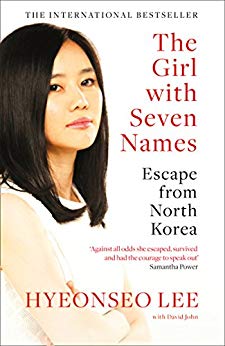
The Girl with Seven Names: A North Korean Defector’s Story by Hyeonseo Lee

Growing up, Hyeonseo and her family could look across the river into China and could not even imagine what life was like on the other side. It might as well have been another planet, so different were the two countries. 

What began as a simple act of teenage defiance set her feet on a journey she never expected to take through China, Laos and finally as a refugee to South Korea. Each leg of her travels forced Hyeonseo to assume a new identity. The name she has chosen for herself in the end, Hyeon (sunshine) and seo (good fortune) is the woman she discovered she was after facing such insurmountable odds.

Hyeonseo Lee presented a TED talk about her experience which you can find here. She also spoke at the United Nations Security Council meeting in New York in 2014 about human rights violations that happen as a matter of course in North Korea. She did an interview with Time in 2015 entitled Freedom, Sanctions and North Korean Ice Cream as well. 

I found The Girl with Seven Names a little difficult to read, not that it was complex, but there seemed to be an emotional reserve in the writing that made it challenging to connect with the author on a personal level. However, given all that this poor girl went through, it is only natural that the retelling is repressed emotionally. How else could she have gotten through it?

The author’s descriptions about the insidious government regulation that rewarded informing on your neighbors, coworkers and family members was detailed. The stories of other refugees she met along the way was eye-opening. I had never before considered North Korea in that light and can never return to ignorance again. The Girl with Seven Names was a powerful story that everyone should read in order to understand the complexity of North Korea just a little bit.

A Room of One’s Own by Virginia Woolf

Over the years, I’ve heard much of A Room of One’s Own by Virginia Woolf. I agreed with oft-quoted passages. I thought the idea of Shakespeare’s literary sister Judith intriguing. But I never took the time to read it. I was a bit put off by the very feminists quoting dear ol’ Virginia. I didn’t consider myself THAT radical.

Now that I’ve entered middle-age, I decided that I was that radical after all and reading it proved that I was indeed without a doubt.

Ms. Woolf wrote this extended essay in 1929 and the thoughts contained herein were undoubtedly shocking at the time. She maintained that women didn’t have the means nor the time to be able to pursue writing of any kind with a few notable anomalies. She mentions the Bronte sisters, Dorothy Osborne, Jane Austen, George Eliot and Lady Winchilsea as exceptions having both the education and means to become writers. 

She also proposed that the best writers were androngynous, although I wasn’t entirely convinced by her argument on that topic. I believe that a talented female writer is better able to write about experiences unique to women than an equally talented androngynous male writer. 

So how much of what Ms. Woolf wrote is true today? Certainly we’ve progressed to the point where women have the time and income to devote themselves to writing books, haven’t we?

It seems there are still some gender bias when it comes to publishing. (See Bias, She Wrote:The Gender Balance of The New York Times Best Seller list) Books about women win fewer literary awards. (See BOOKS ABOUT WOMEN DON’T WIN BIG AWARDS: SOME DATA) The majority of literature studied in high school was not written by women. (See Here’s The Problem with White-Male-Centric School Reading Lists

So even though there are more women writers, I can’t say that all things are equal yet.  Would you?

Whether you consider yourself radical or not-so-radical, A Room of One’s Own by Virginia Woolf is well-worth a read.

How many of the women writers on this list have you read? (See 50 Great Women Writers) I’ve read 21. 

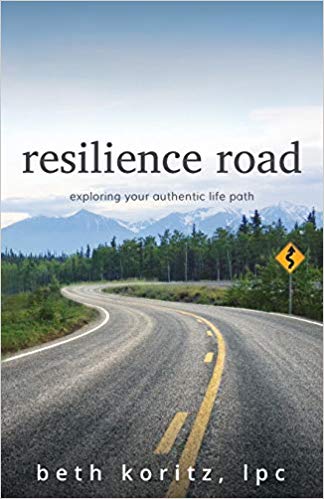
Resilience Road: Exploring Your Authentic Life Path by Beth Koritz

I had high expectations of positive motivation when I began Resilience Road: Exploring Your Authentic Life Path by Beth Koritz. Unfortunately, there were some issues that I couldn’t get past initially, although I did find some redeeming value towards the end of the book.

First, I felt like the author began with a sermon full of trite clichés. I hadn’t made a connection with her as a person yet, so I was unwilling to hear her advice without seeing how she applied these bits of wisdom in her own life. 

From the advice section, we jump right into a major turning point in her life. The author describes being paralyzed from Guillain-Barré Syndrome as a wake-up call. She talks about that experience as well as others beginning from when she was a child of seven. She really did meet adversity head-on!

Mid-way through her life story, there is another sermon meant to be inspiring. Honestly, I would have preferred if these segments were all grouped together after the personal narrative comes to a conclusion. The jumping back and forth between the viewpoint of a counselor and a woman in need of counseling was abrupt. I also didn’t feel like the clients she referenced were helpful in self-analysis, if that was the intent. The points the author was trying to make would have been more powerful when drawn from her own life experience rather than her clients’.

These issues aside, I found that I developed a deep admiration for the author by the end of the book. She had overcome many obstacles to find her place and tribe. Having traveled with her through her memories, I felt more open at the conclusion of the book for the recommendations she made to better my own life. The list of Tools To Create Your Resilience was concise and practical. Everything recommended in this section, from focusing on what you can do and control to the idea that asking for help is a sign of strength not weakness was spot on. 

In the end, I felt that the book was certainly worth the time I invested in reading it and rate it a 4 out of 5 stars.  Get your copy from Amazon here.

I received an advanced review copy from Reedsy Discovery, You can read my review here.

Life Coaching: The Key to Your Future by Alexander R. Davis

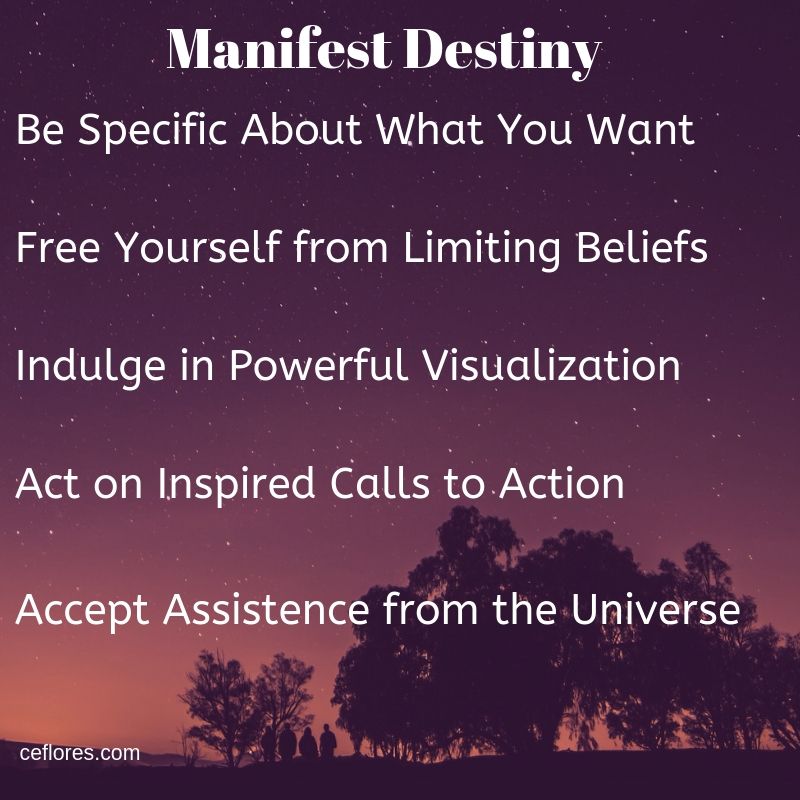
There were a lot of good tidbits in Life Coaching: The Key to Your Future by Alexander R. Davis. The author provided his own enthusiasm and easy to follow steps to help the reader manifest the things that are needed, whether it is financial or otherwise. 

Despite all the inspirational information, there were a few issues I had with this book. First, I believe there was a section missing. Each of the steps to manifesting the Law of Attraction had its own section except Inspired Action, which I believe to be the most important step. If someone does not take action, no matter how much he or she wants something, it will never happen. I think that the author meant to include a section on this since it is a step listed in the full example, but someone it wasn’t included in the book. 

Update: After an email conversation with the author, this section is now in the book.

Then were some word choice errors that must not have been detected by the spell checker like barrow for borrow, marry for merry as well as a few capitalization mistakes. Plus there were a few sections that were redundant, especially in a book this size. Another proofreading pass through seems to be in order. 

Update: These errors and a few others have been fixed and the book updated.

Now, here are the parts I most enjoyed about the book. There was quite a bit of emphasis on overcoming self-imposed limitations, the beliefs that are holding you back. Not only was the information clear and concise, the author provided several coach/student example sessions so the reader could see how this process played out.  

Another aspect I really appreciated about this book was that although the author referred to successfully obtaining your heart’s desire as manifestation, there was nothing magic about the process. Goal setting, actionable steps, and hard work are the keys to manifestation. Anyone who says anything differently is just blowing smoke.

So there you have it! Life Coaching: The Key to Your Future by Alexander R. Davis is a great little book that provides a short and understandable introduction to the Law of Attraction through life coaching. 

I received an ARC from Reedsy Discovery. You can read my review here.

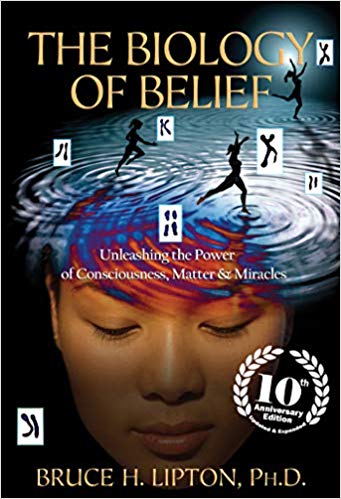
The Biology of Belief: Unleashing the Power of Consciousness, Matter, and Miracles by Bruce H. Lipton, Ph.D.

When Bruce Lipton resigned somewhat spectacularly from his tenured position at the University of Wisconsin School of Medicine and accepted a position at an offshore medical college in the Carribbean, he had no idea how transformative it would be. Teaching students that didn’t fit the typical medical student profile and long afternoons gazing at the sparkling blue sea helped Dr. Lipton make new connections and ground-breaking discoveries in the lifecycle of cells. 

This book introduced a new term to me, epigenetics. Briefly, this is the idea that cells are not constrained by their makeup but are constantly evolving to best survive their environments. Therefore, the environment plays a huge component on gene expression. 

As a stem cell researcher, Dr. Lipton shared scientific proof of the concept of epigenetics. Some of these descriptions are quite complex. However, Dr. Lipton’s revelations didn’t stop there. He proposed that the character of our lives is determined not by our genes but by our responses to environmental signals and that furthermore, this could be changed by changing our beliefs. 

If we were honest with ourselves, we’d admit that many of the beliefs we hold most dear are self-limiting and even false. Imagine what we could do if we freed ourselves from them! 

I can’t do justice to all the evidence Dr. Lipton describes in his book. It is amazing how the fundamental basis of all life, a single cell, can teach us so much about ourselves. Pick up your copy of The Biology of Belief and risk being awe-struck!

Celebrating Solar Power

To celebrate the installation of the final solar power panel at our central Mexican homestead, the book that explains how our quest for electricity all started is FREE for the next few days!

Learn about the unbelievable intricacies of Mexican politics in La Yacata Revolution: How NOT to Buy a Piece of Heaven in Mexico.

World Water Week

World Water Week begins on August 25 and August is National Water Quality Month. Looking at just one country’s problems might help bring the overwhelming world wide water crisis down to manageable numbers.  Then again, maybe not.

Water is a dwindling resource in Mexico. More than 12 million people in Mexico do not have access to potable water. Approxiametely 21% of Mexico was suffering from severe drought in May.

You can Lookat how just one family has adapted to water shortages in Mexico in A to Z Reasons Why La Yacata is the Place to Be in Any Disaster: A Prepper’s Guide to Mexico which is FREE for the next few days. So pick up your copy today and consider how you can improve your own water conservation efforts!