To celebrate the installation of the final solar power panel at our central Mexican homestead, the book that explains how our quest for electricity all started is FREE for the next few days!
World Water Week begins on August 25 and August is National Water Quality Month. Looking at just one country’s problems might help bring the overwhelming world wide water crisis down to manageable numbers. Then again, maybe not.
Water is a dwindling resource in Mexico. More than 12 million people in Mexico do not have access to potable water. Approxiametely 21% of Mexico was suffering from severe drought in May.
Negotiating the healthcare system in Mexico is challenging to say the least. You can read about one woman’s current struggle to get adequate healthcare for cancer treatment in Mexico, you can go here.
In honor of Happiness Happens Month, Surviving Voluntary Exile: How to overcome common obstacles to making a successful life transition ebook is FREE for the next few days. If you are an expat having difficulty making the transition to your new culture, then this is the book for you!
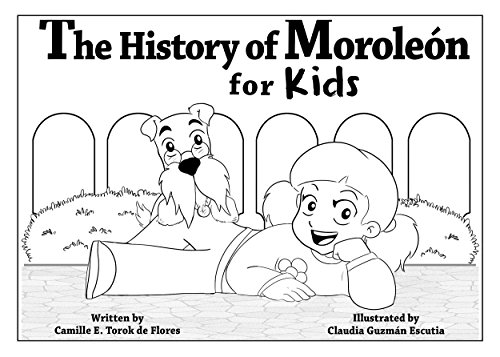
In honor of National Coloring Book Day, August 2, The History of Moroleon for Kids is FREE at Amazon for the next few days! Learn about Moroleon, Guanajuato, Mexico through a lively cartoon conversation. Pick up your FREE copy today!
Have you made goals that you haven’t met yet? Do you have a vague dream that you want to accomplish someday? Are there things you want to try but are afraid of failure? It’s time to buckle down with The Thinking Game: A Winning Strategy for Achieving Your Goals by Kara Lane and catch those rainbows!
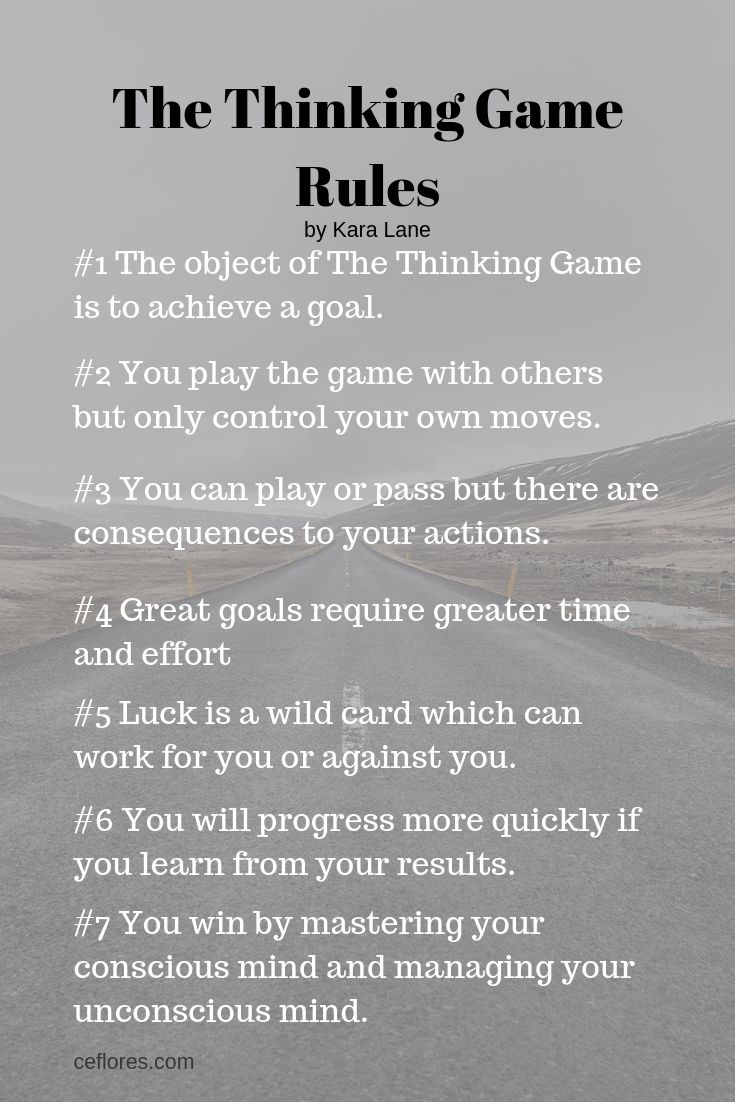
Kara Lane wrote The Thinking Game with the objective of helping you (that’s right YOU) achieve a goal, any goal. However, there are some rules to the game that you need to learn first.
Once you’ve understood the rules, there are things you can do to prepare yourself to meet your goal. You wouldn’t just wake up one morning and decide to run the Boston Marathon now would you? Kara Lane provides some exercises to help you manage your unconscious mind, develop a thinking mindset and strengthen your thinking skills.
The Thinking Game also gives a brief summary of several critical thinking techniques for you to choose from. When making a goal, a decision or pondering the future, you could make a pro/con list, comparisons table or a checklist. You could also use the +1 Solutions, 5 Whys or the Six Thinking Hats methods of analysis.
A goal can never be realized without a little creativity, so Kara provides several creative thinking techniques for you to utilize as well. Meditation, visualization, affirmations, brainstorming, mind mapping, and brain mining are all proven methods to aid you in thinking outside the box.
My favorite chapter was Chapter 6: Questions to Frequently Ask to Improve Your Thinking. We all have aspects of our life that we want to improve. Asking questions like the ones suggested for success, relationships, money, personal satisfaction on a regular basis will help you (and me) stay focused on those long-term goals.
The good stuff doesn’t stop there. Part 3 is all about applying conscious thinking to achieve your goals. In order to get from here to there, you need a plan. This section helps you narrow your goal into something you can reasonably obtain, or if your dream still seems unobtainable, how to make smaller goals that take you in the direction of your dreams. And if you fail, well, what did you learn to make the next plan better.
The Thinking Game is a must read for EVERYONE (seriously). The title belies the seriousness of the book. Yes, thinking can be a game but it’s so much more than that.
I enjoyed the challenges the author included to help the reader move out of his or her comfort zone. Our lives are not meant to be wasted with mindless tasks and passive entertainment. I admit to having a fondness for this type of self-improvement book. In fact, I have a whole shelf of books designed to bettering your situation. This is a book that I gladly added to that shelf.
After all, we all want something. And reviewing the advice and activities in The Thinking Game, you (and I) will be able to move closer to obtaining those goals.
I received an advance review copy from Reedsy Discovery. You can read my review here.
Sir Bennet finds himself in a bit of a quandary. His elder brother, Aldric, the Baron of Windsor, has made a mess of the family finances and it’s up to Sir Bennet to make things right. An arranged marriage with wealthy Lady Sabine might just solve the problem. Not knowing that she is on her way to meet her potential husband, Lady Sabine believes the reason for the trip to Maidstone Castle is to view the renowned relic collection housed there with the hopes of acquiring a few of the ancient pieces. Little does she realize that the birthmark she hides beneath her glove will be proof enough to be labeled a witch, endangering her own life and the lives of all who surround her unless she is able to prove her innocence.
This novel is written with teens and young adults in mind. The story is light and romantic. Lady Sabine are Sir Bennet are likable characters and their interactions during their courtship are entertaining. The discussion questions that follow the story are designed to help teen girls reflect on their own lives. This book would make a great addition to units on life in the 1300s, superstitions in medieval Europe and the belief systems of the time.
Although there is no Maidstone Castle in Hampton, where this story takes place, there is a castle near Maidstone which dates to the medieval ages. The setting adds to the romantic nature of the story.
Set in the middle ages, the accusation of being a witch was a serious matter. A person could be accused of witchcraft for a number of reasons but one of the most common was having a witch’s mark in the form of moles, scars, or birthmarks. Once accused, innocence could be proven through certain physical trials.
Three trials are mentioned in the story, although there were many more. Trial by ordeal, where an accused witch was subjected to some sort of physical punishment. Rapid healing of the wounds inflicted during the ordeal meant the accused was innocent. However, if the wound became infected, he or she was guilty. Trial by dunking was another common test. The accused would be thrown into a body of water from a boat. If the accused sank, innocence was the verdict and he or she would be pulled up into the boat. If the accused floated, it meant he or she had renounced baptism by entering the Devil’s service. The idea of water being so pure an element that it rejects the guilty originates with Pliney the Elder in his Naturalis Historia, BK VII (AD 70) which states that witches will never drown.
The third trial mentioned in the book was The Lord’s Prayer Test. The accused is asked to recite the Lord’s Prayer. If he or she is able to recite the prayer without misspeaking, then the accused would be declared innocent since it was thought that the Devil would not allow one of his servants to do so.
Get your copy here. Read other reviews of the book here.
Disclosure of Material Connection: I received this book free from the publisher through the BookLook Bloggers book review bloggers program. I was not required to write a positive review. The opinions I have expressed are my own. I am disclosing this in accordance with the Federal Trade Commission’s 16 CFR, Part 255 “Guides Concerning the Use of Endorsements and Testimonials in Advertising.”
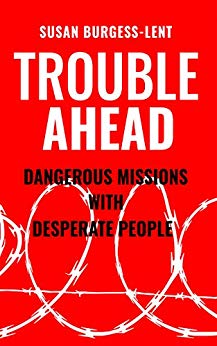
Susan Burgess-Lent shared candid diary excerpts from her missions to Africa in Trouble Ahead: Dangerous Missions with Desperate People. She chronicled her time in Rwanda, Sudan, Kenya, and Darfur when she was moved to fight on behalf of the women and children she saw struggling in those areas from 1998 to 2011.
The large charity organizations already in place, designed to provide nourishment and support, were clogged by endless layers of bureaucracy and corruption. The author shares her experiences on fifteen different missions to Africa.
Her adaptatation from middle-class America to third-world (or more politically correct “developing”) nations was hard-learned. The size of the cockroaches alone would have had me scurrying for cover. The descriptions of the environment and people brought her adventures to life for me.
I enjoyed reading how the author made a sort of peace with the endless red-tape and bribery necessary to complete government transactions. She also found a way to deal with unreliable information, roads and transportation that were daily hurdles to jump.
She found inspiration in the unbroken spirits of the women who lived in the refugee camps. Despite the need to travel miles to bring clean water, enduring violence and rape by the men charged to protect them, the malnutrition, heat and flies, these women still found joy in the everyday.
In some areas, she set up a weaving cooperative. She picked up the baskets on her rounds and shipped them out to be sold internationally. In another area, she set up an educational center for women. There they were taught the basics of reading, writing and math which had been denied them in the war-torn country.
The hope she brought to these women was created by empowerment. Learning business skills, the women went on to manage their own micro-businesses. Not even the leveling of the marketplace by government officials deterred them.
While I was reading Susan’s accounts, I had some difficulty keeping track of the multitude of organizations that she dealt with. I can’t imagine how she managed. A glossary or list of all those organizations, what their intentions were and how Susan Burgess-Lent was involved with them would help the reader considerably in this regard.
I loved reading about the hardships she encountered even though they seemed endless: bandits, violence, ineptitude, greed, cultural and language differences. She did what she could even when her best wasn’t even a drop in the bucket in the huge ocean of need she encountered.
When the conditions in Africa no longer allowed for Susan’s aid trips, she turned her attention to Oakland, California where “women’s needs are every bit as urgent as in Africa.” Her continued efforts to assist women better themselves is admirable. May we all be as lucky as Susan in finding our life’s purpose.
Having work for a variety of non-profit organizations over the years, and banged my head in frustration more than once, I could to relate of some of the trials and tribulations Susan endured. It’s a difficult road to travel, bringing aid to the most desperate in Africa, and Susan’s account isn’t a feel-good type of story so some may not enjoy the book as much as I did. It doesn’t skimp on the difficulties she encountered or the frustration she felt.
I received an advanced review copy from Reedsy Discovery. You can read me review here.
Lars Lindgren is all ready when the grid suddenly goes down in the US. Years before, he left civilization behind to become a wilderness man on 40 acres of undeveloped land along a small river someplace in Texas. Shortly after the SHTF, Eileen, stockbroker and small-time gardener, shows up and stays. Pretty soon, a little self-reliant community springs up including Reggie, with his well-stocked arsenal of weapons, his wife Emily, along with Sam and his wife Sally who raise livestock and children. It’s becoming a veritable garden of Eden for these hardy folks who regularly pop over for a spot of tea. Dinner conversations include this year’s projected harvest and the feasibility of blowing up the Tucker family across the highway.
Now, you know I’m all about reading end-of-the-world survival scenarios It really tickles my funny bone to compare some of those outrageous stories with our actual experience of 10-years off-grid living. So, it will be no surprise to you that Into Autumn by Larry Landgraf gave me a few points to ponder.
The happy valley Lars and Eileen inhabit really is sort of a Prepper utopia. With the neighbor’s stockpile of weapons and the other neighbor’s animal husbandry setup, Lars doesn’t even have to give up his daily bacon once the world beyond ceases to function. While there was a good overview of the solar panel system and a fair description of the wood stove, there were some aspects that weren’t covered at all, such as waste disposal. Where did all the poop go? Septic tank? Piled in the bushes? Reused as humanure in the garden? (See Jawhole disaster)
How about birth control? Sam and Sally are still well within childbearing age. When Lars’ son and Reggie’s daughter get together, they immediately pop out a set of man-twins. So what stops these obviously fertile couples from breeding like rabbits? It’s not like there is any TV to watch to while away the evenings. Apparently, no one thought to bring along the portable DVD player that could have run off the solar panels. Ok, maybe this isn’t something the male author thought about. However, it is a valid issue. I know that since moving to an area where birth-control is difficult to obtain (as well as discouraged from the pulpit), I certainly have noticed the rampant crops of babies harvested from the cabbage patch every year. Why not in this happy valley? Then again, maybe it would be too hard to keep the toddlers out of the minefield.
There seemed to be an inordinate amount of attention given to listing the essential items that the inhabitants were always running low on. The list oft-repeated consisted of tea, coffee, salt, and sugar. Evidently, having these luxuries would keep the little group from becoming animalistic and perhaps converting to cannibals as so happens in the zombie apocalypse scenarios. I admit that salt is an essential element, but tea and coffee? If you want a little variety in your beverages, there are oodles of options out there in the wild or easily grown in your own garden.
I believe Preppers and wanna-be Preppers would enjoy Into Autumn by Larry Landgraf because they could compare their state of preparedness with that of the characters in the book, much as I did. Those not so concerned about TEOTWAWKI won’t enjoy this book half as much.
I wasn’t overly impressed with the writing style. It seemed to be slow and ponderous for the most part. Although there were no grammar or spelling errors, the narration didn’t seem natural.











 Into Autumn by Larry Landgraf
 Read more about
