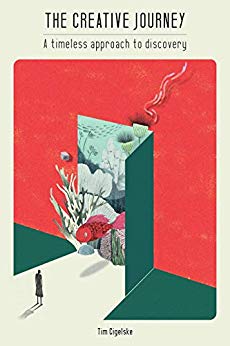
The Creative Journey by Tim Cigelske

Each and every page of The Creative Journey by Tim Cigelske was a delight for me to read. There were quotes from my favorite creative people, Jim Henson, Joseph Campbell, and Mr. Rogers. Excerpts from the writings of Buddha and the bible were scattered like wildflower seeds throughout the text. Real life creative success stories and commentary from Professor Cigelske’s college students drove each chapter’s point home. And then there were the activities! Write your own obituary, create a children’s book about your dreams, keep a logbook. Wonderful stuff!

Although many of the items discussed in this book were not new to me, I did learn a thing or two along the way. We often get so bogged down in what we have to do, we forget what it is we should be doing. Thus was the reading of this book for me. I remembered what I wanted to do before paying bills and assignments and even book reviews got in the way. I want to create.

The path to creating isn’t a well-traveled road. Each of us must find our way by going on own hero’s journey, a concept made famous by the anthropological studies of the esteemed Joseph Campbell.

We are born. We go forth into the world. We are tested and found wanting or we are challenged and found sound. We need to be brave enough to search out our true purpose. We need to be humble enough to learn from those that have gone before us. We need to be committed enough to follow through and not give up. Only then can we say that we have become masters of our own destinies. Even then, sometimes the end of the hero’s journey is just the beginning of another.

Creativity is not something we are naturally endowed with or not. Rather, it’s a way of looking at life. Each section of this well-written book will encourage you to find the creative life that is already inside of you. Whether you run off and join the circus or invent the iPod, living creatively is the only way to find meaning and purpose. And who doesn’t want to live a life full of meaning and purpose? 

For those brave enough to seek a life of creativity, this is the book for you.
I received an ARC of this book from Reedsy Discovery. You can read my review here.

Blog to Book Project — Permissions or Credits

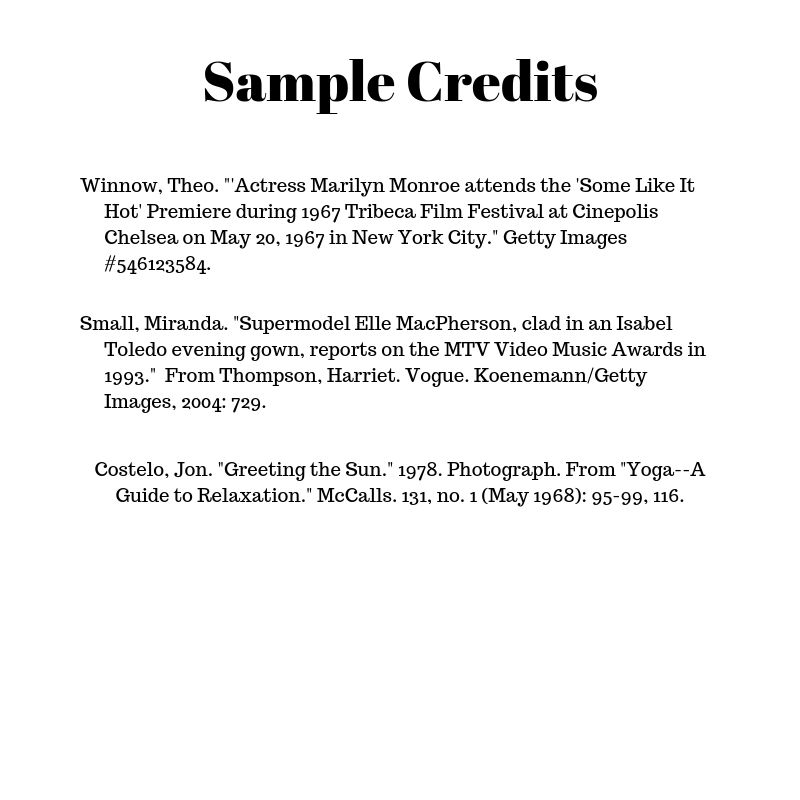
If you needed to get permission to include song lyrics, poems, images, quotations or even entire chapters, this is the section where an author gives credit where credit is due. Format the permission list in either MLA or APA style with the addition of what image or information is being referenced. Credits can be listed in alphabetical order or in order of appearance. 

Works that are classified as public domain do not need permission to be reprinted. Examples of public domain material include general information, materials created and published by the U.S. government, expired copyrighted material or those that never had copyright. 

You should assume that any work published in the United States first published after 1923 has a current copyright. 

Prior to publication, you should have already obtained permission from the copyright holder by sending that person or company a written request for permission to reprint that material. You can usually find the owner and where to contact that person or company in the copyright notice section. 

When you ask permission, you need to be specific about which rights you need and where the work will be reproduced. Consider:  

  • Are you requesting exclusive rights to reproduce the creative work?
  • How long are your requesting permission to use it?
  • Is there a territory limitation?
  • Is the copyright owner asking for monetary recompense for its use?

Exclusive rights mean that the creative work under discussion is only to be used by you in your book. Non-exclusive rights allow the copyright owner to grant permission for use to other individuals or companies. 

Permission can be granted for a limited time or for all perpetuity. Be clear on how long you expect to require permission to use the copyrighted item.

Sometimes permission can only be granted within certain geographic regions. Be sure to be specific where the image will be reproduced. 

Often the copyright owner will request payment for use. The final amount may be negotiable. As a self-published author, you will have to decide how much you are willing to pay for the privilege. 

If this seems like too much work, then simply don’t use copyrighted material. Instead, use your own work. If you need an image for your cover, design it yourself using a photo or formats found on Canva. Or you can use work that is available under the Creative Commons license which is free for public use.

Assignment: Verify that you do not need any permissions for any image or text in your book. If you do, set about obtaining the required permission.

Flash Sale — Ultimate Bundles Herbs and Essential Oils

What's inside Herbs & Essential Oils Super Bundle

The final Ultimate Bundles Herbs and Essential Oils bundle is on sale for $37 November 18 and 19, two days only. The bundle, which includes 29 ebooks, 4 printables, and e-courses, would cost over $700 if the products were purchased separately.

Get your bundle now!

If you are only interested in my humble contribution “Exploring Traditional Herbal Remedies in Mexico” that was included in the Herbs and Essential Oils bundle, I am pleased to announce that the eBook version is now available for pre-sale on Amazon. 

Don’t wait! Two days only!

Buy the bundle now!

Blog to Book Project — Other Books by the Author

If you have other books, this is the page where you want to promote them. Other Books by the Author is basically a second page to your About the Author bio. 

You can make a simple list of titles or you can include a very brief synopsis for each. If you use a pen name, you should include those books under the heading “Written as A. Penname.”

For digital books, you should make clickable links that take the reader to your book on Amazon or to each book’s landing page on your website. Print books don’t have clickability so make sure you write out the full title of the book so that readers can search for your book on their own. 

If you have a book that is comparable in theme to the current book or if you have a sequel, you could include a sample chapter as well. A sample chapter will whet readers’ appetites and leaving them hungry for more, which they can get by purchasing the entire book from the link you have conveniently placed at the end of the sample chapter. 

The sample chapter should be short. It doesn’t even have to be the entire first chapter of the book you are featuring. A page or two, with a cliffhanger ending works best. 

Assignment: Set up your Other Books by the Author page. Be sure to add new titles as you publish them and update older books with the new information.

Piloting Your Life by Terri Hanson Mead

This book was written just for me. After having had my first hot flash a few weeks ago, I suddenly and dramatically realized how unprepared I was for this next stage of life. I vaguely understood that I belong to Generation X (those born between 1965 and 1980) but hadn’t even considered that I was already in midlife at 46 (which begins at 40 and ends at 65). That’s how clueless I was. 

But here I am, and I’m so glad I found this little gem of a book Piloting Your Life by Terri Hanson Mead.

Not only did this book have factual information about what I can expect as I bumble, crash and burn, (Who really sails serenely through any life stage?), this later adulthood phase, but there were life stories from other women who have successfully transitioned. Additionally, there was a “Taking the Controls” section in each chapter with questions for me to ponder as well as a template for my own personal Flight Plan for me to work through. 

If I was in any doubt that somehow the author knew what I needed to hear, then there was that quote from my all-time favorite movie The Best Exotic Marigold Hotel that cinched it for me. Other phrases that resonated with me were “Midlife is a time to recalibrate, not surrender.” and “There are many versions of you, and they are all right.”

There were chapters on the physical changes I can expect, and the mindset I should strive to develop. There were sections on self-care and finding financial freedom. The author shared her experiences and thoughts (some were quite eye-opening) on everything from social value to sex. 

After reading this book, I’ve come to realize how much I can do with this stage of my life. It’s time for me to get started on all those things I’ve been putting off, like finding my superpower, indulging in my guilty pleasures, and even some death planning.  Let’s get started, shall we?

So, if you are flying blind into midlife, like me, then it’s time to join the crew and pick up your own copy of Piloting Your Life by Terri Hanson Mead.

I received an advanced review copy from Reedsy Discovery. You can read my review here.
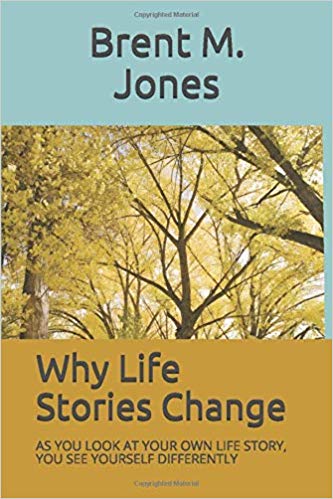
Why Life Stories Change: As You Look at Your Own Life Story, You See Yourself Differently by Brent M. Jones

I admit, the title of this little book was what first attracted me. I wanted to know why life stories change and how I see myself differently as I have aged. I’m not sure that this book gave me a concrete answer to this question though. 

The author shared a few samples of his life story rhetoric as examples of how looking back he has reevaluated the importance of a particular event. He has a little more experience than most in retelling his life story as a member of a men’s church group focused on bonding. Mr. Jones first noticed that the stories of members in the group shared changed with the retelling over time which led to the thoughts contained in this book.

I would have enjoyed more personal stories and more development of the topic of why life stories changed in the book. The book was finished before I had time to mull things over. I was left with the question of what I was supposed to do with this idea of retelling life stories. Was the author encouraging me to just reflect on these events? Was I supposed to write my life story paying particular attention to how I saw events as I was writing? I felt at loose ends at the end of the book. 

The text was well edited, except for the words Little League which were not capitalized when used. Having been born a mere stone’s throw from the capital of the Little League World Series stadium, this was a glaring issue for me. Other than that, there were no major errors that I found.

I enjoyed the quotes from book characters, authors and celebrities that were sprinkled throughout the book. I also enjoyed reading the segments of Mr. Jones life story he chose to include. His About the Author was very well written, so much so that I would have enjoyed hearing more about some of those events in the book itself.

Overall, Why Life Stories Change: As You Look at Your Own Life Story, You See Yourself Differently by Brent M. Jones was a quick and simple read with quite of things I felt were worth highlighting. 

I received an ARC from Reedsy Discovery. You can read my review at Reedsy here.

Blog to Book Project — Colophon

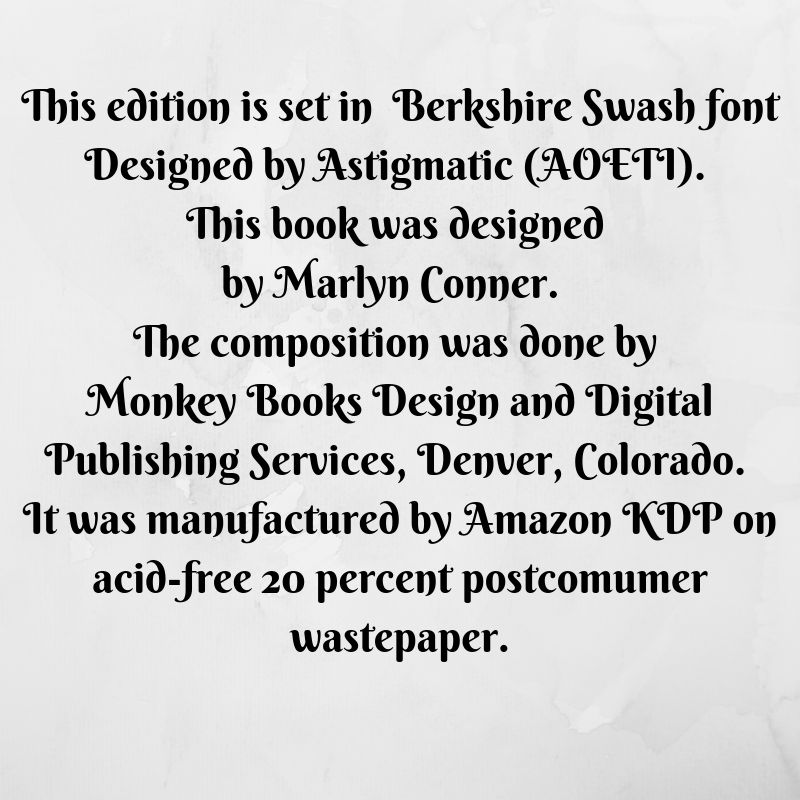
The colophon appears at the very end of the book. It gives information about the printing and publishing process. It might mention the type of paper, ink or binding used to create the book. 

The section Note on the Type could be included in this section or separately. It gives information about the font/typeface used in the book, possibly mentioning its characteristics and history.

Most self-published books do not have a colophon or a page dedicated to the typeface. However, they are worth some consideration. I’m sure you’ve read at least one book where the font changes from one chapter to another. That’s an example of an author (or editor) who did not take the time to look at his or her font.

Assignment: Imagine you are going to add a Colophon or Note on the Type to the end of your book. Check your book for font use consistency.

Blog to Book Project — Timeline

If your book is historical, you may want to include a chronology or timeline. Memoirs are other types of literature that benefit from the inclusion of a timeline. 

A timeline provides the reader a way to keep track of certain important dates as the story progresses. 

A chronology can be placed either in the front matter or back matter. If knowing the order of events is essential to understanding the story, include the timeline in the front matter. 

Even if you don’t plan on including a timeline in your book, creating one often helps you organize your material better. There are many free templates available online or you could create one on Canva. Don’t be afraid to be creative!

Assignment: Make a chronology for your book.

Become a Book Reviewer for Reedsy Discovery

Reedsy Discovery is looking for book reviewers! I’ve been reviewing books for this company since the book reviewer program went live in March 2019. Now, the floodgates have opened and they are looking for more readers to critically review the hundreds of self-published books they have received. 

You can help authors become better wordsmiths with your reviews. Here are some comments I have received from grateful writers.

“Many thanks for your insightful review of my book. I believe you caught the spirit of the adventure. Much gratitude!”

“Thank you for the amazing review of my book. I am so glad that it resonated with you and that you found it helpful. I had the chills as I read your review and was near tears because you got it!”

“Thank you for pointing out those few things in your review, it was definitely helpful, especially the part about a missing section. I had two different documents and somehow that section wasn’t transferred over. So thank you for pointing that out. I’m surprised no one else mentioned it. Good eye!”

If you’ve always wanted to combine reading and writing into one enjoyable activity, then it’s time for you to sign up to be a book reviewer! You can learn more about becoming a book reviewer for Reedsy Discovery here.