2025 Reading Challenge

I really enjoyed my reading challenge last year. I think it made a difference that I didn’t try and pick a certain category for each month, but had options to choose from. So yep, I’m going to do a reading challenge this year.

I’m starting with two categories that I did not complete in prior challenges, a book on my shelf already, and a hardcover book. I think those will be easy to incorporate in the reads for the year.

I found this 2025 reading challenge list and since it seems like it covers a broad spectrum (and has 16 categories), I’m going to use it myself.

What are you reading?

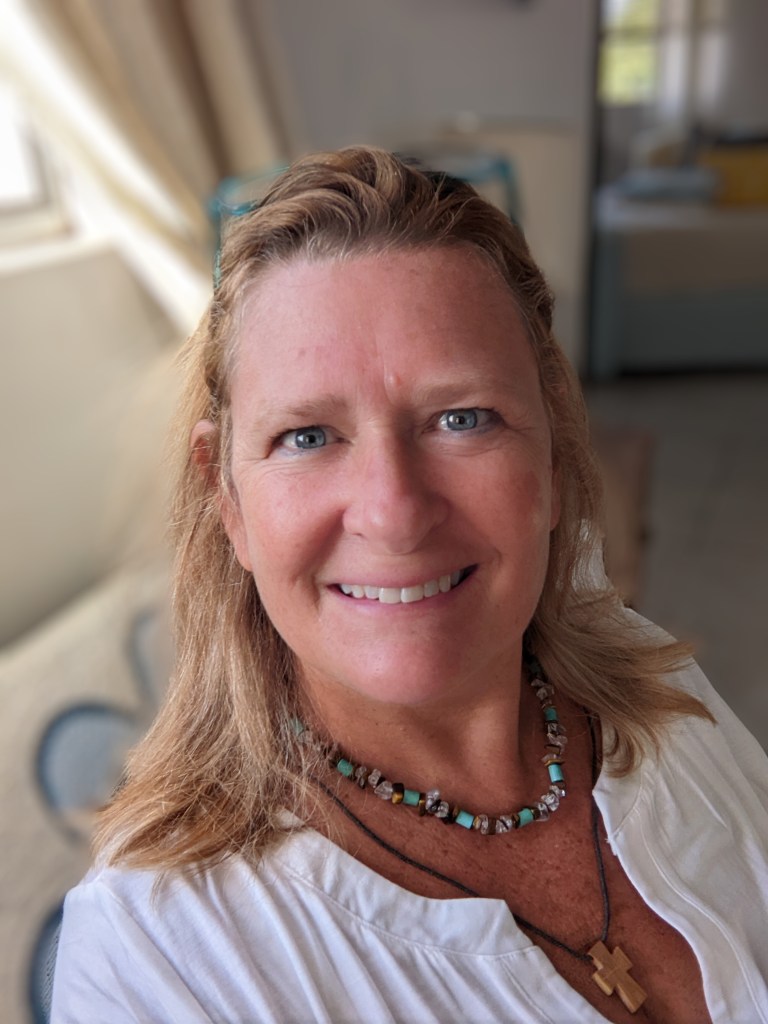
Author Feature — Laura LaBrie

Author Laura LaBrie is from the US from Vermont and resides in Puerto Morelos, Quintana Roo, MX. She came to Mexico on vacation 15 years ago and fell in love with the place. Initially, she and her husband had planned to retire there, but sadly, he passed away. Consequently, she made the move on her own. The small fishing village and its welcoming community played a crucial role in helping her heal. She developed a deep appreciation for the beach, the tranquility, and the nearby jungles.

Back in the US, Laura worked as a music teacher while raising her children. After her children graduated, she decided to reinvent herself and focused more on her passion for writing. She even published her first two books before moving to Mexico. Once in Mexico, her life took a significant turn. With her newfound independence, she delved into researching the culture and traditions of the Maya people. Her interactions with local individuals, particularly a shaman and healer named Don Francisco, led her to discover the rich heritage of the modern Maya, including their ancestral wisdom and magic. She began documenting these extraordinary experiences and stories, leading her to start a blog called “Maya Harmony: Ancient Path to Wellness.” 

Laura was a devout Christian for many years but found her beliefs undergoing a profound transformation after connecting with the Maya people. She started to witness remarkable phenomena that many in first-world countries often overlook. A significant part of her current work involves documenting the “supernatural” occurrences she encounters and the stories she hears from local indigenous people, such as remote viewing, intuitive knowing, working with shamanic stones, and encountering jungle spirits and guardians. This journey has opened her mind to the subtle world and how it operates, and she relishes the exploration.

Among her proudest achievements, she cites raising three wonderful children, publishing 12 books, adapting to life in a foreign country, and learning Spanish. She also misses certain aspects of life in the US, particularly good cheddar cheese. Nonetheless, she has embraced a simpler and more fulfilling life, prioritizing experiences, relationships, and self-love.

The passing of her husband was a pivotal moment in her life, propelling her on a path of self-discovery and transformation. She is now living a life that aligns with her true purpose and passions.

In her free time, Laura enjoys spending time at the beach, being on or in the water, practicing yoga and qigong, and exploring nature. She has a passion for collecting crystals and handmade jewelry, working with tarot cards and oracle cards, and burning incense. She also offers spiritual retreats, excursions, books, e-courses, and Maya birth chart readings.

Laura has authored several books and e-courses, and she is currently working on a new project, an e-course focused on leading Cacao ceremonies. Her creative process involves meticulous planning and intense focus, and she aims to complete this project within a month.

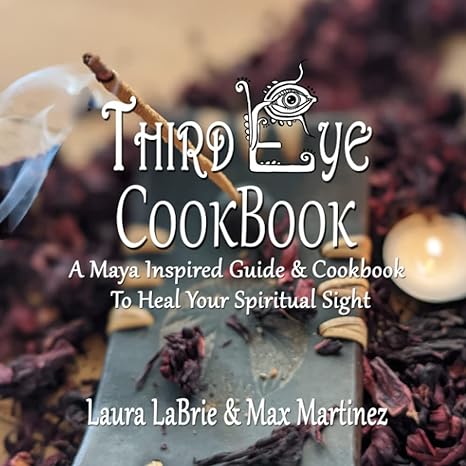
The books she has written which are currently available are: 

Connect with Laura LaBrie:

Powerful You! Little memoirs of inspirational women by Anna Burgess

Powerful You! Little memoirs of inspirational women by Anna Burgess tells the abbreviated stories of five women and the author. It also includes a memorial to an elderly friend of the author, Raymond Farrell. Encouraging commentary is interspersed throughout the book, designed to inspire women confronting life’s obstacles.

It’s not a long or difficult read. The women’s stories are moving. These women overcame challenges that included homelessness, divorce, illness and death of a parent, thriving as a single mother, surviving cancer, and starting a nonprofit.

Although the author repeatedly reiterates that this book is for every woman, it seems as if the target audience was actually the author’s friends and family, rather than for public consumption. For this to be a coaching book, which I’m not convinced it was meant to be, questions after each story to help the reader reflect on her own life would have been good. As it was, the message was, “See these women! They overcame adversity, and so can you!” but without any clear direction on how someone could do that.

Several times, the author states that if just one woman is inspired, then her book will have been a success. I think she sells herself short. The book has the potential of helping thousands of women find direction, with a bit of work.

Each woman’s excerpt was interesting but no more than a few paragraphs except for the author. The author’s own story, while moving, needed some content editing. It seemed that she wrote in a stream of consciousness and then couldn’t bear to go back and edit out redundancies or irrelevant information. The final chapter dedicated to Raymond, the elderly gentleman, seemed out of place in this book geared toward women.

I noticed no grammar or spelling issues in the text, which made it a nice read. Anyone who enjoys reading about others’ life stories would enjoy this book. Those that are looking for help with their in-depth soul-searching processes will need to look elsewhere.

I received an ARC from Reedsy Discovery. You can find my review here.

American Dirt by Jeanine Cummins

I’ve read both negative and positive reviews of American Dirt by Jeanine Cummins. The controversy piqued my curiosity and I read the book. After finishing, I have to say that some of the outrage by the Latino community was warranted, but that didn’t make it a horrible read. 

The action begins right from the first page. A shoot-out at a quinceanera barbeque—ok, stop right there. Anyone who knows anything about Mexican culture will tell you that relegating the formal pageantry and coming-of-age ceremony of a quinceanera to a backyard barbeque, with potato salad no less, is sacrilege. 

The cartel, naturally, is the aggressor, the target, a journalist’s family. Since Mexico is one of the most dangerous countries in the world for journalists, the scenario seems plausible. However, describing the shooters as “the modern bogeymen of urban Mexico”, well, the boogeyman isn’t a Mexican creature, but maybe the author meant El Cucuy. 

Mexican currency at the time American Dirt was written.

Lydia and her 8-year old son Luca are the only survivors of the massacre. Knowing she can’t rely on the police, Lydia flees with just a few things she takes from her mother’s house. She pays the hotel’s 4,000 pesos deposit with four pink bills—hold up. The pink bills are each worth 50 pesos each, so she actually pays 200 pesos. The color of money is mentioned again when Lydia needs to pay 10,000 pesos. She lays down 7 pink, 2 orange, and one blue bill, so that would be well, I don’t know. Are we playing Monopoly here because there aren’t any orange bills in Mexican currency?  Maybe the orange ones are the 100 peso bill? 

The head of the cartel that Lydia and her son must hide from is known as La Lechuza, who according to Lydia’s husband could have been the next Bill Gates–really, what’s wrong with a reference to Carlos Slim here? Yes, the criminal leader of the big bad cartel organization is called La Lechuza, just like the popular children’s song, although there is no reference to this song in the story at all. Since the song is about putting people to sleep, it would have certainly added a creep factor if nothing else. 

Lydia comments that La Lechuza is a terrible name since owls aren’t scary. However, it’s common knowledge in Mexico that la lechuza is often a precursor of death, a bad omen, certainly no laughing matter. But again, none of this was mentioned in the book. 

There were more references that just took away from the authenticity, an Italian meal in San Miguel de Allende (not carnitas), ginger ale (not Coca) stored in the Abuela’s basement (who has a basement?), police officers dreaming about pot roast (not tacos), a girl from Honduras looking like an Aztec (not Maya) warrior, the journey measured in miles (not kilometers), using the word vertedero (not basurero), drinking water from the tap (just not done) and so on. 

However, despite it all, I have to admit it was an engaging read. From the get-go I was invested in the outcome, as implausible as some of it seemed. But then again, it was a work of fiction, a fantasy of sorts, so it was ok. Anyway, if you are looking for something that not only provides an exciting adventure but also tests your knowledge of Mexican culture in an alternate universe since it depicts neither an authentic Mexico nor a typical migrant experience, well then American Dirt by Jeanine Cummins is just the ticket. 

Calling Myself Home: Living Simply, Following Your Heart and What Happens When You Jump by Robin Rainbow Gate

There were several things that resonated with me personally in the memoir Calling Myself Home: Living Simply, Following your Heart and What Happens When You Jump by Robin Rainbow Gate. Although I didn’t have her more privileged childhood, I too, heard the call to Mexico and found myself home in this rural, brilliantly colored land. 

The author studied herbal lore extensively, learning at the feet of some amazing herboleras (herbalists) on both sides of the border. The book thus is divided into sections that coincide with the concept of the Medicine Wheel, as understood by the Native Americans and Mexicas. 

There is considerable time devoted to the author’s childhood and early memories. At first I was frustrated, ready to get to the journey in Mexico. However, as I read, I realized that in order to understand how the author came to be where she was, it was important to see where she had been. 

The author’s life as she settled and embraced Mexico was as fulfilling as you’d expect. She described her wanderings in mountain villages, frustrations with a new way of learning, experiences with unknown sights, sounds, and tastes and her gradual growth as a person as a result of these things. 

Delightfully, at the end of the book, there are self-reflection questions so that the reader too can devise a plan to live life more fully. Honestly, there aren’t many women who would or could follow in the author’s footsteps. However, we each have our own path to follow, some of which cross the mountains and deserts of Mexico. The questions provide an excellent starting point for anyone looking for a more authentic life. Perhaps you’ll too find Mexico calling.

Click here to read more about Robin Rainbow Gate.

Yucatán with Kids: A Travel Guide

Mexico Cassie has done it again. The author of Moving To Mérida: How To Successfully Move To Mexico As A Family has created an excellent guidebook to exploring the Mexican state of Yucatán with kids, naturally called Yucatán with Kids: A Travel Guide. 

This book includes pronunciation assistance for the Mayan place names you will be visiting. It highlights the best beaches, cenotes, and archaeological sites to take your kids. It does a great job of giving pertinent information, like how difficult the cenote is to access, so that you can plan accordingly. It also includes information on haciendas, natural spaces, caves, and inland cities and towns you can take your children, including Mérida and Valladolid. 

Towards the end of the book, Cassie includes two road-trip suggestions for traveling in Yucatán state and surrounding areas. There are notes on food, national festivals, safety and tips for traveling with children. As a guidebook for families with children exploring the area, it can’t be beat.

There were some editing issues that kept me from giving this book the highest rating, however. These are probably things that won’t bother the average reader, but I’m picky. First, the author says she wasn’t going to include pictures because most people would be reading an e-book version. What’s a guidebook without pictures? Since the majority of locations were places the author herself has visited with her family, I’m positive she has oodles of lovely images. And you can absolutely use pictures in e-books. It takes more time formatting, but it would have taken this book over the top.

Note from the author: Photos to accompany the book are on my website, a formatting decision that may not work for everyone but makes the book more affordable and given that most travel books are now sold as ebooks, works well.

Then there were some terms that were mistranslated, although they were understandable errors. The first was Río Lagartos which she informs her readers means Alligator river. No, it doesn’t. The word lagarto translates as lizard in English. Since the crocodiles that live there do indeed resemble very large lizards, Lizard River was an apt name. 

Note from the author: The story about crocodiles and alligators does not come from me but is something told by guides and locals in Río Lagartos.

Another term that caught my attention was the word sarteneja which the author said translated as cistern. The Spanish online dictionary defined sarteneja as another term for bache (pothole). Further research informed me that sartenejas were crevices of naturally found water deposits. So I expect this is a Mayan term that originally referred to areas where water collected and now is used to talk about the structures that hold water. In my area, these are called aljibes and in areas more central in Mexico, I’ve heard the term pila. 

The third mistranslation was concerning the local sun god, Kinich Ahau. The author goes through the etymology of the word, stating kin means sun, ich means face and ahau means lord or priest. However, ich translates as both face and eye in Mayan. As most representations of the sun god have a sun literally in the eye of the carving, k’inich is thought to be more accurately translated as sun-eyed, rather than sun-faced. 

There were also some proofreading errors that should have been corrected before this book was released. In some places río (river) and ría (estuary) were used interchangeably and lacked accents. Then, when listing culinary delights, she mentioned chicharra and castacán as pork dishes. Well, castacán is indeed a local pork dish. However, chicharra is the word for cicada. While cicadas are, in fact, a delicacy in Mexico, they taste more like shrimp than pork, according to sources who have tried them. I believe the word she meant to use was chicharrón, pork rind. 

Note from the author: It is necessary to point out that chicharra is, indeed, a correct term for chicharron in Yucatán.

Towards the end of the book, it felt like I was reading the author’s travel notes rather than a guidebook. Sentences were incomplete, months and days were abbreviated, capitalization and accents became randomized and well, it felt rushed. There were some items that could have been explained a little better. For instance, she mentions Pueblos Mágicos. Anyone living in Mexico would know that she referred to select towns that received revinalization money in recent years to encourage tourism. However, travelers to Mexico might not have that information. 

All of these petty little negatives should not take away from the fact that as a guidebook for families with children who wish to travel in Yucatán state, Yucatán with Kids: A Travel Guide is top-notch. Available on Gumroad and Amazon.

I received an ARC from the author.

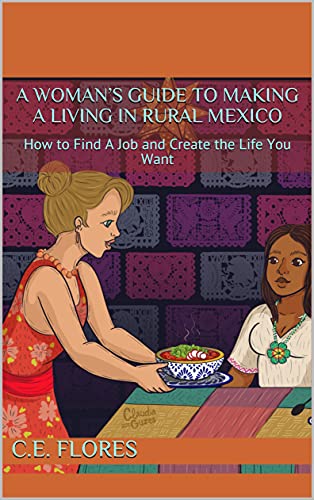
A Woman’s Guide to Making a Living in Rural Mexico: How to Find A Job and Create the Life You Want

Women often face significant obstacles in life–moving to rural Mexico is no exception. A Woman’s Guide to Making a Living in Rural Mexico: How to Find A Job and Create the Life You Want provides the resources you need to overcome the unique barriers to living and working in rural Mexico. This guidebook gives you the exact information you need to succeed at finding work and creating a fulfilling life.

You’ll learn about:

  • 6 legal hurdles to overcome
  • 5 common obstacles to working in rural Mexico
  • 20+ online job positions
  • 15+ local work ideas

Women play a significant role in the success of their families’ quality of life. Women’s small businesses in rural communities can support their families and create a network of success for future generations. A Woman’s Guide to Making a Living in Rural Mexico: How to Find A Job and Create the Life You Want is the manual you need to make this happen.

You can get your preorder copy for $2.99 from now until July 14.  Amazon has mixed things up and you need to click on the “Other sellers & formats” in order to see the sale price. Once you click there, you’ll see “New from $2.99.” Your ebook will be automatically delivered to your Kindle on July 14, after which the price will go up.

April 2021 Virtual Book Tour –Janett Zizumbo

About the Author

Janett Zizumbo was born in Chicago, IL, USA and currently resides in Veracruz, Mx. She has received a Bachelor’s degree from Illinois State University and a Masters degree from University of South Florida. She is a writer, illustrator, visual artist, and teacher.

Being bilingual as a child, she always found it difficult to find resources to help with her fluency. Specifically, having grown up in the United States she only had the opportunity to learn English academically and learn Spanish through conversation with family. This is where she got the idea of creating stories for bilingual children to read and have easy access.

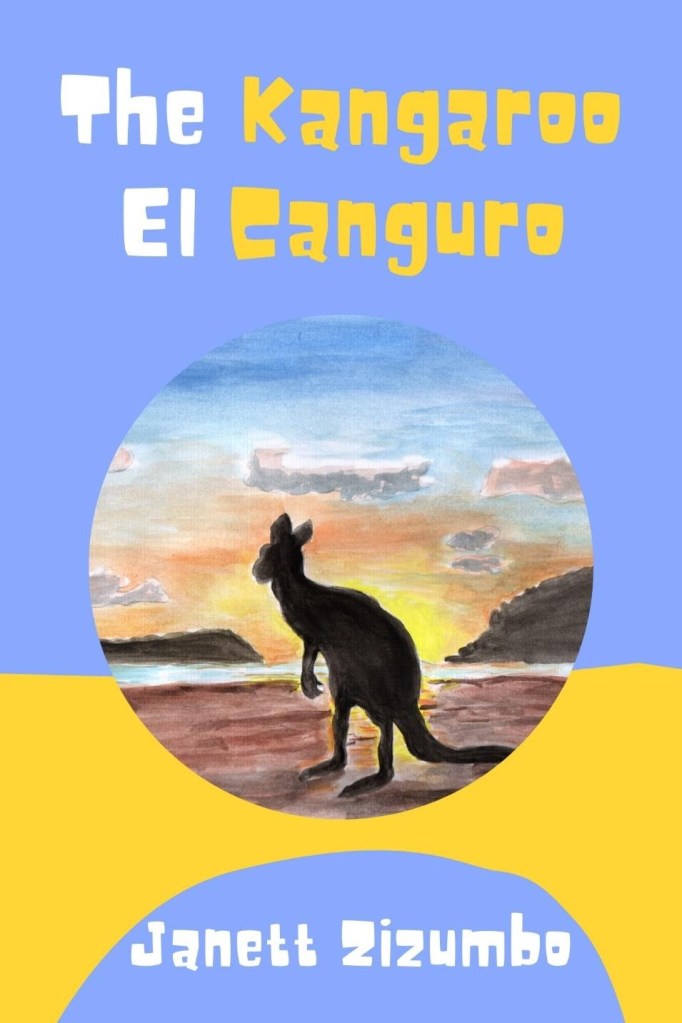
The Kangaroo / El Canguro

During my stay in Australia, the family and I spent some time in one of the nature reserves in Melbourne, Australia. We went during dusk and had a small picnic watching kangaroos hopping around completely unfazed by our presence. It was such a surreal moment to live. A pair of joeys playing with each other inspired me to write this book. I hope you enjoy it as much as I did writing it.

Durante mi estadía en Australia, la familia y yo pasamos un tiempo en una de las reservas naturales de Melbourne, Australia. Fuimos durante el anochecer y tuvimos un pequeño picnic viendo a los canguros saltando completamente imperturbables por nuestra presencia. Fue un momento tan surrealista para vivir. Un par de joeys jugando me inspiraron a escribir este libro. Espero que lo disfruten tanto como yo al escribirlo.

Readers are absolutely perfect for building fluency. These readings include a story, along with reading comprehension questions and a writing/drawing exercise all in Spanish and English.

This reader is a bit more advanced aimed at 1st grade2nd grade students slightly advanced with fluency.

Los Readers son absolutamente perfectos para desarrollar la fluidez. Estos Readers incluyen una historia, junto con preguntas de comprensión de lectura y un ejercicio de escritura/dibujo, todo en Español e Inglés.

Este lector es un poco más avanzado y está dirigido a estudiantes de 1º a 2º grado ligeramente avanzados con fluidez.

What it contains/ lo que contiene:

  • An E-book in Spanish and English/ un E-book en Español e inglés
  • Reading comprehension questions in Spanish and English/ Comprension de lectura
  • Vocabulary/ Vocabulario
  • Writing portion/ejercicio de escritura
  • Drawing portion/ ejercicio de dibujo
  • crossword puzzle/ crucigrama
  • Total of 17 pages/ 17 paginas en total
  • An audio will be included on the website to help the student understand the pronunciation

Connect With Me

Bilingual Online Teacher

Ophelia’s Bilingual Readers

Facebook

Instagram

April 2021 Virtual Book Tour — Lynda Lock

15878540_10208016849835707_589871261_o

Hello, I’m Lynda Lock. I’m originally from British Columbia, Canada, and now live in Isla Mujeres, Quintana Roo, Mexico. It’s an island about seven kilometers long and a kilometer wide 15 minutes by boat from Cancun. It has all the peace and quiet of island life combined with all the big city amenities, including a large international airport just a few minutes away.

I came to Mexico with my husband. We are both from British Columbia Canada, having lived in a variety of small communities and large cities. My original hometown, located in the coastal mountains of British Columbia, is now a deserted ghost town. It was a thriving gold mining town that shut down when the mining company ran out of easily accessible gold. My husband, on the other hand, grew up in the city of West Vancouver, located directly across the harbour from the much larger metropolis of Vancouver BC. We met on a similarly sized island in BC Canada called Bowen Island in 1975. We have been together since 1980. We married in 1987. My husband and I are currently retired. For the most part of our working lives, we were self-employed entrepreneurs with a wide variety of businesses that included an antique store, a freight boat business, a solid waste disposal company, an award winning bed and breakfast, and a micro-brewery, to name just a few. He was also the Fire Chief and I was a volunteer firefighter for many years in another small island community in BC Canada. I’ve also been an ambulance driver, a control centre supervisor for a high-tech computer-driven train, a park attendant, and have written a safety magazine.

My husband and I frequently say that we have Adult Attention Deficient Syndrome. As soon as a business was running well, we got bored and sold it, only to immediately start a different type of business. In the later years of our working careers, we switched to managing businesses for other companies. He managed a large winery and restaurant complex and I managed a mid-sized hotel.

We had enjoyed short vacations on the western side of Mexico for many years and then we discovered the Caribbean side in 2002. Wow! The turquoise water, good food, friendly islanders; we were hooked. After four visits to the island, we purchased an oceanfront lot in 2006 on Isla Mujeres with the idea of building a home. Since we were still working at that time we had planned to live part-time on the island and the balance of the year in Canada.

When it was time to return to work we happened to arrive in the middle of a late spring snow storm. A meter of snow! That was it for us. We told our employers that we would be leaving permanently in October of 2008, and worked until it was time to move to Mexico. In the meantime, we sold our home, furniture, paintings, decorations, books – everything. The only possessions that we kept were some articles of clothing and a few tools or special mementos. Our rule was; if it won’t fit in the car it isn’t going.

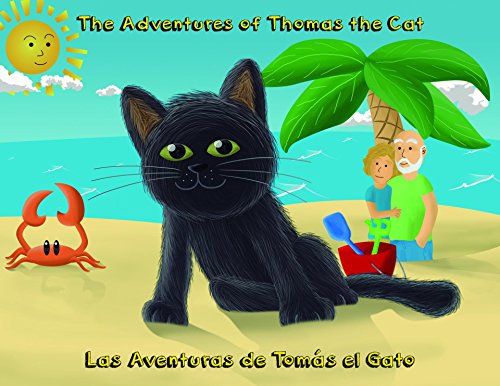
We drove from the Okanagan Valley to Isla Mujeres in our Nissan Hybrid car, taking twenty-three days to sightsee across the south-western USA and central Mexico. Our then nine-year-old cat, Thomas, had to wait until we arrived on Isla Mujeres before he could fly with my sister to his new home in Mexico. Thomas starred as the hero in my children’s book The Adventures of Thomas the Cat: Las Aventuras de Tomás el Gato. He thrived in Mexico, living until his seventeenth birthday.

Since moving to Mexico, my relationship with my family hasn’t changed. I still see everyone almost as frequently as before. We have an adult son and two grandchildren. They love that we live in Mexico. They visit as often as possible. As for friends, some I see less, others more and I’ve made many more new friends. As I was already retirement age when I moved here, learning a second language has been a big challenge. I miss the easy, silly conversations with the locals, things like chatting about the weather, what’s happening in their lives, and how they are doing. I should have learned Spanish about 30 years ago when my brain was younger and I was smarter. It’s a daily struggle, but I keep trying to pick up new words and phrases. I don’t take lessons because I don’t have the patience for classroom learning. Like all things in my life, I learn as I go. My Spanish is limited, but I keep trying.

I love Mexican culture. It is like being transported back in time to the 1950s. There are large and close-knit families who look out for each other and easy freedom for the kids, not so many organized and scheduled activities, just outdoor fun with friends. I especially love the climate by the ocean in the tropics.

Living in Mexico has helped me to discover the ability to just live and not worry about the silly stuff that we have no control over. I have learned to be patient, when to give up and when to move on. For example, having a guarantee doesn’t mean much. You have to be calmly persistent to get service for any appliance or piece of equipment that is theoretically under guarantee. After seven weeks of polite and daily phone calls with the help of one of our Mexican friends, we finally got our new refrigerator fixed by the manufacturer. My friend’s words of wisdom regarding guarantees were “It’s a game of Survivor. You have to outlast, outwit and outplay your opponent to win.” That really made me laugh.tomas The accomplishment that makes me the proudest was self-publishing my first book in hardcover “The Adventures of Thomas the Cat: Las Aventuras de Tomás el Gato.” It involved figuring out how to get it printed in China as the printing costs in Mexico, the USA and Canada were too much for my budget, arranging the shipping to Mexico, clearing the shipment through customs, and arranging for trucking to our city. It was a great learning experience.
In my free time, I write for my own pleasure, walk on the beach with our low-to-the-ground rescue mutt, socialize with friends, enjoy the sunset and a glass of wine with my husband, who is my best friend, and take pictures.

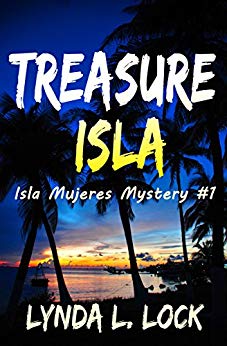
I have self-published four books and two more are in the process.
tomas
treasureisla troubleisla tormentaisla
Books in progress:
Named by the Enemy, historical fiction set in Canada.
The Adventures of Thomas and Sparky, the bilingual sequel to The Adventures of Thomas the Cat: Las Aventuras de Tomás el Gato.

I write a weekly blog called Notes from Paradise–Isla Mujeres with my husband. Whoever has the bright idea for the week, writes the articles. I take 90% of the photographs because I habitually have a camera attached to my hand. Since we began in September of 2011, we have had over 434,000 page views with the weekly average now hitting around 10,000 page views. The response is astounding!

day-of-the-kings-7-mm

I don’t specifically volunteer for any one charity, just help out where I can with student scholarships, donations to helping animals, and entertaining the island’s youngsters during the Christmas Golf Cart Parade and the Day of the Kings, with our Mickey and Minnie Mouse costumes.