Attention, book lovers! Starting TODAY, you have the chance to grab some incredible books by none other than yours truly, C.E. Flores/Millie Flores—completely free! For the next few days, a selection of my books will be available to download, so there’s something for everyone to enjoy.
Here’s How to Get Your Free Books:
Check Daily: Each day, new links to free book downloads on Amazon will be shared. Be sure to bookmark this page, set reminders, and check back frequently so you don’t miss out.
Quick and Easy Download: Each title is free on Amazon for a limited time, so grab them while you can! Downloading only takes a few seconds, giving you instant access to start reading.
Spread the Word: Share the excitement! Tell your friends, family, or social media followers so they can join in and snag these free reads, too. Happy reading!
FREE Book for Today: Playing Tourist in Mexico: A Collection of Adventures from Women Traveling in Mexico
Ever wanted to experience the real Mexico? Playing Tourist in Mexico: A Collection of Adventures from Women Traveling in Mexicoinvites you to join seven adventurous women as they journey through 45 unique destinations across this beautiful country. From bustling Mexico City to the peaceful beaches of Baja California, and from historic Dolores Hidalgo to the guitar-making town of Paracho de Verduzco in Michoacán, this book captures the rich diversity and hidden gems of Mexico.
Inside, you’ll discover:
Inspiring stories from each woman’s journey: Get a glimpse into the heart of Mexico, from popular tourist spots to lesser-known locations.
Cultural insights and local flavors: Feel the vibrancy of Mexico through vivid descriptions of the sights, sounds, and tastes that make each place unique.
Personal reflections and memorable moments: These travelers share the beauty, surprises, and challenges they encountered along the way.
If you’re dreaming of visiting Mexico or simply curious to see the country through a fresh lens, download Playing Tourist in Mexico today. Embark on this journey of exploration, where every page is a new adventure waiting to be discovered.
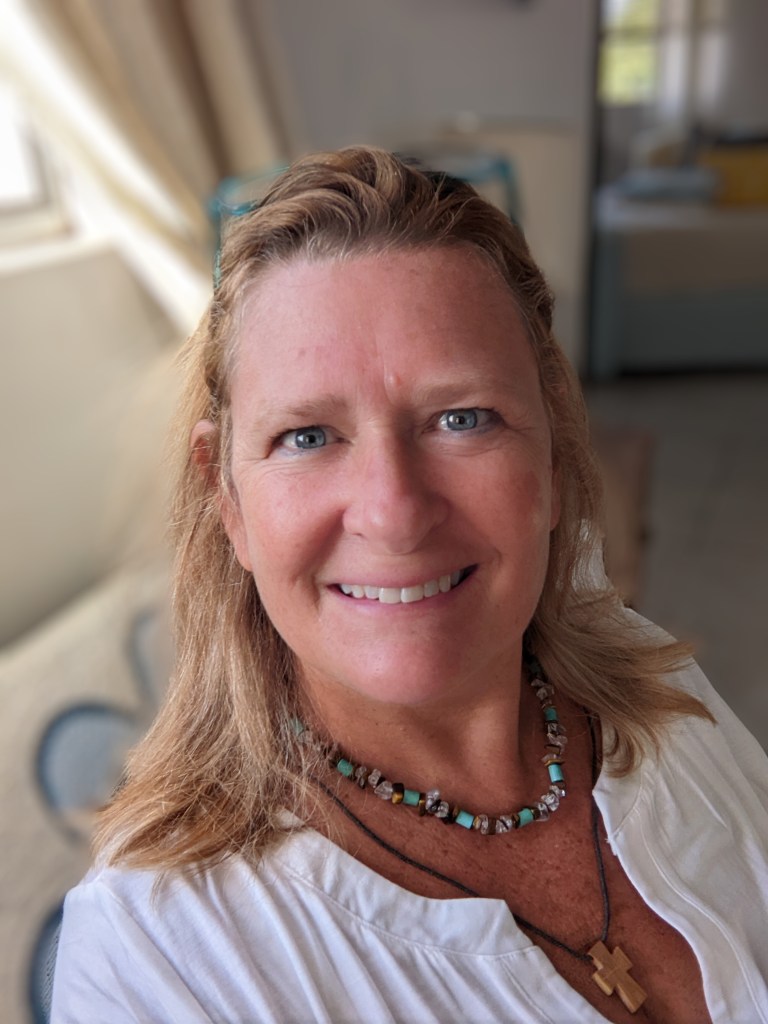
Author Laura LaBrie is from the US from Vermont and resides in Puerto Morelos, Quintana Roo, MX. She came to Mexico on vacation 15 years ago and fell in love with the place. Initially, she and her husband had planned to retire there, but sadly, he passed away. Consequently, she made the move on her own. The small fishing village and its welcoming community played a crucial role in helping her heal. She developed a deep appreciation for the beach, the tranquility, and the nearby jungles.
Back in the US, Laura worked as a music teacher while raising her children. After her children graduated, she decided to reinvent herself and focused more on her passion for writing. She even published her first two books before moving to Mexico. Once in Mexico, her life took a significant turn. With her newfound independence, she delved into researching the culture and traditions of the Maya people. Her interactions with local individuals, particularly a shaman and healer named Don Francisco, led her to discover the rich heritage of the modern Maya, including their ancestral wisdom and magic. She began documenting these extraordinary experiences and stories, leading her to start a blog called “Maya Harmony: Ancient Path to Wellness.”
Laura was a devout Christian for many years but found her beliefs undergoing a profound transformation after connecting with the Maya people. She started to witness remarkable phenomena that many in first-world countries often overlook. A significant part of her current work involves documenting the “supernatural” occurrences she encounters and the stories she hears from local indigenous people, such as remote viewing, intuitive knowing, working with shamanic stones, and encountering jungle spirits and guardians. This journey has opened her mind to the subtle world and how it operates, and she relishes the exploration.
Among her proudest achievements, she cites raising three wonderful children, publishing 12 books, adapting to life in a foreign country, and learning Spanish. She also misses certain aspects of life in the US, particularly good cheddar cheese. Nonetheless, she has embraced a simpler and more fulfilling life, prioritizing experiences, relationships, and self-love.
The passing of her husband was a pivotal moment in her life, propelling her on a path of self-discovery and transformation. She is now living a life that aligns with her true purpose and passions.
In her free time, Laura enjoys spending time at the beach, being on or in the water, practicing yoga and qigong, and exploring nature. She has a passion for collecting crystals and handmade jewelry, working with tarot cards and oracle cards, and burning incense. She also offers spiritual retreats, excursions, books, e-courses, and Maya birth chart readings.
Laura has authored several books and e-courses, and she is currently working on a new project, an e-course focused on leading Cacao ceremonies. Her creative process involves meticulous planning and intense focus, and she aims to complete this project within a month.
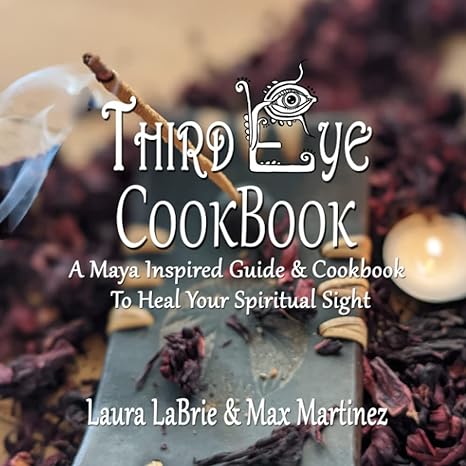
The books she has written which are currently available are:
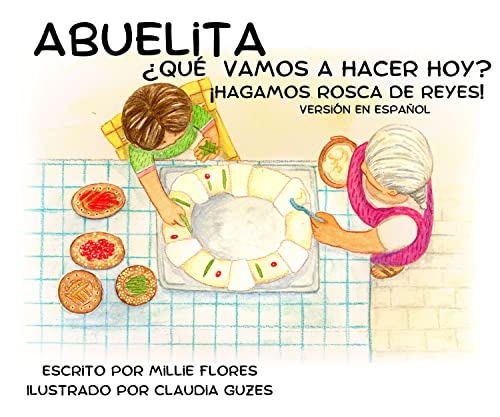
Meet 5-year-old Lupita. Lupita lives in rural central Mexico y está muy emocionada to share her family’s special events contigo. Today, Lupita and her Abuelita are making a Rosca de Reyes and se están preparando para la llegada de Los Reyes Magos.
Both the Spanish and bilingual versions are FREE for the next few days. Pick up your copy and enjoy! (If you feel so inclined to leave a review, that would be so appreciated!!)
Mexican herbalism has often been overlooked by North American herbalists because most remedies have not been written down. Furthermore, many native plants are misidentified even by botanists. This volume of Exploring Traditional Herbal Remedies in Mexico: Learning About Culture Through Plant Use looks at some commonly miscategorized native plants and their traditional uses.
In this book you’ll discover:
◆30 Mexican plants used in traditional remedies
◆Dozens of herbal treatments for common ailments
◆Accurate botanical identification of native Mexican plants
If you’ve ever wondered how feasible it is to find a little place in Mexico to settle down, then La Yacata Revolution: How NOT to Buy a Piece of Heaven in Mexico is the perfect book for you. This short, strange tale of one woman’s quest to not only find and buy, but connect to basic ultilties in rural Mexico is FREE for the next few days. Get your FREE copy today at Amazon!
I’ve read both negative and positive reviews of American Dirt by Jeanine Cummins. The controversy piqued my curiosity and I read the book. After finishing, I have to say that some of the outrage by the Latino community was warranted, but that didn’t make it a horrible read.
The action begins right from the first page. A shoot-out at a quinceanera barbeque—ok, stop right there. Anyone who knows anything about Mexican culture will tell you that relegating the formal pageantry and coming-of-age ceremony of a quinceanera to a backyard barbeque, with potato salad no less, is sacrilege.
The cartel, naturally, is the aggressor, the target, a journalist’s family. Since Mexico is one of the most dangerous countries in the world for journalists, the scenario seems plausible. However, describing the shooters as “the modern bogeymen of urban Mexico”, well, the boogeyman isn’t a Mexican creature, but maybe the author meant El Cucuy.
Mexican currency at the time American Dirt was written.
Lydia and her 8-year old son Luca are the only survivors of the massacre. Knowing she can’t rely on the police, Lydia flees with just a few things she takes from her mother’s house. She pays the hotel’s 4,000 pesos deposit with four pink bills—hold up. The pink bills are each worth 50 pesos each, so she actually pays 200 pesos. The color of money is mentioned again when Lydia needs to pay 10,000 pesos. She lays down 7 pink, 2 orange, and one blue bill, so that would be well, I don’t know. Are we playing Monopoly here because there aren’t any orange bills in Mexican currency? Maybe the orange ones are the 100 peso bill?
The head of the cartel that Lydia and her son must hide from is known as La Lechuza, who according to Lydia’s husband could have been the next Bill Gates–really, what’s wrong with a reference to Carlos Slim here? Yes, the criminal leader of the big bad cartel organization is called La Lechuza, just like the popular children’s song, although there is no reference to this song in the story at all. Since the song is about putting people to sleep, it would have certainly added a creep factor if nothing else.
Lydia comments that La Lechuza is a terrible name since owls aren’t scary. However, it’s common knowledge in Mexico that la lechuza is often a precursor of death, a bad omen, certainly no laughing matter. But again, none of this was mentioned in the book.
There were more references that just took away from the authenticity, an Italian meal in San Miguel de Allende (not carnitas), ginger ale (not Coca) stored in the Abuela’s basement (who has a basement?), police officers dreaming about pot roast (not tacos), a girl from Honduras looking like an Aztec (not Maya) warrior, the journey measured in miles (not kilometers), using the word vertedero (not basurero), drinking water from the tap (just not done) and so on.
However, despite it all, I have to admit it was an engaging read. From the get-go I was invested in the outcome, as implausible as some of it seemed. But then again, it was a work of fiction, a fantasy of sorts, so it was ok. Anyway, if you are looking for something that not only provides an exciting adventure but also tests your knowledge of Mexican culture in an alternate universe since it depicts neither an authentic Mexico nor a typical migrant experience, well then American Dirt by Jeanine Cummins is just the ticket.
The author studied herbal lore extensively, learning at the feet of some amazing herboleras (herbalists) on both sides of the border. The book thus is divided into sections that coincide with the concept of the Medicine Wheel, as understood by the Native Americans and Mexicas.
There is considerable time devoted to the author’s childhood and early memories. At first I was frustrated, ready to get to the journey in Mexico. However, as I read, I realized that in order to understand how the author came to be where she was, it was important to see where she had been.
The author’s life as she settled and embraced Mexico was as fulfilling as you’d expect. She described her wanderings in mountain villages, frustrations with a new way of learning, experiences with unknown sights, sounds, and tastes and her gradual growth as a person as a result of these things.
Delightfully, at the end of the book, there are self-reflection questions so that the reader too can devise a plan to live life more fully. Honestly, there aren’t many women who would or could follow in the author’s footsteps. However, we each have our own path to follow, some of which cross the mountains and deserts of Mexico. The questions provide an excellent starting point for anyone looking for a more authentic life. Perhaps you’ll too find Mexico calling.
This book includes pronunciation assistance for the Mayan place names you will be visiting. It highlights the best beaches, cenotes, and archaeological sites to take your kids. It does a great job of giving pertinent information, like how difficult the cenote is to access, so that you can plan accordingly. It also includes information on haciendas, natural spaces, caves, and inland cities and towns you can take your children, including Mérida and Valladolid.
Towards the end of the book, Cassie includes two road-trip suggestions for traveling in Yucatán state and surrounding areas. There are notes on food, national festivals, safety and tips for traveling with children. As a guidebook for families with children exploring the area, it can’t be beat.
There were some editing issues that kept me from giving this book the highest rating, however. These are probably things that won’t bother the average reader, but I’m picky. First, the author says she wasn’t going to include pictures because most people would be reading an e-book version. What’s a guidebook without pictures? Since the majority of locations were places the author herself has visited with her family, I’m positive she has oodles of lovely images. And you can absolutely use pictures in e-books. It takes more time formatting, but it would have taken this book over the top.
Note from the author: Photos to accompany the book are on my website, a formatting decision that may not work for everyone but makes the book more affordable and given that most travel books are now sold as ebooks, works well.
Then there were some terms that were mistranslated, although they were understandable errors. The first was Río Lagartos which she informs her readers means Alligator river. No, it doesn’t. The word lagarto translates as lizard in English. Since the crocodiles that live there do indeed resemble very large lizards, Lizard River was an apt name.
Note from the author: The story about crocodiles and alligators does not come from me but is something told by guides and locals in Río Lagartos.
Another term that caught my attention was the word sarteneja which the author said translated as cistern. The Spanish online dictionary defined sarteneja as another term for bache (pothole). Further research informed me that sartenejas were crevices of naturally found water deposits. So I expect this is a Mayan term that originally referred to areas where water collected and now is used to talk about the structures that hold water. In my area, these are called aljibes and in areas more central in Mexico, I’ve heard the term pila.
The third mistranslation was concerning the local sun god, Kinich Ahau. The author goes through the etymology of the word, stating kin means sun, ich means face and ahau means lord or priest. However, ich translates as both face and eye in Mayan. As most representations of the sun god have a sun literally in the eye of the carving, k’inich is thought to be more accurately translated as sun-eyed, rather than sun-faced.
There were also some proofreading errors that should have been corrected before this book was released. In some places río (river) and ría (estuary) were used interchangeably and lacked accents. Then, when listing culinary delights, she mentioned chicharra and castacán as pork dishes. Well, castacán is indeed a local pork dish. However, chicharra is the word for cicada. While cicadas are, in fact, a delicacy in Mexico, they taste more like shrimp than pork, according to sources who have tried them. I believe the word she meant to use was chicharrón, pork rind.
Note from the author: It is necessary to point out that chicharra is, indeed, a correct term for chicharron in Yucatán.
Towards the end of the book, it felt like I was reading the author’s travel notes rather than a guidebook. Sentences were incomplete, months and days were abbreviated, capitalization and accents became randomized and well, it felt rushed. There were some items that could have been explained a little better. For instance, she mentions Pueblos Mágicos. Anyone living in Mexico would know that she referred to select towns that received revinalization money in recent years to encourage tourism. However, travelers to Mexico might not have that information.
All of these petty little negatives should not take away from the fact that as a guidebook for families with children who wish to travel in Yucatán state, Yucatán with Kids: A Travel Guide is top-notch. Available on Gumroad and Amazon.






 C.E. Flores