Immersed in West Africa: My Solo Journey Across Senegal, Mauritania, The Gambia, Guinea, and Guinea Bissau by Terry Lister

africa book

I admit it, I’m a travel book junkie. I love reading about the experiences other people have had traveling around the world while I sit comfortably at home. Africa is one of those destinations that I love to read about but I am not too sure that I want to visit, ever. 

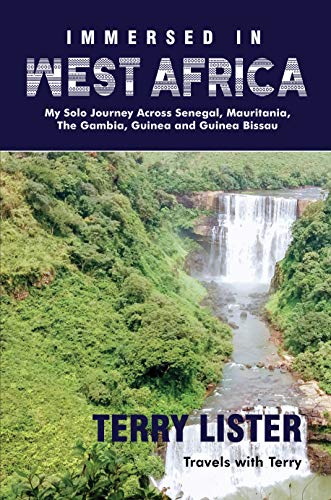
I picked up Immersed in West Africa: My Solo Journey Across Senegal, Mauritania, The Gambia, Guinea, and Guinea Bissau by Terry Lister and did a little virtual traveling the other day. The pictures that the author included were amazing! I have to say that there is nothing quite like the raw nature of those countries he visited. 

The story he told about his travels was interesting as well. I never thought that there might be monuments and museums about the slave trade in Africa. I suppose that anything can be turned into an attraction. With a little more dedication and money, I’m sure those remote places could become educational and even a profit center for the otherwise isolated settlements. 

I chuckled at the author’s horrible transit stories. I mean really, a vehicle with 15 people stacked three high (that was the image I got from reading the account anyway). The hassle with the ATMs, customs and police bribes, general miscommunication, and so on are quirky, real tidbits that make an adventure story ring true. 

lister

My favorite section was the description of the elaborate tea preparation in Chinguetti, Mauritania, and the Terjit Oasis. I also marveled at the villages that were only accessible by ladder in Djiakan. I could just picture women with babies tied to their backs ascending and descending those ladders. 

I would have liked to have a little more explanation about the author’s thoughts on certain items, like his opinion on renewable energy which he says he was “pretty sure you know how I feel”. Well, I didn’t. Or the thing he had for volcanoes and waterfalls. What thing was that? More details would have been nice. 

Regardless, if you are an arm-chair traveler by choice or circumstance, Immersed in West Africa: My Solo Journey Across Senegal, Mauritania, The Gambia, Guinea and Guinea Bissau by Terry Lister will take you to distant lands.

four star

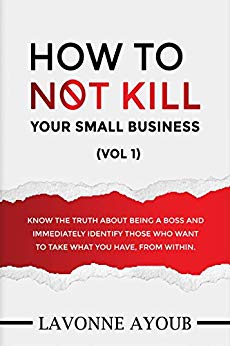
How to Not Kill Your Small Business by Lavonne Ayoub

I had high hopes going into How to Not Kill Your Small Business by Lavonne Ayoub. The introduction started out strong. It claimed that this book was for all business owners and entrepreneurs who struggle with interpersonal relationships. It said that the book would help you identify those who do not have your business as a priority and keep you focused on healthy boundaries. Good stuff, right?

Then I read the book. It contained 31 positive affirmations which were inspiring and nothing more. For example, Day 1 “Do not be afraid to lose clients, customers, or staff. Trying to please everyone creates chaos.” I flipped the page ready to learn more, but there wasn’t anything else in chapter. That was it. And I wanted more. 

I wanted to know why I shouldn’t be afraid to not please everyone. What was at stake by trying to make everyone happy? Where was the research that backed this declaration up? Where were the personal experiences that showed the folly of people pleasing? Where were the reflective questions that I could use as an entrepreneur to align myself to this statement?

So, I have to say that overall I was disappointed with How to Not Kill Your Small Business by Lavonne Ayoub. I thought the affirmations were excellent, but since there was no practical application to them, they were easily forgotten. 

I didn’t feel that I had the edge I needed to protect my business as promised in the introduction by simply contemplating these admonishments. I didn’t feel that I could identify boundaries that would create a stable and secure business that would endure for years. I felt cheated out of my time. Granted, it only took a few minutes to read the entire book but I’m a busy person and those are minutes I’ll never get back.

I received an advanced review copy from Reedsy Discovery. You can read my review here.

Learn to Love: Guide to Healing Your Disappointing Love Life by Thomas Jordan, Ph.D.

It was obvious that Learn to Love: Guide to Healing Your Disappointing Love Life was written by a researcher. The book begins by explaining what book will cover. Then the book discusses those points, one by one. Finally, the conclusion recaps the information, exactly as if it were a research paper. 

While I personally felt that the section on what will be covered in the book was unnecessary, the rest of the book was well-presented. Appropriate citations were included throughout the book to reinforce the main points. The author also used his own love story to make the message personal. When I finished the book, I felt like I had attended a “love relationship class”, which I believe was the author’s intent all along.

So what did Dr. Jordan have to say about love relationships? In a nutshell, our relationship choices are often based on the types of relationships we had in our family of origin. It’s likely that a person who was abused as a child, will find a way to become an abuser or take on the role of victim in his or her romantic relationships.

This recreation of past hurts isn’t really a new concept. However, Dr. Jordan takes the idea a step further and proposes that once we realize this, we can change it. The types of unhealthy relationships are discussed as are their healthy counterparts. There are questions to help you determine what types of interactions you are repeating so that you can work towards finding healthy and whole love relationships. 

The material is simply and clearly presented in terms that everyone can understand. In conclusion, I feel that Learn to Love: Guide to Healing Your Disappointing Love Life by Thomas Jordan, Ph.D. is a book that should be read by those in a relationship, those looking for a relationship, and those who have ended a relationship.

I received an advance review copy from Reedsy Discovery. You can read my review here.

Live Your Gift by Dana V. Adams

Having read and enjoyed the companion guide to Live Your Gift by Dana V. Adams already, I was excited to read the main book. Although a good read, I didn’t find it quite as useful as the workbook, which was a little disappointing but not overwhelmingly so. 

Let me start with the Foreword. While I think that having the Foreword written by Bill Cohen who was the author of the little yellow book called Life Mapping that changed Dana V. Adams’ Life, was a great addition, it was amazingly dated 2081. Perhaps a little time travel occurred? 

The introduction to Live Your Gift by Dana V. Adams, mother of four, covers everything from personal fulfillment to global reckoning, a momentous challenge for just an ordinary person. From the onset, I was interested in learning how Ms. Adams was going to make the connection between self-development and world-shaking betterment in her book. That seemed to be a big stretch to me. I never did feel that the connection was made, though. 

I would have liked a little more focus on the concept of life mapping in the introduction or maybe in the first chapter, what it entailed and what it can provide. I felt like I was jumping from concept to concept without seeing the whole picture. To be fair, life mapping was thoroughly explained in section two of the book. By then I was committed to reading the entire book, whether or not I was fully following the steps.

I also thought the book relied heavily on the stories of celebrities and famous people. I found more inspiration in the chapters that the author shared her own story and that of her oldest son. Some of the biographies didn’t really illustrate the concepts covered in the chapter or tie directly in to the self-reflection activities at the end of each section. Others did an excellent job of making the connection. For example, chapter four focused on values. The story of Walt Disney was a great way to illustrate what it means to live with values. The tie-in was very clear. 

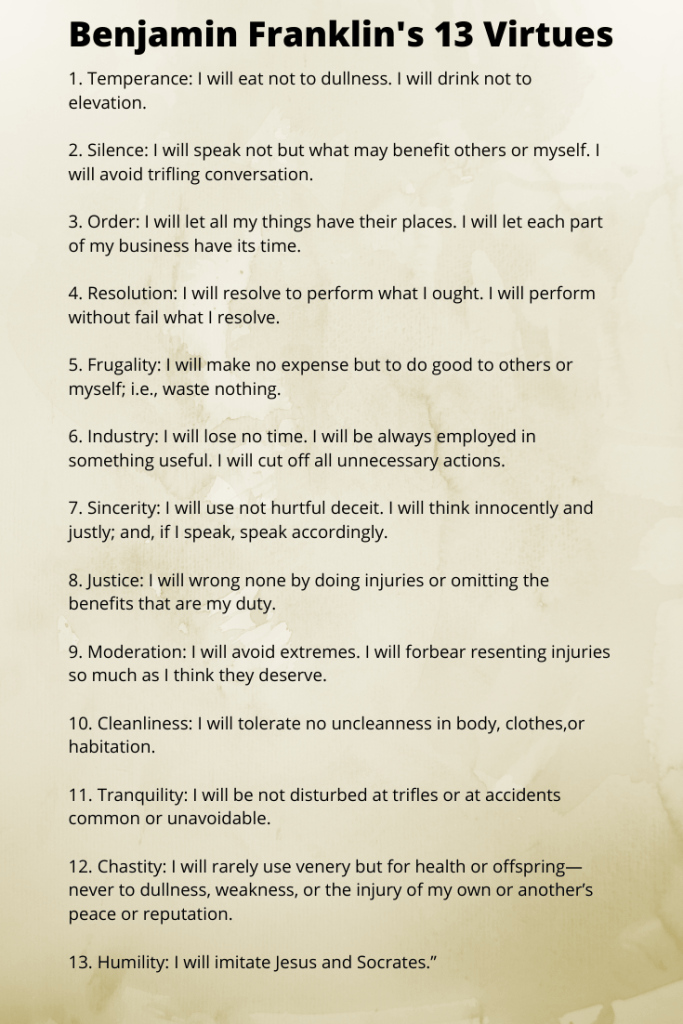
I loved seeing Benjamin Franklin’s 13 virtues list used as an example of how to design your own principle list. The author’s own examples were also very helpful in completing the assignments for each section. Overall, the book convinced me, as if I needed convincing, that I too needed to make my life map, which I believe was the intention of the author. 

So if you are ready to take control of your life and “Live Your Gift” you’ll find inspiration galore in Live Your Gift by Dana V. Adams and a place to create your own life map in the companion guide. 

I received an advance review copy of this book from Reedsy Discovery. You can read my review here.

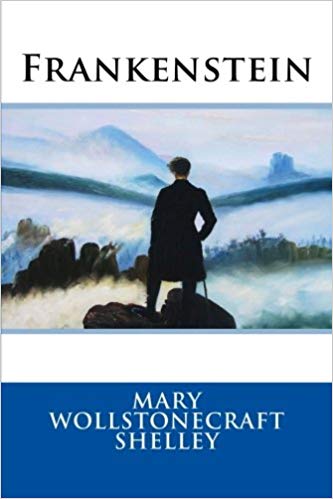
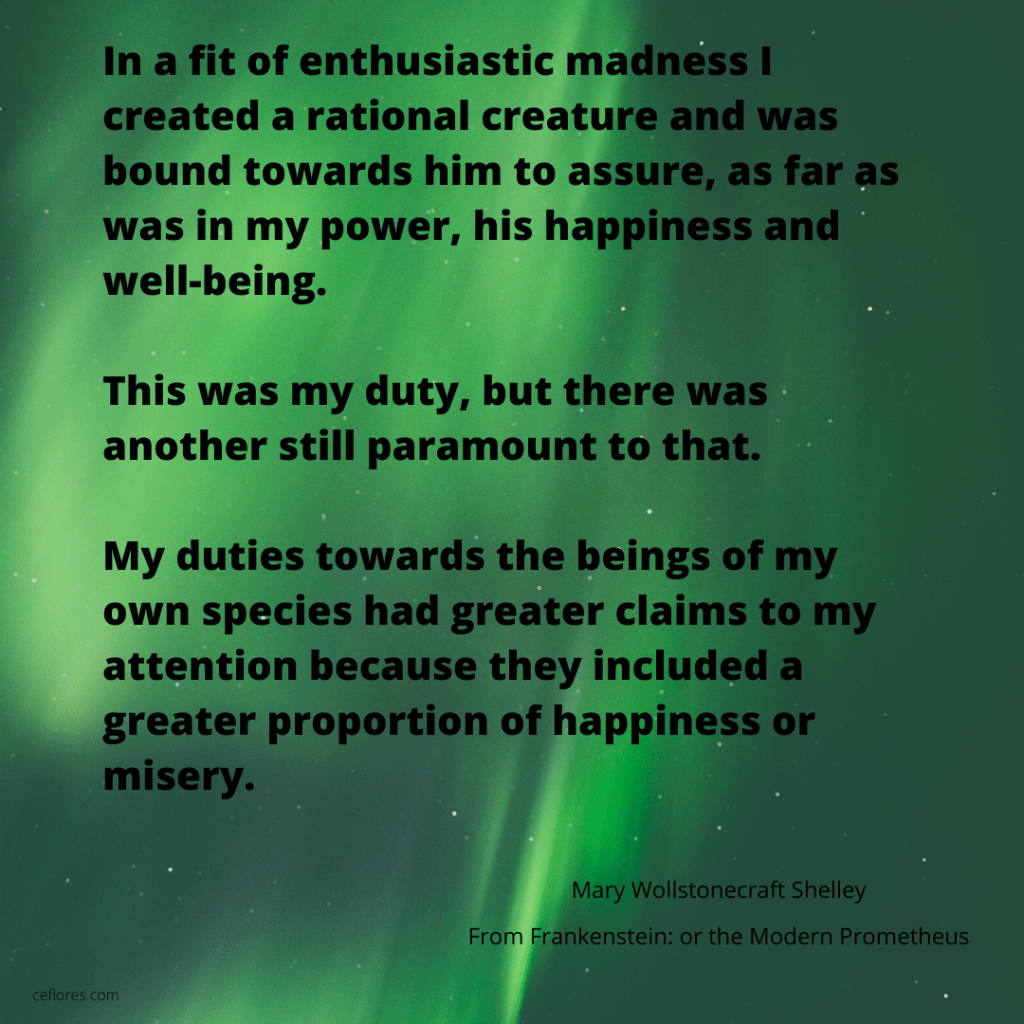
Frankenstein: or the Modern Prometheus by Mary Wollstonecraft Shelley

Frankenstein: or the Modern Prometheus by Mary Wollstonecraft Shelley is told through a series of letters from 28-year-old Robert Walton to his sister Mrs. Saville. While Robert is on an exploration in the Arctic ocean, he happens upon Victor Frankenstein and a single sled dog upon a float of ice. 

Victor is from Genovese, the eldest son of an important family who discovered a way to create the spark of life in inanimate bodies, from whence came all of his woes which he recounts to Roberto who then records the story for his sister.

Frankenstein’s creation is amazingly sensitive and fluent in German, French and English having taught himself by spying on different people he encounters. He manages to dress himself and forage for edibles without any difficulty at all. When the monster, who is never given a name, first speaks, I was astounded by the femininity of his speech. 

The creature begs Victor to create a companion for him to end his loneliness. When he refuses, the being exacts revenge by attacking Victor’s family and friends. In the end, despite the atrocities he committed, my sympathy was ever for the creation and not the creator.

The author’s own life was as pitiable as the monster’s. Her mother died shortly after Mary was born. She ran off with Percy Blythe Shelley, who was already married, at the age of 15. Mary herself lost several infants in quick success as she was writing Frankenstein, only one child surviving to adulthood. Her older sister commited suicide. Shelley’s wife also commited suicide, allowing the couple to finally marry. And then, Mary was widowed at 24 when Percy drowned. Is it any wonder that the monster speaks with such painful eloquence?

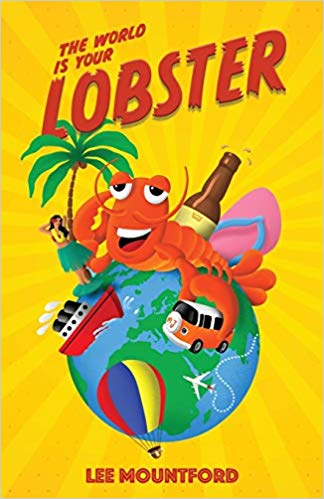
The World is Your Lobster by Lee Mountford

Lee and his wife Nicki decided to take a belated gap year in their 40s and travel the world. Beginning in Melbourne, Australia, they went to 27 countries, covering a total of 77,427 kilometers and sampling 276 domestic beers. Lee recounts the highlights and little adventures in a tongue-in-cheek fashion, with corny jokes, and nearly funny puns. You can’t say the man didn’t try. 

The adventure itself had some inevitable lows, including icky accommodations, being charged extraordinarily high prices, and one instance of denied entrance to the temple for the blatant display of knobby kneecaps. They met some memorable characters on the way, such as the Italian Hamster and Paul, the poetry reciting Russian. 

As I was reading, I kept thinking that I would love to see some of these pictures Lee was yammering on about. Lo and behold, midway through the book, there was a QR code above to view some of the pictures online. Since I may be one of the last remaining people in the world that does not own a smartphone, that feature wasn’t as exciting as the link to their Instagram account. (https://www.instagram.com/worldisyourlobster/). My personal favorite photo was of Lee carting around the hotel safe in Myanmar.

Roundabout the time when the Mountfords arrived in Europe, both trip planning and book proofreading went to the dogs. Random apostrophes appeared in places they had no business being (her’s). Muddled homophones confused the issue at times (who’s vs. whose). Enough inconsistent capitalization sprouted up to drive this English teacher bonkers. (Eiffel Tower, Eiffel tower, eiffel Tower, anyone?) Maybe Maggie-Jane, the orange Brazilian VW camper van that the couple was trundling around in, affected the grammar in some way.

Like all good things, eventually, the journey came to an end. Nicki and Lee took up the yokes of the middle-aged once again, albeit with a gleam of wanderlust in the eye from time to time. So if you are an armchair traveler and enjoy a good travel story, or in this case hundreds of good travel stories, then The World is Your Lobster by Lee Mountford is the book for you!

I received an ARC from Reedsy Discovery. You can read my review here.

Bad Sons by Oliver Tidy

I love a good mystery and Bad Sons by Oliver Tidy didn’t disappoint me. David Booker was teaching English as a second language in Turkey when he came back to the UK to help his aging relatives liquidate their bookstore. When he arrived, no one was there to meet him. No one had seen his aunt and uncle that day. And then a body washes up on the beach.

The descriptions were so detailed I could imagine myself on the gray, chilly mornings, standing next to David looking out at the English Channel. David wasn’t a superhero, quite flawed actually, a smoker, drank a little too much, had a bit of a temper but was overall decent. His concern for his relatives drives him to do more investigation than the local police would like. 

David forms a sort of alliance with Detective Cash, the female detective assigned to his case. Together they do some poking around in an effort to discover what has happened. Not to spoil the story, but they discover that sometimes things are exactly what they seem. 

Delightfully, this is only the first book of the Booker and Cash trilogy. I wonder what sort of other mysteries find themselves entangled in. 

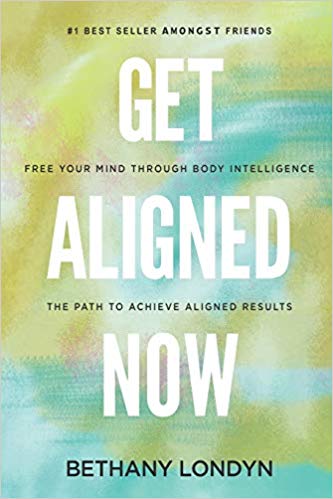
Get Aligned Now: Free Your Mind Through Body Intelligence, The Path to Achieve Aligned Results by Bethany Londyn

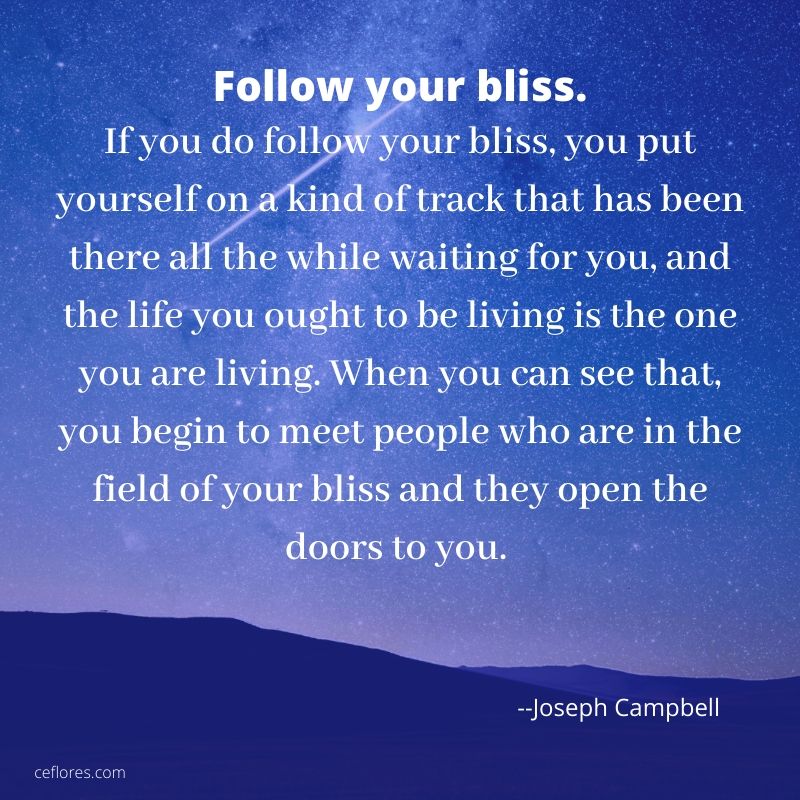
I’m currently on a quest to become a certified life coach and picked this book for this reason. Initially, I thought I had made a mistake. Some sentences in the introduction were so poorly worded and word choices were so unusual, that I thought perhaps the author was someone whose native language was not English. However, the author chose to include one of my favorite quotes by Joseph Campbell, and I decided to keep reading. 

I’m glad I did. Although I won’t say that every chapter resonated with me, quite a number did. Each chapter focuses on a single type of activity that you can do to start listening to your body to begin to make better choices. There were seven sections that used the imagery of a mighty tree as a representation of your body, from roots to the process of photosynthesis.

Each of those seven sections were further divided into daily activities. At the end of each chapter, there was a recap list, which was quite helpful. For example, one chapter was about minimizing distractions and included brief discussions on how applying the concepts of Feng Shui, Minimalism and saging your home environment could help you do that. 

As I mentioned, some of the chapters weren’t for me. I don’t feel that restless energies are trying to speak to me at 3 a.m. I am not in any way clairvoyant, nor do I regularly comune with a guardian angel. But that’s just me. Undoubtedly, there are those out there who would find tapping into those aspects of the unconscious a useful exercise. 

On the other hand, the sections on listening to your body, overwhelming yourself in gratitude, and seeing the world as one of abundance rather than scarcity were spot on in my opinion. So, in the end, I found Get Aligned Now: Free Your Mind Through Body Intelligence, The Path to Achieve Aligned Results by Bethany Londyn worth reading.

I received an ARC from Reedsy Discovery. You can read my review here.

The Creative Journey by Tim Cigelske

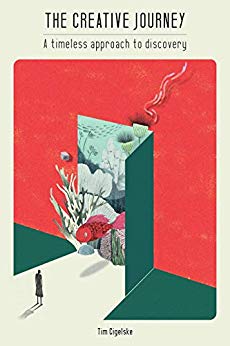
Each and every page of The Creative Journey by Tim Cigelske was a delight for me to read. There were quotes from my favorite creative people, Jim Henson, Joseph Campbell, and Mr. Rogers. Excerpts from the writings of Buddha and the bible were scattered like wildflower seeds throughout the text. Real life creative success stories and commentary from Professor Cigelske’s college students drove each chapter’s point home. And then there were the activities! Write your own obituary, create a children’s book about your dreams, keep a logbook. Wonderful stuff!

Although many of the items discussed in this book were not new to me, I did learn a thing or two along the way. We often get so bogged down in what we have to do, we forget what it is we should be doing. Thus was the reading of this book for me. I remembered what I wanted to do before paying bills and assignments and even book reviews got in the way. I want to create.

The path to creating isn’t a well-traveled road. Each of us must find our way by going on own hero’s journey, a concept made famous by the anthropological studies of the esteemed Joseph Campbell.

We are born. We go forth into the world. We are tested and found wanting or we are challenged and found sound. We need to be brave enough to search out our true purpose. We need to be humble enough to learn from those that have gone before us. We need to be committed enough to follow through and not give up. Only then can we say that we have become masters of our own destinies. Even then, sometimes the end of the hero’s journey is just the beginning of another.

Creativity is not something we are naturally endowed with or not. Rather, it’s a way of looking at life. Each section of this well-written book will encourage you to find the creative life that is already inside of you. Whether you run off and join the circus or invent the iPod, living creatively is the only way to find meaning and purpose. And who doesn’t want to live a life full of meaning and purpose? 

For those brave enough to seek a life of creativity, this is the book for you.

I received an ARC of this book from Reedsy Discovery. You can read my review here.