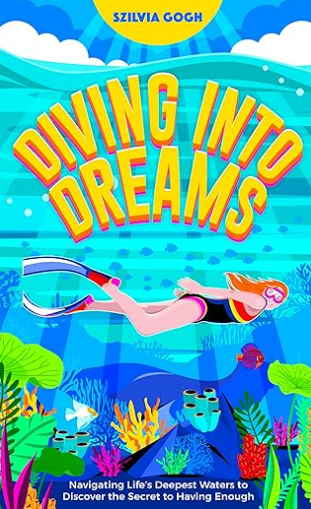
Diving into Dreams: Navigating Life’s Deepest Waters to Discover the Secret of Having Enough by Szilvia Gogh

Diving into Dreams: Navigating Life’s Deepest Waters to Discover the Secret of Having Enough by Szilvia Gogh is a deeply reflective and surprisingly grounded memoir that blends high adventure with introspective wisdom. I was initially drawn to the book because the author, like my grandparents, is Hungarian, a connection that piqued my curiosity more than the diving aspect. I can say that while I still have no personal desire to dive beneath the ocean’s surface, I found myself completely immersed in Gogh’s world.

Her descriptions of the underwater realm are vivid and captivating, rich in sensory detail and emotional depth. She doesn’t romanticize her profession; rather, she presents both the beauty and the grueling realities of underwater work. From Hollywood film sets to remote dive sites, she takes readers on a global journey that’s as much about internal discovery as it is about external adventure.

What sets this memoir apart from many travel and adventure books is its maturity. Gogh isn’t just chasing thrills for the sake of them. She examines the cost of ambition, the drive to achieve, and the fine line between passion and restlessness. I’ve read numerous travel memoirs, and too often they focus on self-indulgence or youthful recklessness. Gogh’s story, by contrast, reflects hard-won wisdom and self-awareness. She questions herself constantly about why she keeps pushing for one more challenge, one more journey, or one more success.

Her evolution from a daring, risk-taking young woman to someone who understands the meaning of “enough” is moving and relatable. It’s an emotional deep dive into identity, satisfaction, and balance. Her achievements are remarkable and include building a unique career as an underwater stunt performer, designing jewelry inspired by her experiences, surviving cancer, and creating a balanced family life. Yet the true treasure of the book lies in her realization that fulfillment doesn’t come from what we do or own, but from who we become.

My favorite line captures the essence perfectly: “True happiness is not acquisition or accomplishment, but alignment—knowing that the life I’m living reflects who I actually am, not who I thought I should become.”

This memoir will resonate with anyone searching for peace after years of striving, or with readers who crave authenticity in an age of endless achievement. Inspiring, honest, and beautifully written, Diving into Dreams is a book to savor.

I received an ARC from Reedsy Discovery. You can find my review here.
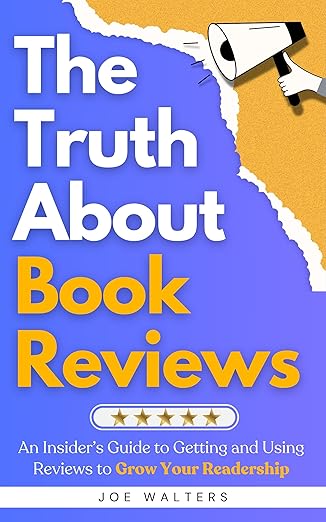

The Truth About Book Reviews: An Insider’s Guide to Getting and Using Reviews to Grow Your Readership by Joe Walters

The Truth About Book Reviews: An Insider’s Guide to Getting and Using Reviews to Grow Your Readership by Joe Walters is a practical, detailed guide for authors who are serious about reaching readers through the power of reviews. For many introverted writers, the idea of asking for reviews can feel intimidating or even impossible. Walters breaks this process down into manageable, actionable steps, showing that obtaining meaningful feedback isn’t as mysterious or unattainable as it seems.

The book clarifies the many different types of reviews, including editorial, media and trade, and customer reviews. It explains their relative importance and how each serves a unique role in an author’s marketing strategy. Walters also discusses how to find and approach reviewers, how to craft effective pitches, and how to make the most of every review once you have it. His insider experience as editor-in-chief of Independent Book Review provides a behind-the-scenes look at what makes a pitch stand out.

While I can’t say I agreed with every point, I found the information genuinely useful. The research required to find the right reviewers can be daunting, and at times, the book reads like a subtle promotion for Walters’ own services. Still, there’s undeniable value in the insight he provides. The inclusion of real email samples, organizational tools, and an excellent to-do list at the end makes the guide not just informative but actionable.

Ironically but effectively, Walters demonstrates his own strategy by reaching out to reviewers like ME to ask for reviews. The fact that I’m now reviewing his book proves his method works. Overall, The Truth About Book Reviews is an honest, accessible, and practical resource that demystifies one of the hardest parts of being an author: getting your work noticed.

The Great Gatsby by F. Scott Fitzgerald

In the spirit of Banned Book Week, I’ve chosen to review a frequently banned book. The Great Gatsby has been challenged and removed from classrooms and library shelves at various times for reasons including sexual references, “profane” language, and depictions of adultery and alcohol use. The novel appears on lists of frequently challenged classics compiled by the American Library Association and related organizations.

This book is like a small, perfectly cut shard of glass: elegant surfaces, sharp edges, and a surprising sting when you look closely. I teach this novel on the platform I work at currently, and the classroom reactions I get have reminded me how much reading is a conversation between text and reader, and how cultural background changes which parts of the book land hard and which parts drift by.

The novel’s canny control of point-of-view, a judgmental Nick Carraway telling us about Gatsby’s dream and the hollowness of old money, is both its strength and, for me, its limitation. Nick’s moralizing gaze gives the book a coherent voice, but it also narrows the novel’s humanity. We almost never see the world except as Nick chooses to frame it. That skewed viewpoint is why the ending, the plot twist, and the moral fallout still hit me every time. The book gives us a climax that feels inevitable and then painfully unresolved.

As a whole, the book can feel thin on action. Much of the “plot” is social maneuvering, parties, and revelations delivered via rumor or later recollection. If you’re the sort of reader who wants kinetic scenes and sustained drama, Gatsby can test your patience. I’m not sure I would have enjoyed it as a teenager. Its pleasures are often retrospective and full of world-weary reflection, things teens don’t always value. My current student, however, is unusually enthusiastic about Gatsby’s romance and tragedy, so who’s to say?

One of my continuing frustrations with the novel is how little we learn about the women who live at its center, Daisy, Jordan, and Myrtle, and even about minor figures like the Finn (the servant) who occupy real positions in the social web. We get Daisy largely as a projection (idealized, then revealed to be small), Jordan as a sketch of modern cynicism, and Myrtle through others’ outrage. Even after reading through the entire book several times, I’m left with questions such as: What were Daisy’s real options in her social world? Why did Jordan cheat and lie, or did she? What did the Finn think about her place in the household and Nick himself? What actually mattered to Myrtle beyond her brief, tragic grasp at glamour? 

In general, I find the sharp, sudden scenes depicting violence to be abrupt and unexpected. The incidents of overt racism and classism are often hard to read from the world’s current position. Despite some definite cringe, I keep teaching The Great Gatsby because it’s compact, richly written, and full of teachable techniques: voice, symbolism (the green light, the Valley of Ashes), and the way an unreliable narrator shapes what a story becomes. It generates excellent class discussions about the American Dream, class, and social performance. But I also teach it with a critique. We read it as a masterpiece and as a text with blind spots, including limited female perspective, a narrow moral lens, and an emphasis on spectacle over sustained action.

If you love it, you’ll find it elegant and quietly devastating. If you find it unsatisfying (as I often do), the book still rewards close reading, especially if you hold a pencil to its margins and ask the questions it leaves unanswered.

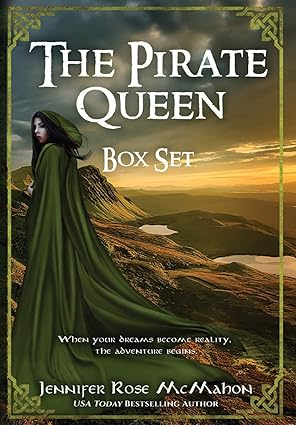
The Pirate Queen Trilogy (Books 1–3) by Jennifer Rose McMahon

If you’re craving an immersive escape into a world where Irish legends collide with modern reality, Jennifer Rose McMahon’s The Pirate Queen trilogy is an absolute treat. This fast-paced, atmospheric series blends history, mythology, romance, and family curses into a captivating journey that spans centuries.

The story follows Maeve O’Malley, an eighteen-year-old whose life is upended when vivid, haunting visions begin pulling her toward Ireland and the legacy of the infamous pirate queen who once terrorized her ancestors. As Maeve digs into her family’s past, she’s swept into a quest involving ancient relics, rival clans, hidden secrets, and a centuries-old curse threatening everything she loves.

Across the three books, Bohermore, Inish Clare, and Ballycroy, McMahon masterfully layers suspense, romance, and rich Irish folklore. The writing brings Ireland’s castles, ruins, and windswept coasts to life, making it easy to feel as though you’re right there alongside Maeve on her treasure-hunting, time-twisting adventure.

By Book 3, I’ll admit I felt a little frustrated when new complications arose just as things seemed to be settling, but pushing through was worth it. The payoff at the end of Ballycroy was equally satisfying and wrapped up the trilogy beautifully without feeling rushed or forced.

Who this series is for:

  • Readers who love reality escapism with a mystical twist
  • Fans of Irish folklore, historical mysteries, and strong female protagonists
  • Anyone who enjoys a blend of romance, suspense, and time-bending adventure

Jennifer Rose McMahon delivers an enchanting trilogy full of secrets, curses, and unexpected twists. While it starts as a battle between past and present, it ultimately becomes a story about destiny, courage, and belonging. If you’re looking for a binge-worthy read that sweeps you away from the everyday, this series hits the mark.

Arcane Souls World: Grave Talker Complete Series by Annie Anderson

If you’re craving a fast-paced, binge-worthy urban fantasy filled with ghosts, chaos, and a flawed yet fiercely relatable heroine, Annie Anderson’s Grave Talker series delivers on every level.

The story follows Darby Adler, a homicide detective and reluctant ghost whisperer, as she navigates a life balanced between solving crimes and managing the constant chatter of the dead. But her quiet existence in Haunted Peak, TN, doesn’t stay quiet for long. With a serial killer demanding her attention and the Arcane Bureau of Investigation breathing down her neck, Darby quickly finds herself tangled in a web of danger, secrets, and paranormal politics.

What makes this series shine is Darby herself. She’s tough, snarky, and far from perfect, a beautifully flawed badass who doesn’t shy away from making messy choices. Her relationships, both living and dead, add emotional depth to the action-packed narrative. There’s plenty of family drama, unexpected betrayals, and high-stakes romance woven into the chaos.

Anderson builds a rich, multilayered Arcane world where supernatural beings, hidden power structures, and world-ending prophecies collide. The stakes get higher with every book, and just when you think you’ve figured it out, another plot twist slams into you. Without spoiling too much: yes, there’s an apocalypse brewing, and yes, Darby’s right in the middle of it.

With seven books packed into this complete series, the pacing never drags. It’s the kind of story you start intending to read “just one more chapter,” and suddenly, it’s 3 AM.

Binge-worthy, action-packed, and brimming with heart, the Grave Talker series is perfect if you love kickass heroines, supernatural intrigue, and family secrets. This is one ride you don’t want to miss.

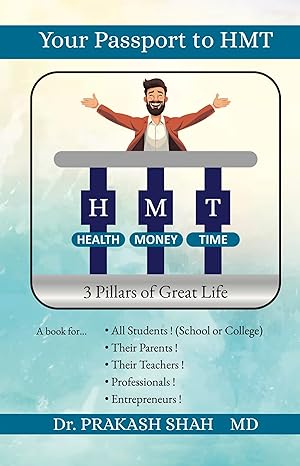
Your Passport to HMT: 3 Pillars of a Great Life by Prakash Shah

Prakash Shah’s Your Passport to HMT sets out to be a motivational guidebook designed to help readers achieve balance and success by mastering the three pillars of a fulfilling life: Health, Money, and Time. With a focus on intentional living, better habits, and actionable strategies, the book promises to help readers create a life of stability, growth, and purpose.

The premise is strong. Shah emphasizes the importance of achieving all three pillars together, rather than chasing health, wealth, or time individually. He offers frameworks meant to inspire self-motivation, discipline, and smart decision-making. The book encourages readers to think ahead, develop systems for success, and cultivate habits that sustain long-term growth.

However, the target audience feels a bit unclear. At times, the book speaks directly to students, guiding them toward self-driven achievement. In other sections, Shah addresses parents and teachers, offering insights into shaping the next generation’s mindset. While the advice is generally sound, choosing a more specific audience could make the message more focused and impactful.

Additionally, Shah’s British Indian background comes through in his phrasing, sayings, and examples, which may feel unfamiliar or slightly “off” to American readers. For example, health tips like avoiding “cold drinks” or the concept of “welcoming pains” as a pathway to future rewards may require some cultural interpretation. Phrases like “appreciation is what a child cries for and an adult dies for” are intriguing but may leave some readers unsure of their meaning.

That said, there’s a lot of value here for readers willing to engage with the book’s perspective. The advice is actionable and well-intentioned, and Shah’s passion for helping others create better lives is evident throughout. If you’re open to exploring new frameworks for success and don’t mind a blend of cultural influences, you may find practical takeaways within these pages.

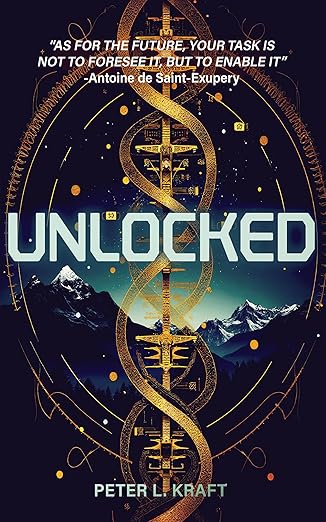
Unlocked: The Dawn of Unlocking Superhuman Abilities by Peter Kraft

Peter Kraft’s Unlocked: The Dawn of Unlocking Superhuman Abilities is a thrilling techno-science adventure that explores the ethical and moral implications of humanity’s pursuit of perfection. Set in the futuristic confines of Switzerland’s E-Labs, the novel introduces Dr. Natalia Accorsi and her team, who discover “combinations” capable of unlocking extraordinary superhuman abilities like telekinesis and telepathy. This groundbreaking achievement sets the stage for a high-stakes conflict involving shadowy conspiracies, espionage, and the survival of humanity itself.

I especially enjoyed the character development of Dr. Accorsi, a scientist torn between her commitment to advancing human potential and her fears of unleashing catastrophic consequences. Her internal struggles and evolving resilience resonate deeply, making her a compelling protagonist. Additionally, the twist involving the true identity of her nemesis adds a layer of unpredictability, keeping readers engaged.

One of the book’s unique elements is its integration of Maya history and mysticism into the scientific narrative. The suggestion that the Maya were the first to “unlock” superhuman potential offers a fascinating link between ancient wisdom and modern innovation. However, it’s important to note that depicting the Maya civilization as “destroyed” is misleading, as the Maya people continue to thrive today, albeit without centralized governance. This historical oversight is a minor flaw in an otherwise intriguing premise.

The novel’s climax, the explosive destruction of the lab during a battle of ideologies, brings to mind the epic clashes of superheroes like Superman and General Zod. The action is intense and cinematic. However, the middle portion of the book lags slightly, with repetitive deliberations on the ethical dilemmas of revealing the combinations to the world. While these discussions provide necessary context, they slow the narrative’s momentum.

The use of algorithms and controlled experiments adds authenticity to the scientific backdrop, creating moments of gripping suspense as the team tests each combination. The ending teases a promising exploration of collaborations between modern scientists and Maya shamans in future books, setting up an exciting continuation.

Overall, Unlocked is a thought-provoking read that will captivate fans of sci-fi and techno-thrillers. Readers are invited to ponder humanity’s potential and the choices that define our future.

Being on the Wing: Navigating the Enneagram Subtypes by Dr. Angela McCaffrey Rosenberg

Being on the Wing: Navigating the Enneagram Subtypes by Dr. Angela McCaffrey Rosenberg offers a fresh and enchanting approach to understanding the Enneagram by exploring each personality type through the lens of birds. Using captivating bird analogies, Rosenberg makes the complex world of Enneagram subtypes approachable. Her unique choice to connect each of the nine Enneagram types with a particular bird allows readers to explore personality traits in a lighthearted and engaging way, making it easy for Enneagram enthusiasts and newcomers to connect with her insights.

Each section in Being on the Wing delves into the characteristics, strengths, challenges, and growth pathways for each of the nine Enneagram types, reimagined as distinct bird personalities. Through these bird archetypes, Rosenberg illustrates each personality type’s core motivations and struggles in a way that feels alive, personal, and grounded in nature. 

The book is further enriched by beautiful, original illustrations, enhancing its appeal for visual learners and bird lovers alike. These vibrant illustrations add to the charm of Rosenberg’s writing, making the Enneagram feel accessible to people who may not have previously engaged with the system. Including quotes from various authors adds depth to each chapter, offering thought-provoking reflections and insights into the wonderful world of birds. This combination of illustrative art and carefully chosen quotes makes Being on the Wing a visually captivating and spiritually enriching experience.

A particularly enjoyable feature of the book is its humor and informal tone. Rosenberg writes with warmth and ease, making complex psychological concepts feel inviting rather than daunting. Her engaging style is filled with humor and a touch of whimsy, making it a pleasure to read, even for those unfamiliar with Enneagram theory. I found myself rereading passages for the sheer enjoyment of it. Additionally, the “bird quiz” at the beginning of the book is a helpful tool for readers to identify their own personality subtype, enhancing the book’s interactive and personal nature. 

Rosenberg’s Being on the Wing goes beyond merely describing the Enneagram types; it also provides readers with practical tips for self-growth and personal well-being tailored to each bird type. She encourages readers to reflect on their strengths and challenges, suggesting how each type can work toward personal growth.

For anyone interested in the Enneagram, nature, or the beauty of birds, Being on the Wing is a delightful and informative read. It offers valuable insights into self-awareness, encourages personal growth, and fosters an appreciation for both human and avian nature. Even without a deep knowledge of the Enneagram, readers can enjoy this book for its engaging stories. 

I received an ARC from Reedsy Discovery. See my review HERE.

2025 Reading Challenge

I really enjoyed my reading challenge last year. I think it made a difference that I didn’t try and pick a certain category for each month, but had options to choose from. So yep, I’m going to do a reading challenge this year.

I’m starting with two categories that I did not complete in prior challenges, a book on my shelf already, and a hardcover book. I think those will be easy to incorporate in the reads for the year.

I found this 2025 reading challenge list and since it seems like it covers a broad spectrum (and has 16 categories), I’m going to use it myself.

What are you reading?