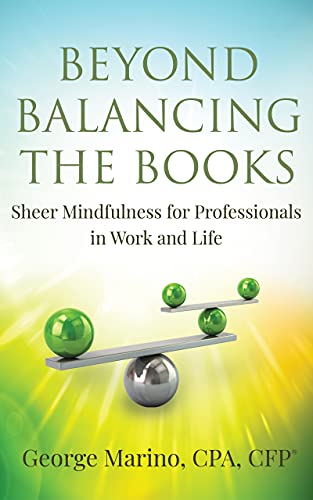
Beyond Balancing the Books: Sheer Mindfulness for Professionals in Work and Life by George Marino

Beyond Balancing the Books: Sheer Mindfulness for Professionals in Work and Life by George Marino is The Power of Now for accountants. It takes the somewhat complex ideas of gurus such as Eckhart Tolle, Don Miguel Ruiz, and Meister Eckhart and shows how accountants can apply mindfulness to their work and home life. 

Although the title suggests that the ideas in this book could be applied to other professionals, the metaphors, examples, parables, and situations are tailored to accountants. It is masterfully crafted in that regard. The challenges unique to financial tasks, including stress during tax season, working with demanding clients, and the accountant’s own personal baggage regarding money, were addressed. 

There are biblical excerpts, quotes from famous people like Einstein, and short poems that the author wrote to aid readers in finding inner peace through mindful activity. In addition, there are some links to the author’s YouTube channel for further guided meditations, while others are written out for the reader. 

I’m not sure that I could pick my favorite part. I enjoyed the meditation exercises. I loved the short poems. I chuckled at the conversation between the accountant and their friend (a reminder to be kind to yourself). The information about the practical application of mindfulness, both in professional and personal lives, resonated with me. The Mindfulness at Work Questionnaire for Professionals was beneficial in pinpointing how I could become more present. I thought the Thirteen Qualities of an Awakened Workplace was a helpful guide in helping employees determine how healthy their work environment is. I especially liked the section about the Money Attitude Scare (MAS) and how mindfulness can change how I look at money and financial planning. As you can see, this book is jam-packed with mindful goodies!

Beyond Balancing the Books should be on every accountant’s required reading list. Other professionals may also find it useful, disregarding the extreme CPA focus. People who are not ready to start down the mindful living path will probably find this book not as helpful. It’s a longish book, so not something that could be read in one sitting. However, that’s the point of being in the present, taking things as they come, isn’t it?

I received an ARC from Reedsy Discovery. You can read my review here.

The Upside of Down: The Sky Above and The Mud Below by Joel Bernard

I have to admit that I’m somewhat of a fanatic of post-apocalyptic survival books. I can’t say precisely what it is about the genre that appeals to me, perhaps the promise of a new beginning, but whatever it is, The Upside of Down: The Sky Above and The Mud Below by Joel Bernard fit the bill. 

The story is written from the perspective of the characters in a somewhat futuristic but not too distant future when climate change has caused a global catastrophe. Wildfires, storm surges, flooding, drought, superstorms, tornadoes, and the like were catalysts to a vast migration. People from the southern US were moving North, and those from the coasts were moving inland. 

Although I enjoyed the book, there were some issues. The first drawback I found was that the sheer number of characters was overwhelming. Constantly switching back and forth between characters, perspectives, and even storylines, made it difficult to form an attachment to some individuals. Then some of the characters were dead, and we only hear from them after they are dead, which does very little to advance the plot since all they can talk about is being dead. 

There seemed to be some vagueness about what happened to Moses, a likable character that lived in a church and could “get things.” It appeared that he had become an integral part of one of the wandering groups but then was killed, and there was a ceremony of some sort to mark his passing. However, none of these events are presented to the reader directly. I’m not sure if the chapters were edited out or the author didn’t smooth the plot development out quite right, but Moses got lost in the story. 

I believe the author meant this novel to be a morality tale. The situations presented and the scientific information presented in hindsight musings told the story of a civilization that did not heed scientific warnings. The result was this calamitous new world humans struggled to survive in. Unfortunately, the story lacked immediacy. There was a lot of cloud gathering and navel-gazing by the characters, who realistically would be more focused on adapting to their harsh surroundings as they exhaustingly traveled hundreds of miles on foot to their hoped-for destinations. 

So although I enjoyed the book, the meandering storyline in The Upside of Down: The Sky Above and The Mud Below by Joel Bernard might not be something everyone would enjoy.

I received an ARC from Reedsy Discovery. You can see my review here.

The Grieving Brain: The Surprising Science of How We Learn from Love and Loss by Mary-Frances O’Connor

In 2021, I lost my mother, and the waves of grief that periodically overwhelm me make me feel as if I’m drowning in the loss. Mary-Frances O’Connor’s book, The Grieving Brain: The Surprising Science of How We Learn from Love and Loss, was recommended on some site or other and I just knew I would have to read the book.

The Grieving Brain is a mixture of detailed scientific processes and discoveries and personal stories, no less detailed, centered around how we experience grief. It appears that on some level, our brains are unable to understand how someone who had become irrecoverably part of our DNA is no longer in the same plane of existence as we are. That inability to fathom this concept remains even after we have begun to build a new life, one that no longer includes our beloved. Our brain needs to be retrained, as it were. 

This is not a comfort book per se. The author makes no bones about not having the right answer on how we can go on with life while grieving. However, understanding that these intense feelings are part of our core structure and that we are not alone in our experience of loss, well that does do something to momentarily ease the pain.

The Garden of Small Beginnings by Abbi Waxman

Looking for a feel-good book to read this spring? Then check out The Garden of Small Beginnings by Abbi Waxman.

Lili’s husband was killed in a car accident in front of her house three years ago leaving her with two small daughters. Her sister stepped in to help when Lili had a breakdown. The company that Lili does illustrations for sends Lili to a weekly gardening class as part of the requirements for her next project. The class revolves around turning an empty lot into a flourishing vegetable garden. This is a story of grief, new beginnings, growth, and hope. 

Lili’s efforts at creating a life for her family are a bit irreverent, completely honest, and blessedly hysterical. The chapters are divided by short commentaries about gardening that had me in stitches. Lili finds that life, just as with gardening, provides us with no guarantees of a happy outcome and that’s ok. 

I don’t believe this novel will appeal to everyone, however, being a middle-aged woman who loves gardening and has experienced grief, The Garden of Small Beginnings by Abbi Waxman was right up my alley.

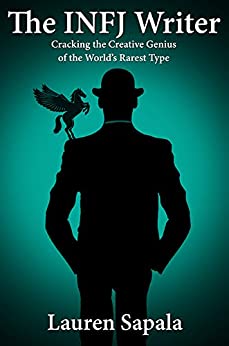
The INFJ Writer: Cracking the Creative Genius of the World’s Rarest Type by Lauren Sapala

First, I need to preface that according to the Meyer-Briggs assessment, I’m an INFP-A so I’m not exactly the target audience this book was aiming at. However, it was a recommendation from the Introvert Writer Summit I enjoyed at the beginning of March and being introverted, I hoped that there would be something useful for me in it.

And there was! I felt validated as both an introvert and writer as I read it. Some of the weird stuff that I thought just made me nuts was addressed. For example, the children’s book series that I’m currently working on–well, the main character Lupita is a fully formed, slightly awkward, 5-year old clamoring in my head for me to tell her story. She just appeared to me one day and here we are, taking dictation for book 3. This phenomenon was addressed in Chapter 4, INFJ Psychic Ability and Character Development. Apparently, this happens to other writers too! WHOOP!

The book also talked about how introverts prefer to work intensely for large blocks of time, don’t like meetings, and lead interesting lives which will make fabulous memoirs. (So me!) In addition, there are discussions about what it means to be a Sensitive Intuitive writer and how hangups with financial success hold them back from making a killing with writing. (Certainly true!) And why INFJs, INFPs, and Sensitive Intuitives might not find it in their best interests to try and become a full-time writer. Fascinating stuff!

So I highly recommend The INFJ Writer: Cracking the Creative Genius of the World’s Rarest Type by Lauren Sapala if you are an INFJ writer. You’ll also find it helpful if you are an INFP or Sensitive Intuitive. After all, knowing ourselves is the first step in truthful writing. 

If you’d like to get an idea of what type of writer personality you have, here’s a link to a free online personality test.

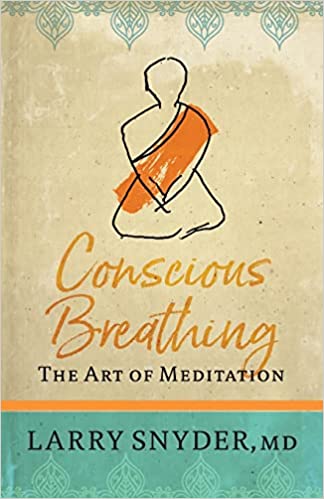
conscious Breathing: The Art of Meditation by Larry Snyder, MD

Having read The Four Agreements by Don Miguel Ruiz and The Power of Now by Eckhart Tolle, I felt I could more than handle Conscious Breathing: The Art of Meditation by Larry Snyder, MD. I was pleasantly surprised to discover that this little gem was not only a more accessible guide to meditation but also that it addressed the number one obstacle to mindful living, addiction.

My favorite chapter was entitled “Anxiety, Addiction, and Acceptance.” It begins by defining addiction and demonstrating how it contributes to anxiety. When we accept that addiction and anxiety are part of human existence, we can find ways to mediate their effects on our well-being. The author gives the example of two individuals injured in an auto accident. One seeks retaliation against the other driver through a lawsuit. The other concentrates on physical therapy and recovers sooner. What we focus on influences our future happiness. 

The author isn’t judgemental, merely suggestive as he discusses meditation practices. All things are temporary, including our thoughts and emotions. Conscious breathing through meditation allows us to let it all go. The book is short enough that it can be read several times. After all, meditation isn’t something that can be mastered but rather practiced day in and day out. 

On the other hand, just as substance addition is a relapsing neurobiological disease, surrendering our belief in control is something we need to do repeatedly, much like Sisyphus rolling his boulder up the mountain for eternity. Along the same lines, Sisyphus had options. It makes you wonder if he railed against his fate or enjoyed the climb. Considering he tried to outwit death several times, which resulted in his punishment, I imagine he spent eternity looking for another opportunity to control the situation, his addiction, as it were.

Anyway, just as meditation isn’t for everyone, this book might not appeal to all readers. The essays are short and separated by nice, if not exceptionally inspiring, photographs. So many things are out of our control, and not everyone is ready to accept that; thus, the act of “letting go” encouraged in the book isn’t obtainable for some yet. 

I received an ARC from Reedsy Discovery. You can find my review here.

Job by Ben Avery

One of the 2021 reading goals I set for myself was to read a graphic novel. I decided to pick a bible-based one to see if this type of literature was something I could do with Claudia with the women of the bible characters. 

I somewhat randomly picked Job written by Ben Avery and illustrated by Jeff Slemons. I was impressed with the drawings. They were detailed and eye-catching. I’d never tried to read a graphic novel on my kindle either, so I was pleased to find that although the text was small, it was easy to read. 

I enjoyed the artist’s representation of heaven, especially Satan’s appearance. The characters, Job, his family, servants, and friends, seemed to be dressed in what I imagined they would wear. Everything seemed to go for a 4-star review until I got to the part where God answers Job and brings up the Behemoth and Leviathan. (Job 40 – 41) The Leviathan is pictured as a large crocodile-type beast, which seemed reasonable. However, the Behemoth was a dinosaur. Since there is a gap of oh, about 65 million years between dinosaurs and men inhabiting the earth, I found it hard to reconcile this particular artist’s rendition. 

I always understood the Behemoth to be some sort of large beast, although what animal is was exactly wasn’t clear. According to Jewish tradition, the Behemoth and Leviathan were primeval chaos monsters that would become food for the righteous after the end of days. Hmmm. Other scholars hint that the Behemoth is another name for the hippopotamus, while the Leviathan could be a whale or shark. Then again, perhaps both creatures were dragons. (eye roll here).

The story ended a bit abruptly for me as well. We are told that Job was blessed with 10 more children, livestock, and crops, but I’d like to have seen a little more of that illustrated. The final little bit again rubbed me the wrong way. I suppose I should have expected it as this was a bible story, but there was no need to throw in any reference to the New Testament. The premise was “the Book of Job asks three questions that are answered in the Lord Jesus Christ.” Ok. Whatever. Honestly, Job’s story is an interesting commentary on how individuals behave in crisis and has several useful lessons to teach us all on its own. 

So I ended up rating the book only 3-stars and decided that I don’t think I’ll be writing any graphic novels anytime soon after all.

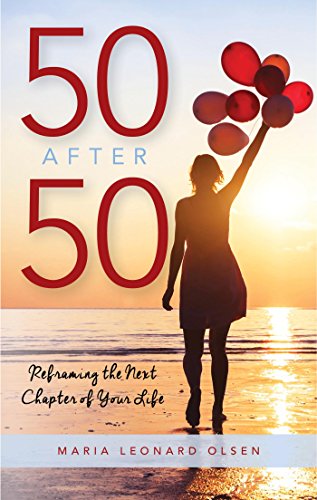
50 After 50: Reframing the Next Chapter of Your Life by Maria Leonard Olsen

In her inspirational book 50 After 50: Reframing the Next Chapter of Your Life, Maria Leonard Olsen bravely chronicles her less-than-ideal childhood and struggles with sobriety. Part one centers on why she made a list of 50 activities she wanted to experience after the age of 50. Part two goes through the list, one by one, grouped by category. Part three includes two other lists created by daring senior women, a list of recommended reading, and book club discussion questions.

Rapidly approaching the big five-oh myself, I was fascinated to read about the author’s adventures and accomplishments. Her list included international travel, further education, social daring, physical challenges, spiritual quests, lifestyle changes, and some thrill-seeking behaviors.

The first section dealt with the author’s journey through rehab and the AA community. Some who have not experienced addiction, whether of a loved one or themselves, might not be able to identify as much with the author’s struggle. However, the information is relevant to the story since it was the catalyst for the author to create a new life and experience new things.

While extremely motivating, not all the activities on the list are within reach of the average 50-something woman. The author had the advantage of living in the D.C. area and access to the upper crust social circle, which made some of her accomplishments less challenging. She admits to that in the book’s conclusion. Also, not all of the things the author chose will appeal to every woman, but that’s not to say that other women won’t enjoy reading about them.

With the premise of “challenge yourself,” the author presented her after-50 list. I especially appreciated the self-reflection question at the end of each list item. It made me pause and think about where I stood concerning this aspect of things, such as travel or spirituality. The quotes introducing each list item were also apropos and thought-provoking.

While I appreciated categorizing the items, it might have been interesting to have them ordered chronologically instead as the author moved toward her own self-actualization. I’m positive her list choices correlated with self-discovery. I imagine the trekking through the mountainous regions of Nepal was early on while random acts of kindness occurred when she was more settled with herself, but with no timeline, that’s pure speculation on my part.

There was a lot for me to ponder in 50 After 50: Reframing the Next Chapter of Your Life by Maria Leonard Olsen as I, too, approach my fifth decade. If you are in a similar position, I heartily recommend a little armchair adventuring with Ms. Olsen.

I received an ARC from Reedsy Discovery. You can read my review here.
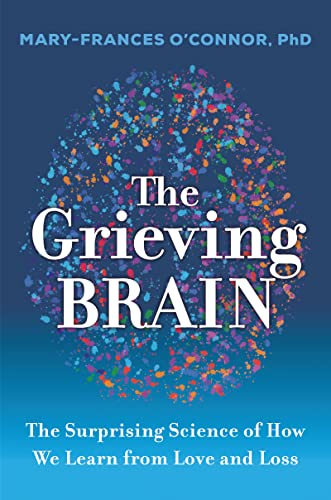
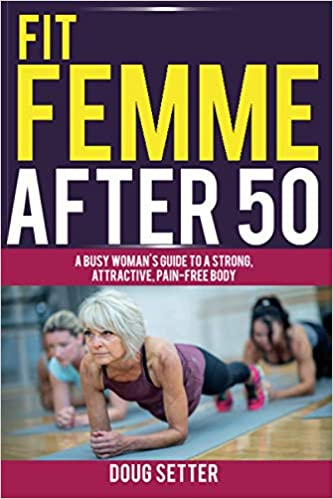
Fit Femme After 50: A Busy Woman’s Guide to a Strong, Attractive, Pain-Free-Body by Doug Setter

Rapidly approaching 50 myself, I picked up Fit Femme After 50: A Busy Woman’s Guide to a Strong, Attractive, Pain-Free-Body by Doug Setter with the idea that I could incorporate some suggestions into what I have determined will be my healthier lifestyle going forward. I hoped for some inspirational stories of women firming up in later years and several practical exercises for my routines. My expectations were partially fulfilled, which is saying something.

The author highlighted the stories of several women who were successfully fit and, more accurately, tough broads, like Iris Davis, body-building champion at 76, and Monika Kriedmann-Bleckenwegner, over 50, who completed the Austria Iron Man competition the day after having a tooth pulled. These women were definitely inspirational! 

Following that, the author gave several suggestions on how to motivate yourself, what to each, which vitamins to take, and some solid exercises to do, complete with clear pictures on how to do them. Honestly, it was great stuff. 

However, large sections of the book were irrelevant to me as a nearing 50 woman. The author included his personal experiences, including his time in the military, that, as a male, weren’t be experiences I could relate to. Statistically, only a little of 14 percent of the U.S. military are women anyway. While Canada, the author’s native country, has a higher percentage ranging between 13 to 19 percent depending on the service branch. 

Although there was a chapter on hormones, one of the most significant issues women at 50 face, the author failed to convince me that his suggestions were designed for women in that age group. The examples and personal experiences cited were, more often than not, male, like Abe Vigoda, Dan Brown, Louis L’Amour, the author himself. A quick google search turns up Susan Shapiro, Joan Wolf, Edie Meidav as women writers over 50 who incorporate exercise into their lives. As for performers, we have Jennifer Lopez, Madonna, Sharon Stone, Elle Macpherson, Sandra Bullock, Halle Berry as steller examples of fit and healthy women over 50.

Then, the English teacher in me cringed at each dash used instead of proper punctuation. Although I didn’t find any spelling or grammatical errors, this constant misuse detracted from my reading experience.

Despite the fallacies mentioned above, Fit Femme After 50: A Busy Woman’s Guide to a Strong, Attractive, Pain-Free-Body by Doug Setter contains solid fitness advice for anyone, male or female, to improve their physical and mental well-being.

I received an ARC from Reedsy Discovery. You can see my review here.